
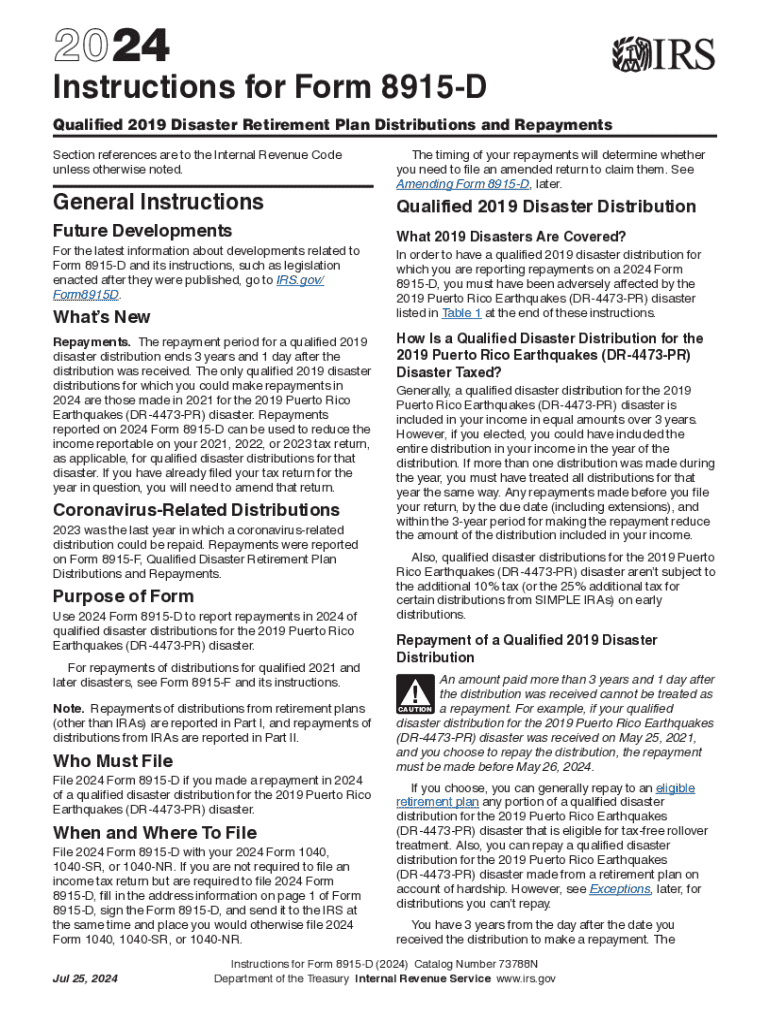







Definition & Purpose of IRS Form 8915-F
The IRS Form 8915-F, "Qualified Disaster Retirement," serves a crucial role in the tax reporting process for individuals affected by qualified disasters. This form is specifically designed to address the financial impacts of disasters on retirement plans. It allows individuals to report the repayment of qualified distributions taken from retirement accounts due to a disaster. By using Form 8915-F, taxpayers can potentially spread the tax impact of these distributions over three years, easing financial burdens. This form is an evolution of previous versions like Form 8915-D, adapting to ongoing needs for disaster relief.
How to Obtain IRS Form 8915-F
To obtain IRS Form 8915-F, taxpayers can visit the official IRS website, where downloadable PDF versions are available. These forms can also be accessed through tax preparation software, which typically includes the most recent IRS forms. Additionally, paper copies can be requested directly from the IRS by mail, although this method may take longer. Many tax professionals, such as accountants or tax consultants, also have access to these forms and can provide them to their clients while assisting with the completion process.
Steps to Complete IRS Form 8915-F
- Gather Necessary Documents: Before starting, collect all relevant financial statements, including retirement account statements showing distributions and any repayment documentation.
- Complete Personal Information: Enter your full name, address, and Social Security number accurately at the top of the form.
- Report Qualified Distributions: In the sections provided, detail all qualified disaster distributions received, along with the corresponding amounts and dates.
- Calculate Repayment Amounts: Record any amounts you have repaid to your retirement account and calculate the taxable portion remaining.
- Determine Taxable Amount: Use the worksheet included with Form 8915-F instructions to compute the taxable amount, which may be spread over three years if applicable.
- Finalize and Review: Carefully review all entries for accuracy. Mistakes can delay processing or trigger IRS inquiries.
Eligibility Criteria for Using Form 8915-F
Form 8915-F is intended for individuals who have taken a qualified disaster distribution from a retirement account. To qualify, the distribution must be tied to a federally declared disaster, and the individual must maintain documentation proving impact by the disaster. Certain age restrictions and income limits may also apply, depending on the specific terms of the disaster relief legislation in effect. It's crucial to verify current eligibility requirements, as they can change based on new IRS guidelines or disaster declarations.


IRS Guidelines for Form 8915-F
The IRS provides detailed instructions for completing Form 8915-F, highlighting rules about distribution qualification, tax implications, and repayment options. The guidelines emphasize that taxpayers can opt to spread the income from distributions over a three-year period, reducing the immediate tax burden. Additionally, the IRS allows for penalty exceptions for early withdrawals under specific disaster conditions. Following these guidelines precisely is essential for avoiding errors that could lead to audits or tax penalties.
Important Terms Related to Form 8915-F
- Qualified Disaster Distribution: A withdrawal from a retirement account that meets specific IRS criteria related to federally declared disasters.
- Repayment Period: The timeframe allotted for individuals to repay distributed funds to their retirement account to mitigate tax impacts.
- Federally Declared Disaster: An official designation by the federal government identifying specific disasters eligible for tax relief.
- Tax Deferral: The ability to delay tax payments on certain distributions, spreading them over a period (usually three years).
Penalties for Non-Compliance
Failing to properly report distributions or incorrectly completing Form 8915-F can result in significant penalties. These penalties can include interest on unpaid taxes, accuracy-related penalties, and the potential loss of eligibility for tax benefits associated with disaster distributions. To mitigate these risks, it is crucial for individuals to adhere strictly to the form’s instructions and seek professional advice if needed.
Filing Deadlines & Important Dates
Taxpayers must file Form 8915-F along with their annual tax return by the standard IRS deadline, usually April 15. However, extensions are available under certain circumstances, allowing for additional time without incurring late filing penalties. Ensuring timely submission is vital as the IRS may impose late filing penalties and interest on any unpaid taxes after the deadline.




