01. Edit your rtb 41 form online
Type text, add images, blackout confidential details, add comments, highlights and more.

Type text, add images, blackout confidential details, add comments, highlights and more.

Draw your signature, type it, upload its image, or use your mobile device as a signature pad.

Send rtb41 via email, link, or fax. You can also download it, export it or print it out.
Tenancy forms in British Columbia serve as standardized legal documents used in rental agreements and related transactions between landlords and tenants. These forms comply with the Residential Tenancy Act, providing a structured way to manage various rental aspects such as moving in, rent agreements, modifications, and terminations. The primary function of these forms is to ensure that both parties have clear, documented evidence of their rights and responsibilities, thus minimizing disputes. They offer a transparent framework for dealing with issues like security deposits, maintenance responsibilities, and rental terms, making them essential for any tenancy agreement.
To effectively utilize tenancy forms in British Columbia, start by identifying the specific form needed for your purpose, such as a rental agreement or a notice to vacate. Once selected, fill out the required fields accurately, ensuring all information is truthful and complete. For example, when completing a rental agreement form, include details such as the property address, tenant names, rental terms, and rent amount. Ensure both landlord and tenant review the information before signing. It’s advisable to keep a copy for personal records and reference. If any amendments are required later, they should be documented in an addendum and signed by both parties.
Tenancy forms can be obtained from several sources within British Columbia. The most reliable source is the official government website for the Province of British Columbia, where forms are available for download. Additionally, they can be accessed through affiliated service platforms like DocHub, which provides electronic versions that can be easily filled and signed. Local libraries and government offices may also have physical copies available. When obtaining forms, ensure they are current and compliant with the latest legislative updates to avoid legal complications.
Completing a tenancy form involves a systematic approach to ensure accuracy and compliance with legal requirements. Start by gathering all necessary information, such as tenant and landlord personal details, property address, and specific terms of the agreement. Step-by-step, fill out each section, beginning with identifying information and moving through terms and conditions. Secure signature areas for both parties to confirm their agreement to the terms. It is crucial to review the completed form for any errors or omissions before signing. Finally, distribute copies to all involved parties, retaining one for your records.
Tenancy forms are crucial in the Province of British Columbia as they protect the rights of both landlords and tenants by providing a clear, agreed-upon framework for rental agreements. These forms assure both parties that terms are legally recognized and enforceable, covering aspects such as rent payments, deposits, and notice periods. They help prevent misunderstandings and disputes by clearly outlining expectations and responsibilities, serving as documented proof in case of legal proceedings. Thus, they form a vital part of responsible and transparent rental management.
Tenancy forms are commonly used by various stakeholders in the rental market in British Columbia, including landlords, property managers, and tenants. Landlords and property managers utilize these forms to formalize rental agreements with tenants and manage tenant obligations like repair requests and rental payments. Tenants use these forms to understand their rights and responsibilities and to ensure proper documentation for security deposits and lease conditions. Legal advisors and real estate professionals might also use these forms to guide clients in legal and transactional matters related to tenancies.


The legal use of tenancy forms in British Columbia is governed by the Residential Tenancy Act, ensuring that these documents are enforceable and valid in court. They must be completed with accurate and honest information and signed by all involved parties. The forms must comply with provincial regulations, including specific clauses that protect tenant rights and landlord obligations. Failure to use these forms correctly can result in legal disputes and potential fines. Landlords must use these forms to adhere to legal requirements for notice periods, rent increases, and termination of tenancy.
Tenancy forms in British Columbia include several key elements crucial for establishing valid and binding agreements. These include:
These elements ensure that the form addresses all necessary aspects of the rental transaction.
British Columbia tenancy forms must comply with specific provincial rules to be considered valid. For instance, there are strict guidelines on the maximum allowable rent increase, which must be adhered to in the tenancy agreement. Notice periods for vacating or ending a tenancy are also regulated, typically requiring a minimum notice as specified by the local laws. Security deposit limits are capped at half of one month's rent and must be documented accurately. Understanding these local regulations is essential for landlords and tenants to ensure the legal enforceability of their forms.
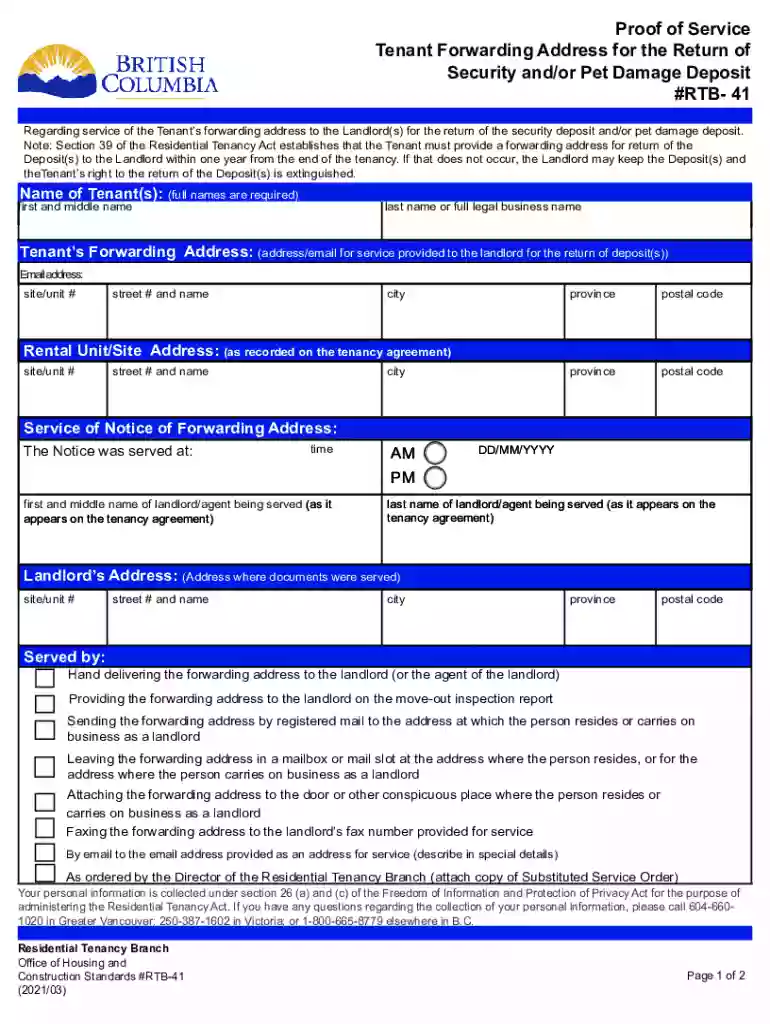
Using a tenancy form might include scenarios where a landlord issues a "Notice to End Tenancy" due to unpaid rent or a tenant requests a modification in terms, such as adding a pet clause. In each case, the relevant form outlines the procedure, timelines, and legal requirements to follow, ensuring that actions taken are officially documented and legally sound. Another common use is when a tenant provides a "Proof of Service" to send their forwarding address for deposit returns, showcasing their practical application in real-world situations.
We've got more versions of the rtb 41 form form. Select the right rtb 41 form version from the list and start editing it straight away!
At DocHub, your data security is our priority. We follow HIPAA, SOC2, GDPR, and other standards, so you can work on your documents with confidence.