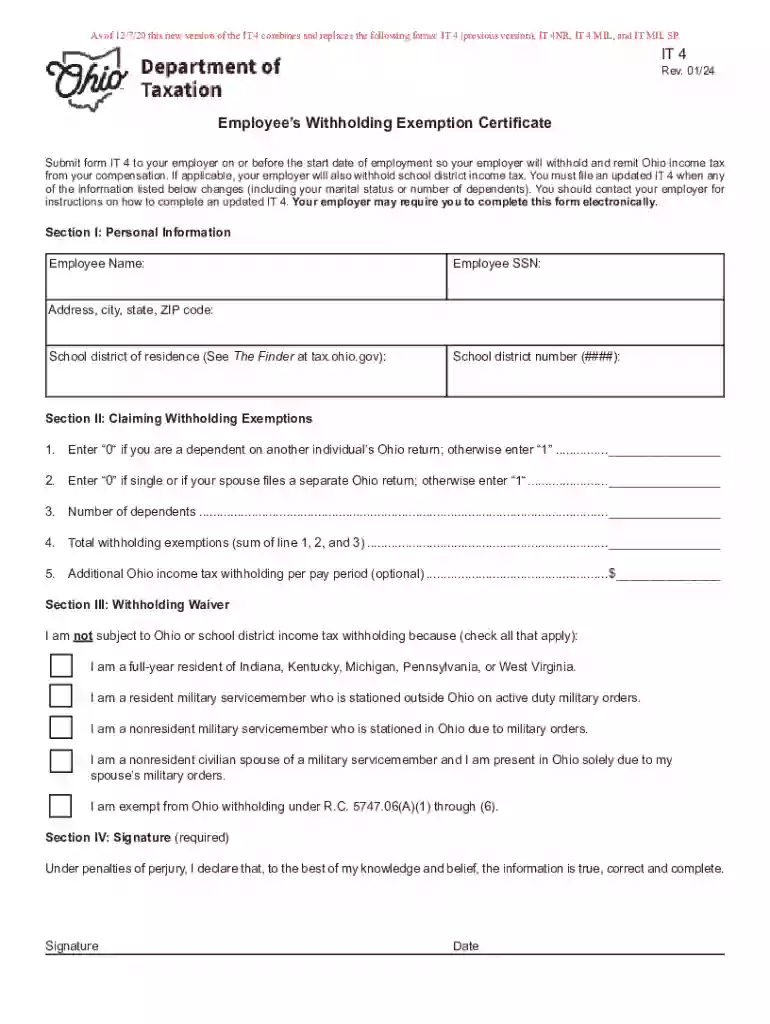
Employee's Withholding Exemption CertificateRevised 2026

Get Form
Employee's Withholding Exemption CertificateRevised Preview on Page 1

Here's how it works

01. Edit your form online
Type text, add images, blackout confidential details, add comments, highlights and more.

02. Sign it in a few clicks
Draw your signature, type it, upload its image, or use your mobile device as a signature pad.

03. Share your form with others
Send it via email, link, or fax. You can also download it, export it or print it out.

Definition & Meaning

The Employee's Withholding Exemption CertificateRevised is a crucial document used by employees in the United States to indicate their withholding preferences for federal, and sometimes state, income taxes. This form allows employees to claim exemptions or allowances that can reduce the amount of taxes withheld from their paychecks. It plays a significant role in ensuring that an employee's tax obligations are met properly throughout the year, avoiding potential underpayment or overpayment situations.

Steps to Complete the Employee's Withholding Exemption CertificateRevised

  1. Personal Information: Start by filling in personal details such as your full name, address, and Social Security number. Ensure accuracy as mistakes can lead to complications.

  2. Filing Status: Indicate your tax-filing status—single, married, or head of household. This status affects the calculation of your withholding amount.

  3. Exemptions and Allowances: Determine the number of exemptions or allowances you are eligible to claim based on your personal situation, including dependents, deductions, and credits.

  4. Additional Withholding: If you wish to have extra tax withheld from your paycheck, specify the additional amount. This can be useful for covering taxes on other income sources.

  5. Signature and Date: Sign and date the form to validate it. Unsigned forms are considered incomplete and may be rejected by your employer.

Who Typically Uses the Employee's Withholding Exemption CertificateRevised

This form is widely used by various employee groups within the US, including:

  • New Hires: When starting a new job, filling out this form is typically a mandatory part of the onboarding process.
  • Current Employees: Existing employees may update the form as their life circumstances change, such as marriage, divorce, or the birth of a child.
  • Seasonal Workers: Those with fluctuating incomes may use this form to adjust their withholdings to match their earnings.
  • Self-Employed Individuals: They may also use this form to plan for estimated tax payments, although they generally file quarterly estimates instead.
decoration image ratings of Dochub

Legal Use of the Employee's Withholding Exemption CertificateRevised

The form legally guides employers in withholding the correct amount of tax from an employee's wages. By law, every employee must submit a valid withholding certificate to their employer, who is then responsible for applying the specified withholding settings. The form should be updated whenever there is a significant change in personal or financial circumstances to comply with tax obligations.

Key Elements of the Employee's Withholding Exemption CertificateRevised

  • Personal Identification: Vital for matching the form to the correct taxpayer.
  • Withholding Specifications: This dictates the amount of federal tax deducted from earnings.
  • Adjustments for Additional Income or Deductions: Allows for more accurate tailoring of tax withholdings to personal financial circumstances.
  • Certification: The employee's signature attesting to the accuracy and completeness of the information provided.

IRS Guidelines

The Internal Revenue Service (IRS) provides detailed instructions on how to fill out the Employee's Withholding Exemption CertificateRevised. These guidelines include step-by-step directions for calculating the appropriate number of allowances and instructions for additional withholding. Following the IRS guidelines ensures compliance with federal tax laws and helps prevent issues during tax filing.

Form Submission Methods

Employees have various methods to submit their completed forms to their employers:

  • Online Submission: Many employers offer an electronic submission option through payroll or HR systems, providing a secure and efficient method of submission.
  • Physical Submission: Employees can also hand in a paper form to the HR department of their organization.
  • Mailing: Though less common, mailing the completed form is an option for remote workers or those without direct access to their employer's facilities.

Penalties for Non-Compliance

Non-compliance with the requirement to submit an accurate Employee's Withholding Exemption CertificateRevised can lead to several consequences:

  • Inaccurate Withholding: You may face a tax bill and potential penalties for underpayment if your employer withholds too little.
  • Interest and Penalties: Additional taxes owed at the end of the year may accrue interest and penalties if not promptly addressed.
  • Audits and Investigations: Providing false information intentionally could trigger an IRS audit or investigation.

Understanding the comprehensive aspects of the Employee's Withholding Exemption CertificateRevised is vital for employees to manage tax obligations effectively and avoid any unnecessary penalties or misunderstandings with employers or the IRS.

be ready to get more

Complete this form in 5 minutes or less

Get form

Got questions?

We have answers to the most popular questions from our customers. If you can't find an answer to your question, please contact us.
Contact us
Exemption from withholding An employee can also use Form W-4 to tell you not to withhold any federal income tax. To qualify for this exempt status, the employee must have had no tax liability for the previous year and must expect to have no tax liability for the current year.
Events during the year may change an employees exemptions, adjustments, deductions or credits he or she may expect to claim when filing a tax return. When this happens, the employee will need to give the employer a new W-4 to adjust his or her withholding.
If an employee qualifies for exemption from withholding, the employee can use Form W-4 to tell the employer not to deduct any federal income tax from wages. This applies only to income tax, not to Social Security or Medicare tax.
Is filing as exempt illegal? No, filing as exempt is not illegal however you must meet a series of criteria in order to file exempt status on your Form W-4. Also, even if you qualify for an exemption, your employer will still withhold for Social Security and Medicare taxes.
How long can I stay exempt without owing taxes? Ans. Exempt status is typically valid for one year, after which youll need to re-evaluate your eligibility. Staying exempt longer than you qualify for can lead to tax debts.

Security and compliance

At DocHub, your data security is our priority. We follow HIPAA, SOC2, GDPR, and other standards, so you can work on your documents with confidence.
Learn more
ccpa2
pci-dss
gdpr-compliance
hipaa
soc-compliance
be ready to get more

Complete this form in 5 minutes or less

Get form

People also ask

Claiming exempt is bad if you are going to owe taxes. Federal tax withholding is used to pay your taxes. If your are underwithheld pay you pay when you file, it you over withold you get a refund.
By placing a 0 on line 5, you are indicating that you want the most amount of tax taken out of your pay each pay period. If you wish to claim 1 for yourself instead, then less tax is taken out of your pay each pay period.

Related links