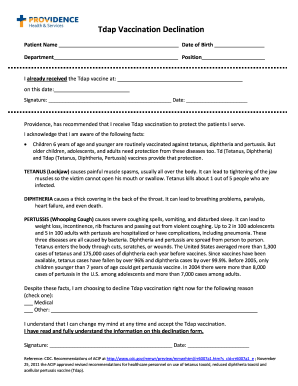
Definition and Purpose of the CNA Program Physical Examination Form
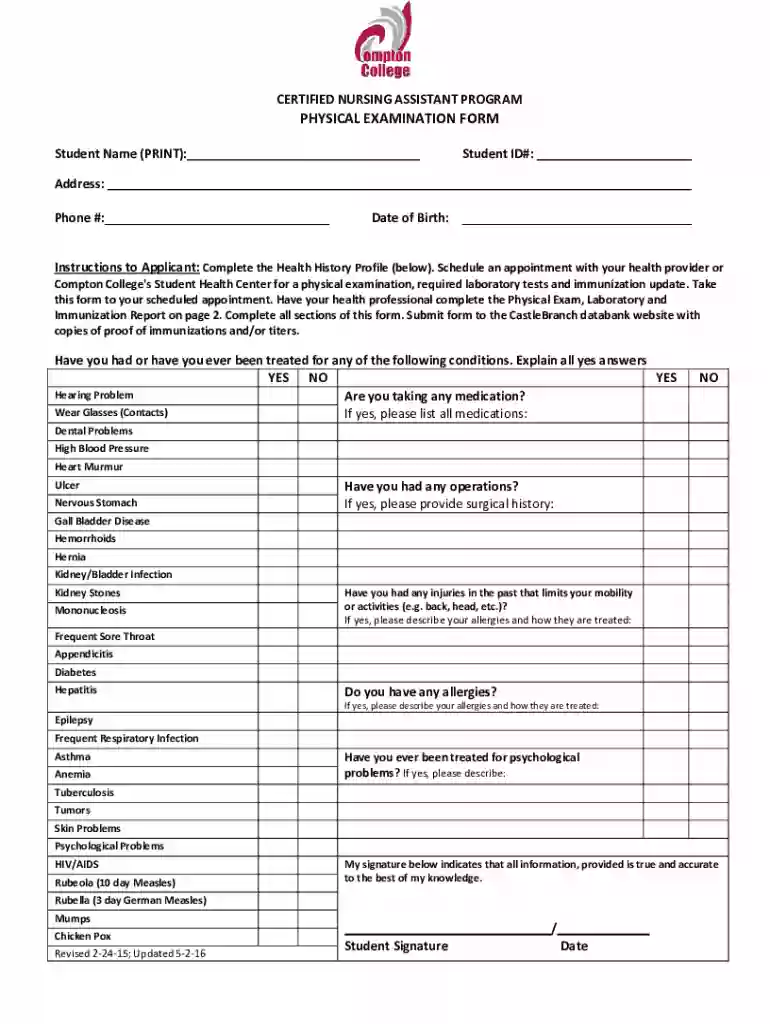
The CNA Program Physical Examination Form serves as a comprehensive assessment tool for students enrolling in a Certified Nursing Assistant (CNA) program. This document ensures that prospective CNAs meet the necessary health and physical requirements to participate in the program, safeguarding both their well-being and the safety of patients they will assist. It includes multiple components to evaluate health history, physical fitness, and immunization status.
Essential Components
- Personal Information: The form begins with fields for basic personal details such as name, date of birth, and contact information.
- Medical History: This section captures the applicant's past medical conditions, surgeries, and ongoing health issues.
- Immunization Records: Verification of immunizations, including measles, mumps, rubella (MMR), and hepatitis B, is required. This ensures compliance with health standards for those in healthcare environments.
- Physical Examination Results: A healthcare provider assesses vital signs and physical capabilities, detailing strengths and any limitations relevant to the CNA role.
Steps to Complete the CNA Program Physical Examination Form
Completing the CNA Program Physical Examination Form is a multi-step process that involves the applicant and a certified healthcare professional. Here is an outline of how to effectively complete the form:
- Fill Out Personal Information: Begin by entering all required personal details accurately. Double-check for any errors that could delay processing.
- Complete Health History: Applicants should provide a complete account of their medical history, ensuring all past conditions and surgeries are documented.
- Schedule a Physical Examination: Arrange an appointment with a licensed healthcare provider to perform the necessary physical exam. Bring the form for them to complete.
- Update Immunization Records: Confirm that all required vaccinations are current and documented. In cases lacking proof, necessary vaccinations might have to be administered.
- Healthcare Provider's Input: During the physical exam, the provider will evaluate vital signs and physical fitness. They will complete and sign the relevant sections of the form.
Important Sections Detailing Applicant Requirements
Each part of the form serves a critical role in assessing the fitness of the applicant for the CNA program:
- Allergy Information: Applicants must list known allergies to medications, foods, or environmental factors to prevent exposure during training.
- Current Medications: Document all current prescriptions or over-the-counter medications to provide a complete health profile.
- Physical Capability Assessment: This involves evaluating the applicant's ability to meet the physical demands of CNA duties, such as lifting or standing for prolonged periods.
Legal Significance of the CNA Program Physical Examination Form
This form has significant legal and compliance implications for both the educational institutions and the students:
- Compliance with Health Regulations: By meeting set health standards, the form helps align the program with state and federal health regulations.
- Liability: Accurate completion of the form protects the educational facility from potential legal issues that could arise if a student were to have an unmanaged health issue while participating.
Who Typically Uses the CNA Program Physical Examination Form?
This form is primarily utilized by prospective students aiming to enter CNA programs, but also widely used by:

- Educational Institutions: Schools and training facilities offering CNA programs require this form to ensure candidates meet health prerequisites.
- Healthcare Providers: Physicians, nurse practitioners, or other authorized medical personnel are involved in completing the examination portion.
State-Specific Rules and Variations
State-specific mandates might dictate unique requirements for the CNA Program Physical Examination Form:
- Immunization Requirements: While immunizations are generally required, specific states may have additional vaccines that are mandatory.
- TB Testing: Tuberculosis testing requirements might differ, with some states mandating skin tests while others require chest X-rays for clearance.
Practical Examples and Scenarios
A new applicant, for instance, who has never filled such a form, might benefit from the following common scenarios:
- Scenario 1: An applicant has a vaccination record missing a required inoculation. They must get the vaccine administered and documented before starting the CNA program.
- Scenario 2: A student with an old sports injury might need additional evaluation to ensure it doesn't hinder their CNA responsibilities, such as patient transfer activities.
Integration with Document Management Platforms
Once the form is completed, platforms like DocHub offer a seamless process for managing and storing the document:
- Digital Submission: Utilize platforms for uploading, sharing, and securely storing your completed form.
- Collaboration Tools: Leverage features like annotation and commenting to highlight areas for revision or review before submission.
- Secure Storage: Documents are encrypted for secure long-term storage, ensuring accessibility across devices without compromising data privacy.