
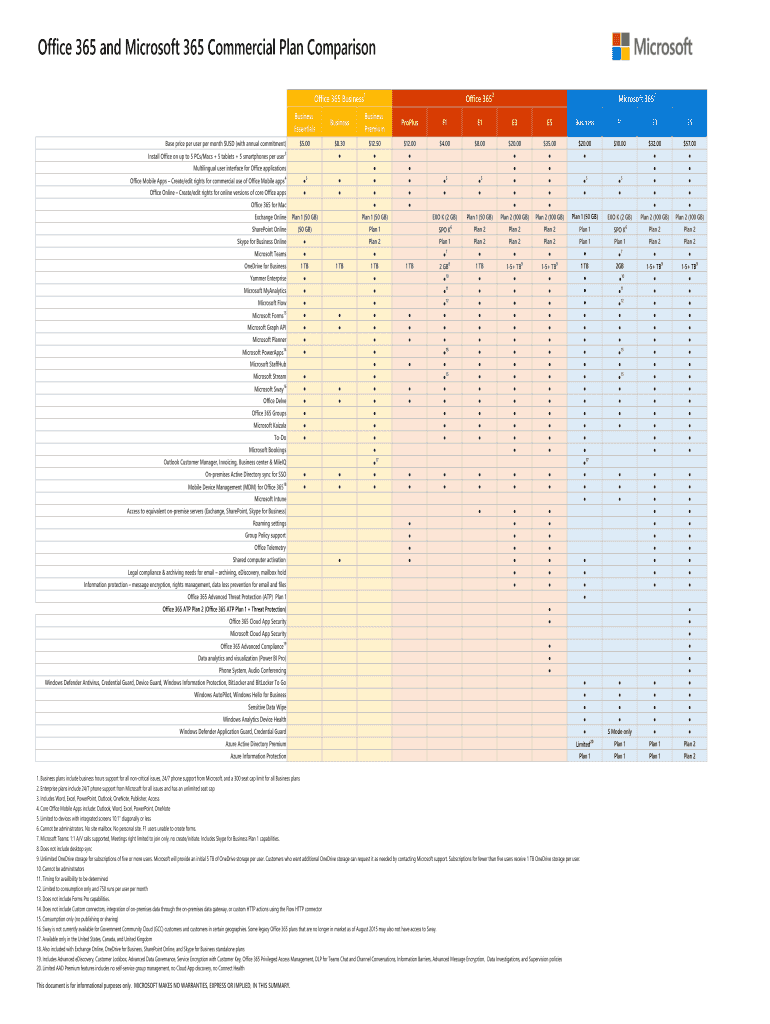







Comparison of Office 365 Plans for Businesses
Office 365 plans cater to a variety of business needs, providing different features based on specific requirements. Here's a detailed comparison to help businesses select the most suitable plan available.
Overview of Office 365 Plans
Office 365 offers several plans tailored to various user needs, primarily split into Business and Enterprise categories. Each plan provides access to Office applications, cloud storage, and collaboration tools, but with varying limits on features and user counts.
-
Business Plans: Targeted at small and medium-sized businesses.
- Plans like Business Basic, Business Standard, and Business Premium encompass essential applications and services.
-
Enterprise Plans: Designed for larger organizations needing advanced features and customization.
- Includes plans such as E1, E3, and E5, offering enhanced security, compliance capabilities, and advanced analytics.
Key Features Across Plans
Different plans offer varying features that may influence organizational requirements:
-
Access to Office Applications:
- Most plans provide online versions of Word, Excel, and PowerPoint.
- Desktop versions are available with Business Standard and above.
-
Cloud Storage:
- All plans include OneDrive cloud storage, with Business plans offering at least one terabyte; Enterprise plans may include additional features.
-
Collaboration Tools:
- Integration with Microsoft Teams and SharePoint varies, particularly where collaboration features enhance productivity among users.
Pricing Structure of Office 365 Plans
Evaluating the pricing models can significantly impact budget considerations:
-
Business Plans:
- Business Basic starts at a lower monthly fee, focusing on essential services.
- Business Standard and Business Premium incorporate more comprehensive features, leading to higher costs.
-
Enterprise Plans:
- Pricing models for E1, E3, and E5 differ, with E5 being the most expensive due to its extensive offerings of advanced security and analytics tools.
Licensing and Management
Understanding licensing structure is crucial for compliance and management:
-
User Licensing:
- Licenses can be assigned to each user, with a cap on user numbers in Business plans compared to more flexible options in Enterprise plans.
-
Management Tools:
- Admin centers vary by plan, offering varying levels of control over user accounts, permissions, and security settings.
Additional Security and Compliance Features
Security is paramount, particularly for sensitive business environments:
-
Data Protection:
- Enterprise plans include Advanced Threat Protection, data loss prevention, and compliance tools for regulated industries.
-
Email Security:
- Options differ in terms of email security, with advanced features available in higher-end plans to mitigate spam and phishing threats.
Integrations and Compatibility
One of the major benefits of Office 365 is its integration with other tools:
-
Integration with Third-Party Applications:
- Office 365 easily connects with various third-party applications, enhancing workflow efficiency.
-
API Access:
- Higher-tier plans provide APIs for developers to create custom integrations, adding flexibility for businesses with unique operational requirements.
Step-by-Step Plan Selection Guide
Selecting the right Office 365 plan can be simplified by following these steps:
-
Assess Business Needs:
- Consider the size of your team, required applications, and anticipated growth.
-
Examine Feature Sets:
- Identify which tools and services are critical based on your business operations.
-
Evaluate Budget:
- Compare pricing structures against available features and select a plan that fits your budget while meeting essential needs.
-
Consider Future Needs:
- Opt for flexibility and scalability; select a plan that can evolve as your business grows.
-
Review Term Length:
- Decide between monthly and annual subscriptions based on financial strategy and commitment level.
Resources for Further Assistance
For organizations seeking an in-depth understanding of specific plans, additional resources include:
-
Official Microsoft Documentation:
- Detailed product information and comparisons can provide accurate data for informed decision-making.
-
Consultation Services:
- Hiring an IT consultant or Microsoft partner for personalized analysis may benefit businesses with complex requirements.
By examining the various aspects outlined in this comparison of Office 365 plans, organizations can make educated decisions that align with their operational objectives and budget constraints.




