




01. Edit your irs mileage reimbursement rules online
Type text, add images, blackout confidential details, add comments, highlights and more.

Type text, add images, blackout confidential details, add comments, highlights and more.

Draw your signature, type it, upload its image, or use your mobile device as a signature pad.

Send internal revenue service standard mileage rate via email, link, or fax. You can also download it, export it or print it out.
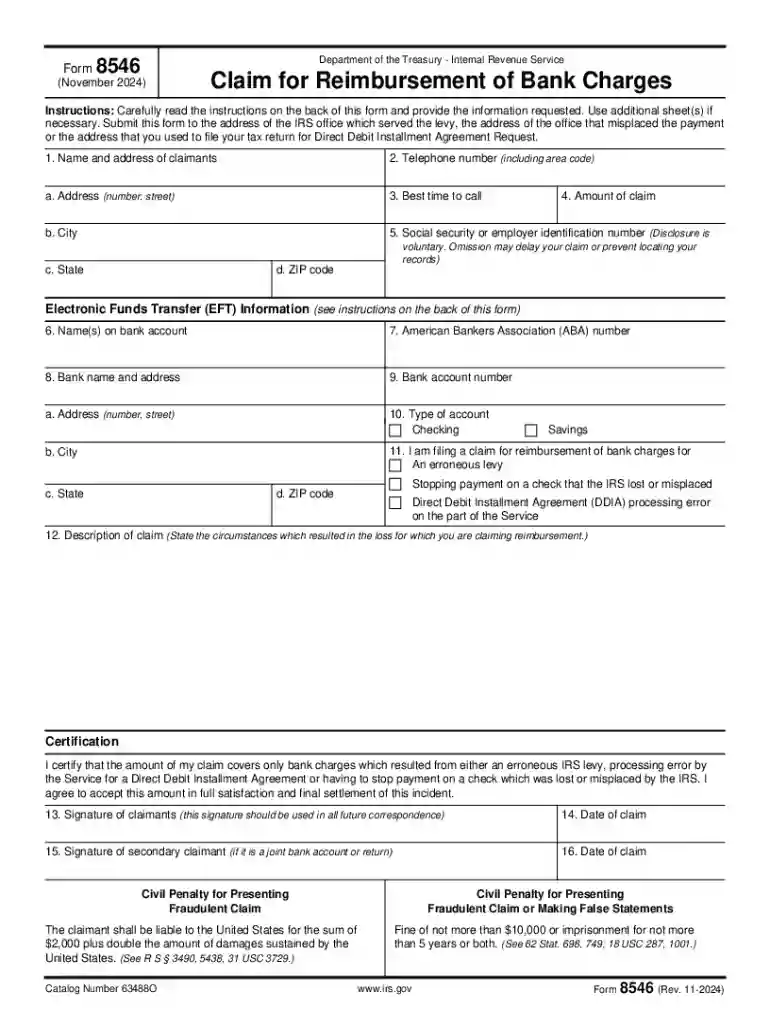
The IRS Form 8546, titled "Claim for Reimbursement of Bank Charges," is a document used primarily by taxpayers to claim a reimbursement for bank charges due to issues like erroneous levies, misplaced checks by the IRS, or errors related to Direct Debit Installment Agreements. This form allows users to request compensation for costs incurred as a result of these errors, which can significantly impact personal and business financial operations. The reimbursement claim can cover up to $1,000 and must be filed within one year of the incident.
Employing Form 8546 involves several critical steps, starting with the accurate documentation of incurred bank charges. Taxpayers must detail all relevant charges and provide supporting evidence as required by the IRS. The completed form, once filled, should be submitted through the appropriate IRS channels with all necessary attachments, ensuring completeness and compliance. Thorough documentation enhances the likelihood of a smooth reimbursement process.
Several terms and conditions apply specifically to the processing of Form 8546 claims. Claimants need to ensure all bank charges are directly related to IRS errors, as unsupported or indirect claims may be rejected. Furthermore, fraudulently filed claims are subject to penalties under IRS regulations. Compliance with form submission deadlines and accuracy are essential to the successful reimbursement of eligible charges.
The IRS provides specific guidelines on how to file Form 8546 effectively. These include ensuring supporting documentation is sufficient to corroborate claims. It is critical to follow detailed instructions on where to submit the form based on residency and the nature of the claim. The IRS offers phone and online support for taxpayers needing assistance with the form.
Claims under Form 8546 must be filed within a strict one-year window from the occurrence of erroneous charges. Late submissions are typically not considered eligible, emphasizing the importance of timely filing. Important dates are often based on the receipt or posting date of erroneous charges, which the taxpayer needs to document thoroughly.
Form 8546 can be submitted via mail, which remains the primary method, ensuring that all documents, receipts, and attachments are included to support your claim. While an electronic submission method via online IRS services could streamline the process, such options depend on annual advancements in IRS processing systems. Ensure to follow any specific mailing instructions for accuracy.
Penalization for non-compliance with Form 8546 can stem from fraudulent claims or failure to provide appropriate, truthful documentation. The IRS applies penalties depending on the severity of the issue, and taxpayers may face fines or further legal action for repetitive or exaggerated claims. Awareness and adherence to all regulatory requirements safeguard against compliance issues.
While physical forms are traditionally mailed to the IRS, digital versions provided through IRS.gov offer convenience in preparation. The digital format ensures neatness, and checks for errors, such as mathematical miscalculations, potentially minimizing delays in processing. However, submission still usually requires postal mailing unless specific IRS guidance allows for an electronic filing pilot or alternative service.
Eligible claimants for Form 8546 include taxpayers directly affected by bank charges resulting from IRS administrative errors. This includes individuals and businesses who can substantiate their claims with the required documentation. Understanding eligibility helps in preparing a successful claim, aligning with IRS procedures and expectations for the reimbursement process.


Form 8546 consists of fields for personal information, detailed accounts of the claim, and sections for signatures and attestations. Key elements must be filled accurately to ensure legitimate claims. Every section serves a distinct purpose, consolidating all pertinent details necessary for IRS verification and approval.
The IRS is the issuing authority for Form 8546, utilizing it in conjunction with other regulatory documents to manage taxpayer disputes over erroneous financial levies. The IRS directs the structure and procedural instructions of the form, ensuring it aligns with federal tax administration standards. While not available through general retailers, Form 8546 can be accessed on the IRS website for authenticity and the most current version verification.
We've got more versions of the irs mileage reimbursement rules form. Select the right irs mileage reimbursement rules version from the list and start editing it straight away!
At DocHub, your data security is our priority. We follow HIPAA, SOC2, GDPR, and other standards, so you can work on your documents with confidence.


The latest versions of IRS forms, instructions, and publications. Form 8546 Title Claim for Reimbursement of Bank Charges Revision Date Nov 2024 Posted Date 12
by T Righetti 2025 Cited by 3 Reg. 8546, 8546. Published by University of Oklahoma College of Law Digital Commons, 2025 Regulatory (last updated July 2, 2024). APPLICATIONS


