







Definition & Meaning
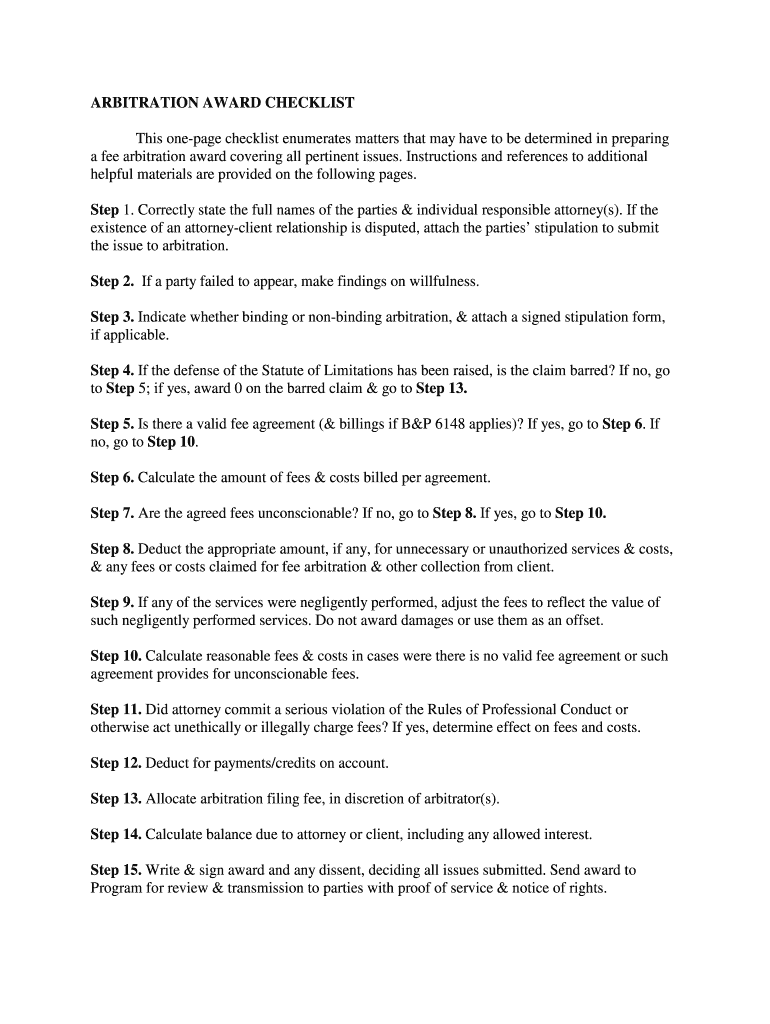
The "Arbitration Award Checklist" is a crucial tool designed to guide arbitrators through the process of preparing a fee arbitration award. This comprehensive checklist ensures that every necessary step is taken into account to facilitate a fair and informed resolution of fee disputes between attorneys and clients. It encompasses elements like determining the validity of the attorney-client relationship, reviewing fee agreements, and calculating associated fees and costs. By following this checklist, arbitrators can assess the situation systematically, ensuring all relevant legal standards and evidence are considered, thereby minimizing potential litigation.
How to Use the Arbitration Award Checklist
Arbitrators should begin by familiarizing themselves with the checklist sections, which detail each aspect of the fee dispute process. To use the checklist effectively:
- Review Each Section: Understand the purpose and content of each listed item.
- Gather Relevant Documents: Ensure all necessary legal documents, contracts, and evidence are collected to support the checklist items.
- Assess Each Checklist Item: Carefully examine each point on the checklist against the gathered documents and evidence.
- Conclude with Informed Decisions: Use insights from the checklist to make fair arbitration decisions that comply with legal standards.
The checklist acts as a roadmap, providing both a sequence of actions and a comprehensive reference for evaluating the particulars of each case.
Key Elements of the Arbitration Award Checklist
The checklist includes several key components indispensable for thorough arbitration:
- Validation of Attorney-Client Relationship: Confirm that a legitimate relationship exists and that all parties consented to the services rendered.
- Fee Agreement Assessment: Review any fee agreements or contracts to ensure clarity and compliance with professional standards.
- Calculation of Fees and Costs: Accurately calculate the fees and any additional costs, factoring in both proposed and contested amounts.
- Investigation of Non-appearance or Misconduct: Address any wilful non-appearance or violations of professional conduct during arbitration proceedings.
These elements ensure a holistic review of the arbitration case, providing clarity and direction to arbitrators.
Steps to Complete the Arbitration Award Checklist
Completing the checklist involves the following systematic approach:
- Initial Review: Analyze the arbitration case to understand the scope and objectives.
- Collect Evidence: Gather all relevant documents, emails, agreements, and notes.
- Follow Checklist Thoroughly: Mark off each item as you validate and complete it.
- Document Findings: Ensure every decision and observation is securely documented for potential future reference.
- Finalize the Award: After meticulous verification, prepare and issue the arbitration award based on checklist conclusions.
This step-by-step process facilitates comprehensive coverage of all arbitration aspects.
Who Typically Uses the Arbitration Award Checklist
The checklist is primarily used by:
- Arbitrators: Individuals tasked with resolving fee disputes.
- Legal Assistants or Paralegals: Professionals supporting arbitrators by preparing documents and organizing evidence.
- Attorneys Engaged in Arbitration: Lawyers who represent clients in fee arbitration cases.
Using the checklist, these individuals are equipped to handle arbitration cases with a systematic and legally thorough approach.


Important Terms Related to the Arbitration Award Checklist
Understanding legal jargon is vital when working with the checklist. Important terms include:
- Fee Arbitration: A form of dispute resolution specifically addressing disagreements over attorney fees.
- Arbitrator: A neutral third party who is authorized to resolve a dispute outside of court.
- Professional Conduct: Standards and guidelines governing attorneys’ behavior and ethical obligations.
Implementing these terms in practice enhances comprehension and ensures adherence to legal norms.
Legal Use of the Arbitration Award Checklist
The checklist is legally employed to ensure that arbitrators' decisions align with both statutory requirements and professional ethics. Legal use involves:
- Ensuring Ethical Compliance: Confirming all actions and decisions conform to professional standards.
- Facilitating Fair Outcomes: Documenting evidence of due process and equitable treatment in fee disputes.
- Minimizing Litigation: Structuring decisions that can withstand scrutiny if challenged in court.
This tool is legally empowering, offering a structured means to resolve disputes amicably.
Examples of Using the Arbitration Award Checklist
Consider scenarios like:
- Dispute Over Hourly Fees: An arbitrator applies the checklist to verify the agreement terms, assess the attorney’s work records, and evaluate the fairness of claimed fees.
- Unclear Retainer Agreements: Usage of the checklist helps determine if the retainer clearly delineates services covered, thus resolving discrepancies in fees.
These examples highlight the checklist’s practical application in real-world arbitration situations.




