







Definition & Meaning
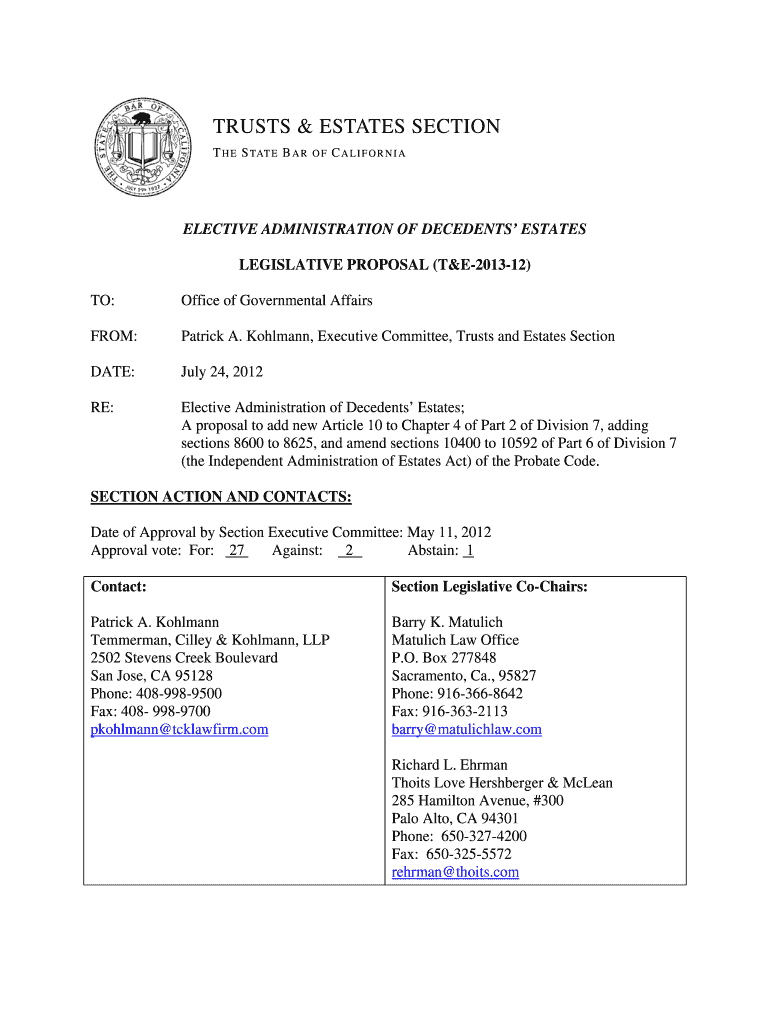
The Trusts and Estates Section of the State Bar of California is a specialized body within the legal profession that focuses on areas pertaining to trusts and estates law. This section is integral for legal practitioners who specialize in estate planning, probate, and trust administration. It provides a forum for lawyers to collaborate, share insights, and advance the practice of trusts and estates law. The section aims to improve legislation, provide continuing education, and advocate for the interests of professionals involved in managing and administering estates and trusts.
How to Use the TRUSTS and ESTATES SECTION - The State Bar of California
Membership in the Trusts and Estates Section of the State Bar of California allows practitioners to take full advantage of the resources provided, including educational programs and legal updates. Members can engage in seminars and webinars that address current legal developments and practices. Use this section to access peer-reviewed publications and legal research tools that help in drafting estate plans or advising clients on probate matters. Participation also includes networking opportunities with other professionals in the field.
Utilizing Networking Opportunities
- Attend annual conferences to meet other estate planners.
- Join online forums and discussion groups.
- Participate in regional meetings or workshops.
Legal Use of the TRUSTS and ESTATES SECTION - The State Bar of California
Legally, the Trusts and Estates Section serves as a pivotal resource for navigating California's complex estate and probate laws. It assists in clarifying elective administration rights and provides guidelines on modifying existing legal frameworks. The section offers resources on legislative developments, ensuring that attorneys remain compliant with the latest amendments to trust and estate law. Engaging with this section helps attorneys adhere to ethical standards and client confidentiality requirements.
Key Legislative Resources
- Elective Administration of Decedents' Estates guidelines.
- Regular updates on amendments to the Probate Code.
- Detailed analyses of new legal precedents affecting estate administration.
Key Elements of the TRUSTS and ESTATES SECTION - The State Bar of California
The Trusts and Estates Section encompasses several key elements crucial to practitioners:
- Education: Offering workshops, seminars, and publications to enhance legal knowledge.
- Legislation: Playing an active role in drafting and consulting on legislative proposals.
- Professional Development: Providing a platform for skill enhancement through various engagement activities.
- Advocacy: Representing the interests of members in policy discussions and legislative reform efforts.
Professional Development Resources
- Peer-reviewed journal access.
- Continuing Legal Education (CLE) credits.
- Mentorship programs for newer attorneys.
Important Terms Related to TRUSTS and ESTATES SECTION - The State Bar of California
Understanding specific terms can be essential for practitioners working within this section. Some pertinent terms include:
- Elective Administration: A process allowing specific beneficiaries to choose between different types of estate administration.
- Probate Code: Legislation governing the process of proving a will's validity and managing estate distribution.
- Pour-Over Will: A testamentary device ensuring transfer of assets into a trust upon the testator's death.
Detailed Explanations of Terms
- Elective Administration: Streamlines estate settlement by reducing court involvement.
- Probate Code: Provides the procedural framework for estate administration.
Steps to Complete the TRUSTS and ESTATES SECTION - The State Bar of California
Completing the processes associated with this section involves several steps:
- Understand the Purpose: Familiarize with the general goals and functions of the section.
- Enroll: Complete the membership application for access to resources.
- Utilize Resources: Access publications, attend seminars, and use research tools.
- Engage with Peers: Participate in forums and networking events to share insights.
State-Specific Rules for the TRUSTS and ESTATES SECTION - The State Bar of California
California's rules and regulations regarding trusts and estates can vary compared to other states. The Trusts and Estates Section provides guidance specific to California's legal environment. Practitioners must be aware of state-specific filing requirements, notice obligations, and bond mandates that apply uniquely within California.
Examples of Unique California Rules
- Filing Requirements: Specific timelines for submitting probate documentation.
- Notice Obligations: Detailed stipulations on notifying beneficiaries.
Who Typically Uses the TRUSTS and ESTATES SECTION - The State Bar of California
The Trusts and Estates Section is predominantly used by:
- Estate Planning Attorneys: Professionals drafting wills, trusts, and other estate documents.
- Probate Lawyers: Individuals managing estate settlements and court procedures.
- Tax Advisors: Those who offer advice on tax implications of estate transfers.


Typical User Scenarios
- An attorney drafting a complex trust arrangement.
- A probate lawyer navigating court-supervised administration.




