







Definition & Meaning
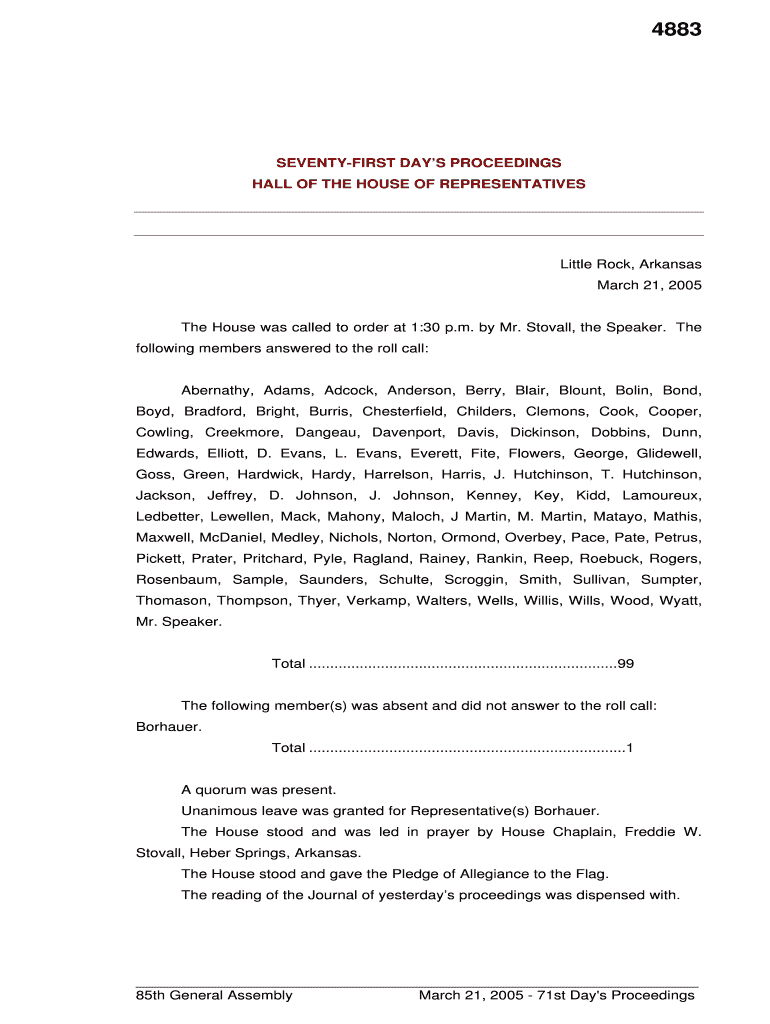
The "4883 SEVENTY-FIRST DAY S PROCEEDINGS HALL OF THE HOUSE OF REPRESENTATIVES Little Rock, Arkansas Marc" form provides a detailed account of the activities and legislative decisions made by the Arkansas House of Representatives on March 21, 2005. This document, representing the 71st day of the 85th General Assembly, includes critical legislative actions, such as roll call results, committee reports, amendments to house bills, and voting outcomes. Understanding this document involves recognizing its role in capturing important civic processes, including the passage of bills related to significant public policies like education and health services.
Key Elements of the Proceedings Document
Understanding the intricacies of the proceedings requires focusing on several fundamental components:
- Roll Call Results: Lists the attendance and voting participation of representatives, providing transparency and accountability for public officials.
- Committee Reports: Summarizes findings and recommendations from various legislative committees, offering insight into subjects under discussion.
- Bill Amendments: Details changes made to proposed legislation, reflecting political compromises and policy refinements.
- Voting Outcomes: Provides results of votes on legislative measures, indicating approval or rejection by the House.
These elements offer a comprehensive view of the legislative landscape and priorities on the specified day.
How to Obtain the Proceedings Document
Obtaining the proceedings document is crucial for researchers, students, and citizens interested in governmental operations. Here are the methods to access it:
- Official Government Websites: Many documents are archived on state legislative websites, providing free access to the public.
- State Archives: Physical copies might be available in state libraries or archives, where one can request access.
- Document Services: Online platforms may offer such documents upon request or subscription, adding convenience for remote access.
Utilizing these sources ensures you can review the legislative processes and decisions comprehensively.
State-Specific Rules
The Arkansas proceedings document is specific to the legislative framework of the state. Key state-specific factors include:
- Legislative Session Details: The document covers specific schedules and operational rules of the Arkansas General Assembly.
- State Regulations: It includes amendments and legislation influenced by Arkansas-specific laws and socio-economic factors.
State-specific regulations must be considered when analyzing legislative intent and regional policy impacts.
Legal Use of the Proceedings Document
The proceedings document serves several legal and academic purposes:
- Historical Research: Provides context for historical analysis of lawmaking trends and legislative priorities.
- Legal Precedent: Used by legal professionals to understand statutory intent and legislative history during case proceedings.
- Public Accountability: Acts as a record for citizens to hold elected officials accountable for their legislative actions.
Understanding its legal utility helps leverage the document effectively for professional and civic purposes.
Steps to Complete the Review
A systematic approach is essential for reviewing the document:
- Read the Introduction: Understand the session context and objectives.
- Analyze Roll Call Data: Identify key participants and their roles.
- Review Committee Reports: Grasp necessary legislative discussions and recommendations.
- Examine Bill Amendments: Note any changes and political strategies involved.
- Summarize Voting Outcomes: Document the final decisions on critical measures.
This procedural review ensures thorough comprehension and efficient knowledge extraction from the document.
Who Typically Uses This Document
The primary users of these documents include:
- Policy Makers: For insights into legislative intent and policy impacts.
- Researchers and Academics: To support studies on political science or public administration.
- Journalists: For reporting on legislative developments and holding public officials accountable.
Understanding the user base helps contextualize the document's relevance and application.
Digital vs. Paper Version
Choosing between digital and paper versions involves considerations of accessibility and usability:
- Digital Version: Offers easy access and search capabilities, often integrated with annotation tools for in-depth analysis.
- Paper Version: Useful for physical archiving and official documentation needs, preferred by institutions requiring tangible records.
Selecting an appropriate format is critical for optimal use based on individual or institutional needs.
Important Terms Related to the Proceedings
Familiarity with specific terminology is vital for understanding the document, including:
- Amendment: An official change proposed to a bill or piece of legislation.
- Committee Report: A document summarizing the deliberations and findings of a legislative committee.
- Roll Call: A recorded vote by assembly members on specific legislative bills.
These terms encapsulate the procedural lexicon necessary for a comprehensive understanding of legislative processes.
Examples of Using the Proceedings Document
Real-world scenarios where this document proves beneficial include:
- Educational Projects: Students analyze legislative activities to understand government functions.
- Legal Cases: Attorneys reference historical votes and amendments for case argumentation.
- Public Engagement: Citizens utilize documented outcomes to influence future legislative participation.
These examples illustrate the document's versatility in educational, professional, and civic settings.




