







Understanding Usufruct and Its Applications
Usufruct is a legal term that designates a right to enjoy the use and advantages of another's property while maintaining its substance. This concept plays a vital role in various legal frameworks, especially within property and inheritance laws.
Definition and Overview of Usufruct
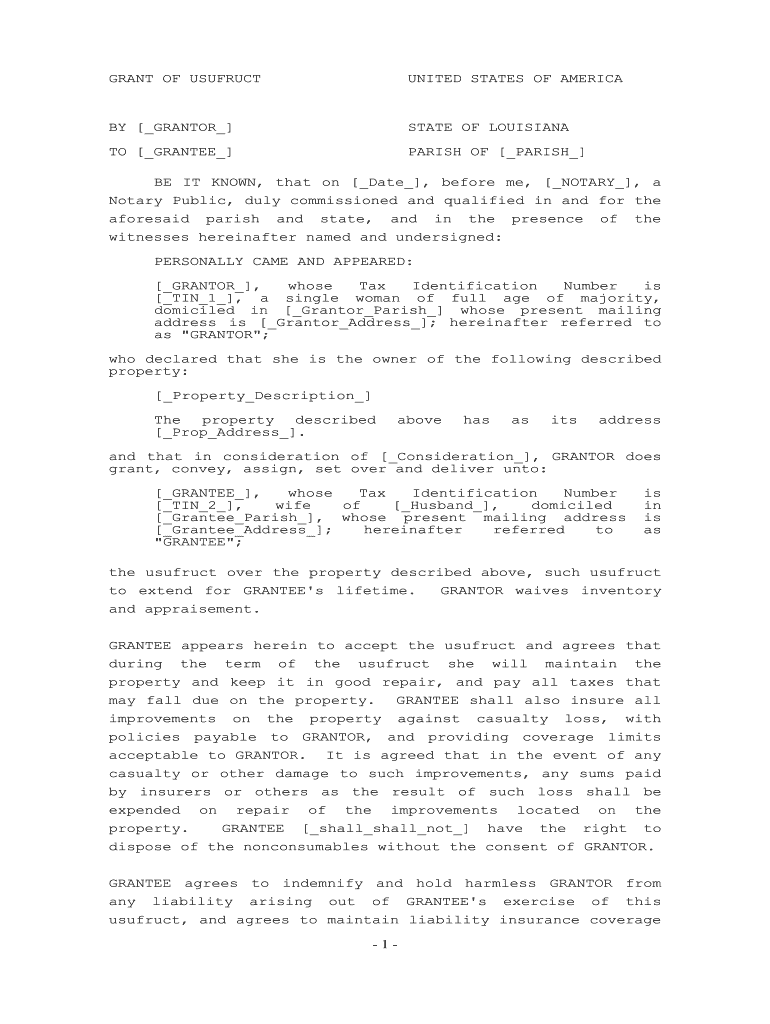
The term usufruct comes from Latin, meaning "use and enjoyment." In the context of property law, a usufruct gives one party (the usufructuary) the right to use and derive benefits from a property that belongs to another (the naked owner). According to Louisiana law, where the concept is particularly prevalent, a usufruct can cover movable and immovable property and is often established through a formal agreement.
- Duration: Usufruct typically lasts for a specified period, often until the death of the usufructuary or another designated term.
- Responsibilities: The usufructuary must preserve the property, pay taxes, and maintain insurance to protect against liabilities. For instance, if the property is a house, the usufructuary is responsible for upkeep and repairs.
Creating a Usufruct Agreement
Creating a usufruct agreement involves drafting a document that outlines the terms of the usufructuary's rights and responsibilities. This agreement can take various formats, including:
- Usufruct Agreement Template: A standard document that includes provisions for the duration, responsibilities, and rights associated with the usufruct.
- Usufruct Contract: A more customized form that addresses specific needs and conditions agreed upon by both parties.
When drafting a usufruct agreement, it's important to include:
- Identification of Parties: Clearly define the grantor (property owner) and grantee (usufructuary).
- Description of the Property: Provide detailed information about the property subject to usufruct.
- Terms of Use: Specify how the property can be used, including any restrictions or obligations.
Termination of Usufruct
Usufruct can be terminated through various means, each with specific legal implications. Common methods include:
- Expiration of Term: A usufruct may be set for a specific time period, automatically terminating upon reaching that date.
- Death of the Usufructuary: In cases where usufruct is established for the lifetime of the usufructuary, it concludes with their death.
- Mutual Agreement: Both parties may agree to terminate the usufruct at any time, requiring a formal amendment to the original agreement.
- Abuse or Neglect: If the usufructuary fails to adhere to the responsibilities outlined in the agreement, the grantor can seek termination.
Practical Examples of Usufruct Usage
Usufruct arrangements are frequently utilized in scenarios like inheritance and family property management. For example:
- A parent may grant a usufruct of their home to a child, allowing the child to live in the house for life while retaining ownership rights to pass it on to other heirs after their death.
- Usufruct may also apply to business assets, where an owner allows a partner to operate and benefit from the business while maintaining ownership control.
Usufruct in Louisiana Law
Louisiana law provides specific definitions and guidelines regarding usufruct, thus distinguishing it from other forms of property rights. The state’s civil code outlines the rights of the usufructuary, including the right to collect rents or profits generated from the property.
- Usufructuary Rights: These rights include collecting income from the property and using it as they see fit, provided it does not diminish the property's value.
- Liabilities: Conversely, usufructuaries must manage ongoing obligations such as property taxes and maintenance costs.
Pronunciation and Common Queries about Usufruct
Understanding terminology can enhance comprehension of usufruct's function in legal contexts. The term "usufructuary" (the person benefiting from usufruct) is typically pronounced as "yoo-zuh-fruhk-chu-er-ee."
Common questions surrounding usufruct include:
- What is a usufruct agreement?: A legal document that specifies the rights and obligations of the usufructuary.
- How can a usufruct be terminated in Louisiana?: Through expiration, mutual agreement, or abuse of terms, as governed by state laws.
Each of these facets illustrates the essential nature of usufruct within property law, emphasizing its significance in managing rights and responsibilities tied to property ownership and use.




