01. Edit your k 1 form online
Type text, add images, blackout confidential details, add comments, highlights and more.

Type text, add images, blackout confidential details, add comments, highlights and more.

Draw your signature, type it, upload its image, or use your mobile device as a signature pad.

Send schedule k 1 via email, link, or fax. You can also download it, export it or print it out.
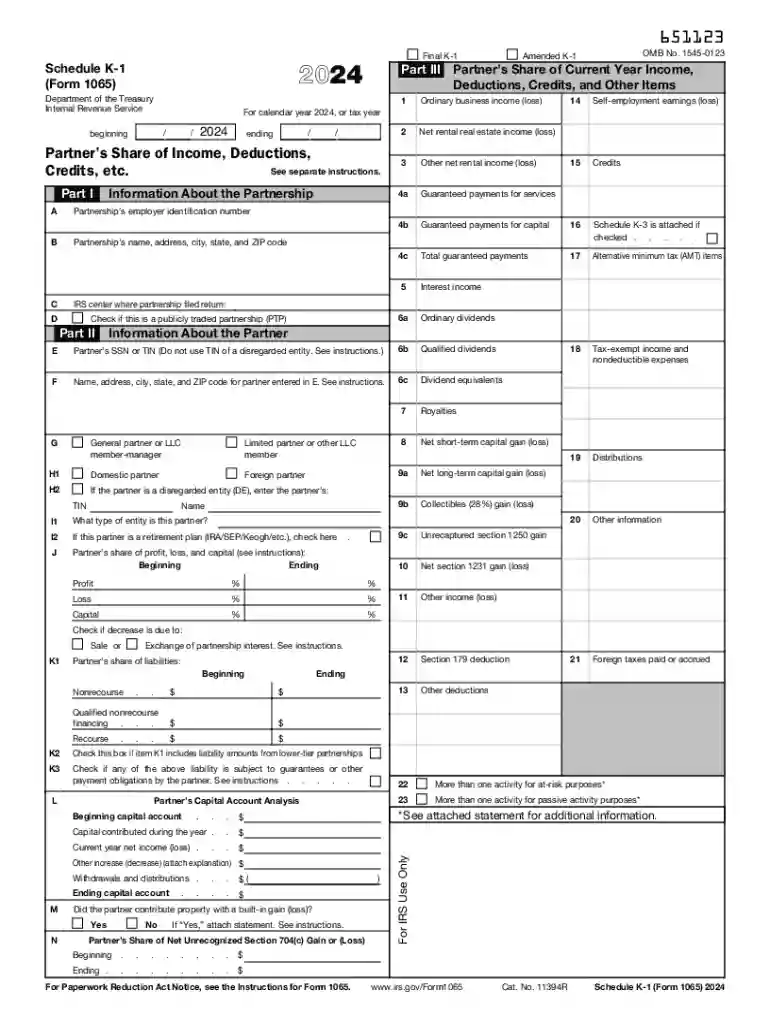
Schedule K-1 Form PTE is a tax document utilized within the framework of pass-through entities, where income is passed directly to owners or investors, bypassing corporate taxation. This form is specifically designed to report each member's share of the entity's income, deductions, credits, and other financial information. Commonly used by partnerships and S corporations, Schedule K-1 Form PTE is an essential tool in preparing individual tax returns, ensuring that all income is reported and taxed appropriately at the individual's rate.
In practical terms, this form provides a transparent breakdown of the taxpayer's proportionate share of financial activities coming from the entity, which must be integrated into their personal income tax filings. This intricate system requires precision, as the values recorded on Schedule K-1 Form PTE directly impact both federal and state tax obligations.
When using the Schedule K-1 Form PTE, it is crucial to understand the detailed instructions associated with filling out the form. The recipient of the Schedule K-1 uses the information provided to complete their respective personal, partnership, or corporate tax returns. Key steps include:
Review Form for Accuracy:
Integrate with Personal Tax Filing:
Consult the IRS Instructions:
Understanding how to properly use the Schedule K-1 Form PTE is fundamental for mitigating errors that may trigger IRS audits or result in financial discrepancies.
Completing the Schedule K-1 Form PTE requires methodical attention to detail, as inaccuracies can lead to significant tax liabilities or penalties. Follow these detailed steps:
Gather Relevant Information:
Complete Preliminary Details:
Report Income and Deductions:
Verify and Sign:
Filling out the Schedule K-1 Form PTE entails a precise approach due to its complexity and potential tax implications.
The Schedule K-1 Form PTE contains several critical sections, each necessary for properly representing a taxpayer's financial position:
Partnership or S Corporation Information:
Partner or Shareholder Information:
Income and Deductions Allocation:
Tax Credits and Additional Items:
These sections ensure that every aspect of individual financial impact is recorded and evaluated for tax purposes.
The IRS provides extensive guidelines for understanding and filling out the Schedule K-1 Form PTE, covering aspects such as:
Definition of Terms:
Filing Instructions:
Handling of Special Situations:
Adhering to IRS guidelines is imperative for ensuring compliance and avoiding penalties.
Understanding the filing timeline for the Schedule K-1 Form PTE is crucial:
Typical Deadline for Partnerships:
Extensions and Amendments:
Missing deadlines can result in late fees, interest charges, and possibly increase the risk of IRS audits.
Schedule K-1 Form PTE is relevant across various entity types:
Limited Liability Companies (LLCs):
S Corporations:
Partnerships:
Each entity type has specific rules and implications for the filing and use of Schedule K-1 Form PTE.
Non-compliance with Schedule K-1 Form PTE filing requirements can result in:
Monetary Penalties:
Interest on Unpaid Taxes:
Increased Audit Risk:
It's important for all parties involved to understand these consequences to ensure compliance and safeguard against unwanted financial penalties.
We've got more versions of the k 1 form form. Select the right k 1 form version from the list and start editing it straight away!
| Versions | Form popularity | Fillable & printable |
|---|---|---|
| 2025 | 2.4 Satisfied (129 Votes) | |
| 2024 | 4.4 Satisfied (34 Votes) | |
| 2023 | 4.9 Satisfied (20 Votes) | |
| 2022 | 4.3 Satisfied (33 Votes) | |
| 2021 | 4.8 Satisfied (85 Votes) | |
| 2020 | 4.4 Satisfied (100 Votes) | |
| 2019 | 4.3 Satisfied (142 Votes) | |
| 2018 | 4.4 Satisfied (236 Votes) | |
| 2017 | 4.3 Satisfied (181 Votes) | |
| 2016 | 4.3 Satisfied (163 Votes) | |
| 2015 | 4.4 Satisfied (728 Votes) | |
| 2014 | 4 Satisfied (54 Votes) | |
| 2013 | 4 Satisfied (80 Votes) | |
| 2012 | 4 Satisfied (26 Votes) | |
| 2011 | 4 Satisfied (60 Votes) |
At DocHub, your data security is our priority. We follow HIPAA, SOC2, GDPR, and other standards, so you can work on your documents with confidence.