







Definition and Purpose
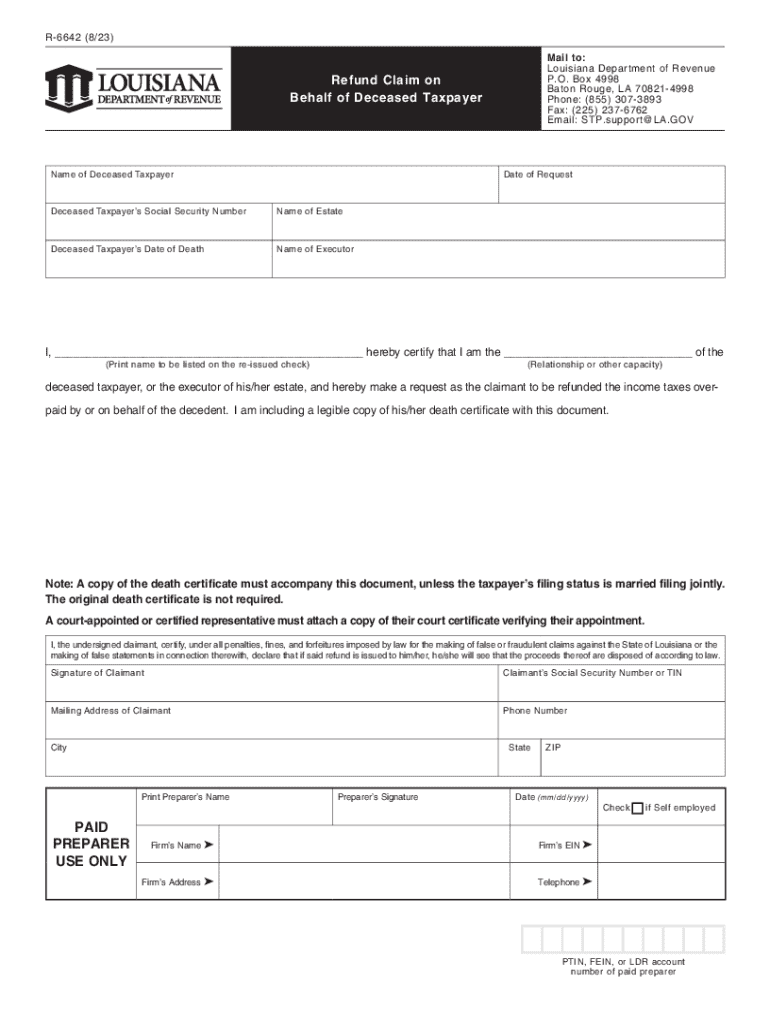
A document requiring "a certificate of death must accompany this document" typically refers to a specific requirement in a legal, financial, or administrative process where confirmation of a person's passing is necessary. This is often part of estate settlement, tax refunds on behalf of a deceased taxpayer, or other legal affairs. The primary purpose of attaching a death certificate is to authenticate the death of an individual so that the concerned process can proceed legally and without dispute.
Deadlines for submission are generally linked to the form's specific purpose. For example, tax-related documents must often align with annual tax deadlines, whereas estate-related forms might have different timelines based on state probate laws.
Steps to Complete This Form
-
Gather Required Documents:
- Secure an official death certificate from the registry of births, deaths, and marriages in the relevant state.
- Collect any additional documents that may be needed, such as court orders or additional forms specified in the instructions.
-
Complete Personal Information:
- Include detailed information about the deceased, such as name, Social Security number, and date of death.
- Provide your relationship to the deceased, ensuring clarity in the representation role you are performing.
-
Certification and Declaration:
- Fill out any declarations or certification clauses that confirm the accuracy of the provided information.
-
Review and Submit:
- Double-check all entries for completeness and accuracy.
- Submit the form along with the death certificate either online, via mail, or in-person as per the form’s guidelines.
Required Documents
There are several documents that frequently accompany this type of form:
-
Official Death Certificate: Required to authenticate the event of death; must be a certified copy.
-
ID Proof: For the person submitting the form, to establish the legality of actions on behalf of the deceased.
-
Court Documentation: Necessary if there are legal stipulations or conditions around the execution of the deceased's affairs.
Legal Use and Compliance
The inclusion of a death certificate ensures that all activities are conducted within the legal framework, preventing fraud and confirming authenticity. The ESIGN Act supports electronic submissions, and statutes within the U.S. legal system provide guidance on handling deceased-related matters. Non-compliance can result in delays or rejection of the form, which could impact financial or legal proceedings.
Important Terms Related to This Requirement
-
Probate: The legal process through which a deceased's will is validated and their estate is distributed.
-
Executor: An individual appointed to execute the wishes outlined in a deceased person's will.
-
Intestate: A term describing a situation where a person dies without leaving a will, impacting how this document's processes may unfold.
IRS and Tax Guidelines
For documents related to tax refunds, the IRS requires that a death certificate accompany specific forms to validate the claimant's rights to the tax return. These guidelines necessitate strict adherence to submission dates and documentation authenticity, as part of broader compliance in tax proceedings.
Filing Methods
Forms that necessitate the certificate of death can often be submitted through multiple channels:
-
Online Portals: Certain federal and state agencies provide digital platforms for document submission.
-
Mail Submissions: Traditional postal submission routes often require additional delivery time.
-
In-Person Submissions: Allows for immediate verification and processing, commonly used for critical or high-value documents.
Who Typically Uses This Form
Executors and administrators of estates generally handle these forms, often tasked with managing the administrative end of a deceased person's affairs. They may include:
- Familial Representatives
- Legal Guardians
- Financial Trustees
Such roles necessitate a comprehensive understanding of the required documents and protocols to ensure smooth execution of duties.


