Rhode Island State Taxes: What Retirees Need to Know in 2026

Get Form
Rhode Island State Taxes: What Retirees Need to Know in Preview on Page 1

Here's how it works

01. Edit your form online
Type text, add images, blackout confidential details, add comments, highlights and more.

02. Sign it in a few clicks
Draw your signature, type it, upload its image, or use your mobile device as a signature pad.

03. Share your form with others
Send it via email, link, or fax. You can also download it, export it or print it out.

Important Terms Related to Rhode Island State Taxes

Understanding the terminology used in Rhode Island state taxes is crucial for retirees. Terms such as "taxable income," "adjusted gross income," and "itemized deductions" play significant roles in determining your tax liability.

  • Taxable Income: The amount of income subject to taxes after accounting for deductions and exemptions.
  • Adjusted Gross Income (AGI): Your total income minus specific deductions, crucial for determining your eligibility for additional tax credits.
  • Itemized Deductions: Deductions for specific expenses, such as medical and dental expenses, which reduce taxable income.

Key Elements of Rhode Island State Taxes for Retirees

Retirees in Rhode Island need to be aware of specific tax elements that might affect their finances:

  • Social Security Benefits: Rhode Island does not tax Social Security benefits for individuals with federal AGI below a certain threshold.
  • Pension Income: Certain pension types may be partially taxable.
  • Property Tax Relief: Eligible retirees may qualify for property tax relief under specific conditions.

Eligibility Criteria

Retirees should ensure that they meet the criteria for filing taxes in Rhode Island. Eligibility generally hinges on income levels, filing status, and residency status.


  • Residency Status: Full-time residents must report all income, while part-time and nonresidents report only income earned within the state.
  • Income Thresholds: Income above Rhode Island’s minimum threshold requires filing a tax return.
decoration image ratings of Dochub

Steps to Complete Rhode Island Tax Forms

Filing your taxes involves a series of logical steps, ensuring accuracy and compliance with state laws.

  1. Collect Required Documents: Gather W-2s, 1099s, and any relevant documentation of income.
  2. Calculate Income: Use your federal return as a reference for income reporting.
  3. Determine Deductions: Evaluate whether standard or itemized deductions offer better benefits.
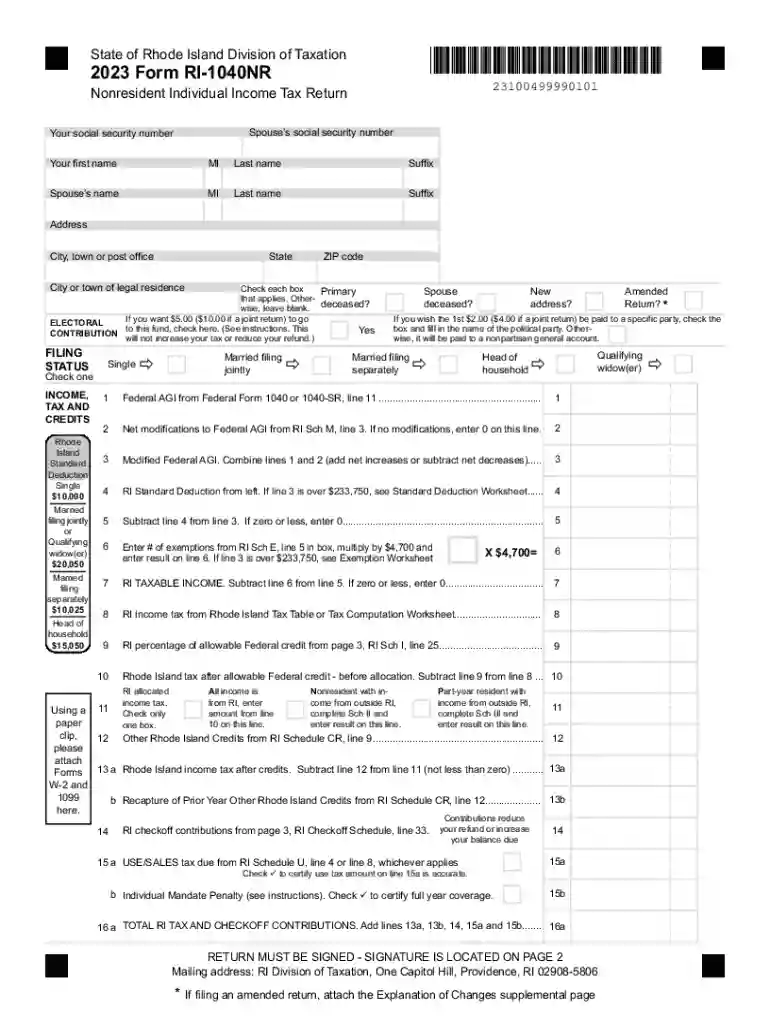
  4. Complete Form RI-1040: Fill out the state-specific form for nonresident or resident returns.
  5. Review and File: Double-check all information for accuracy before submitting.

Filing Deadlines and Important Dates

Retirees must adhere to specific deadlines to avoid penalties. Typically, tax returns are due by April 15, unless extensions are requested.

  • April 15: Standard filing deadline for state taxes.
  • October 15: Deadline for extensions.

Who Typically Uses Rhode Island State Taxes Forms

Rhode Island state tax forms are essential for the following groups:

  • Retirees: Specifically those with diverse sources of retirement income.
  • Part-Time Residents: Individuals who split time between states must file based on the income earned in Rhode Island.

Penalties for Non-Compliance

Failing to file or pay taxes on time can result in penalties and interest charges. It is important for retirees to understand:

  • Late Filing Penalty: Generally a percentage of taxes owed for failing to file a return on time.
  • Interest Charges: Applied on unpaid taxes until full payment is made.

Examples of Using Rhode Island State Taxes Forms

Consider a retiree, John, who receives pension and Social Security income:

  • John’s Income Profile: With an AGI below the threshold, his Social Security benefits are non-taxable in Rhode Island.
  • Pension Consideration: Part of his pension may be taxable, requiring careful reporting.
  • Property Tax Credit: If eligible, John can reduce his effective property tax through state relief programs.

State-Specific Rules for Rhode Island Taxes

Rhode Island follows guidelines that vary from federal tax policies, which retirees should know:

  • Inheritance Tax Exclusion: Check current value exclusions as these can impact estate planning.
  • Credit Programs: Look into the statewide tax credit initiatives that may be available for seniors.
be ready to get more

Complete this form in 5 minutes or less

Get form

Got questions?

We have answers to the most popular questions from our customers. If you can't find an answer to your question, please contact us.
Contact us
State taxation of pension and Social Security income. Meanwhile, 13 states and the District of Columbia fully tax pension income: Arizona. California.
Is retirement income taxable in Rhode Island? Rhode Island taxes most types of retirement income. Income from military pensions is tax-exempt. The exemption amount for pension and annuity income is $20,000, which means some taxpayers may qualify for a total exemption of $40,000.
In some cases, you may not need to file state taxes if you only lived in the state for a short time or if your income falls below a certain level. Some states follow a progressive tax rate, which means the rate increases with income, while others stick to a flat tax rate.
If you have income that is not tax-exempt, you may have to pay income taxes in retirement. For tax year 2024, if you are filing jointly with a spouse who is also 65 or older, you will file a return and pay taxes if your income exceeds $32,300 ($30,750 if your spouse isnt 65).
The qualifications are as follows: You must be 65 years of age or older and/or disabled.

Security and compliance

At DocHub, your data security is our priority. We follow HIPAA, SOC2, GDPR, and other standards, so you can work on your documents with confidence.
Learn more
ccpa2
pci-dss
gdpr-compliance
hipaa
soc-compliance
be ready to get more

Complete this form in 5 minutes or less

Get form

People also ask

Retirement tax rates by income source Social Security income is taxed at your ordinary income rate up to 85% of your benefits; the rest is tax-free. Long-term investment gains, including qualified dividends, are taxed at the long-term capital gains rate (plus a potential 3.8% net investment income tax).
Smart Tip: Taxes on Pension Income Vary by State Its a good idea to check the different state tax rules on pension income. Some states do not tax pension payments while others doand that can influence people to consider moving when they retire.
If you exceed the income threshold for your filing status, then youll be required to file a tax return. This means that your Social Security benefits may be subject to federal and possibly state income tax.

Related links