







Definition & Meaning
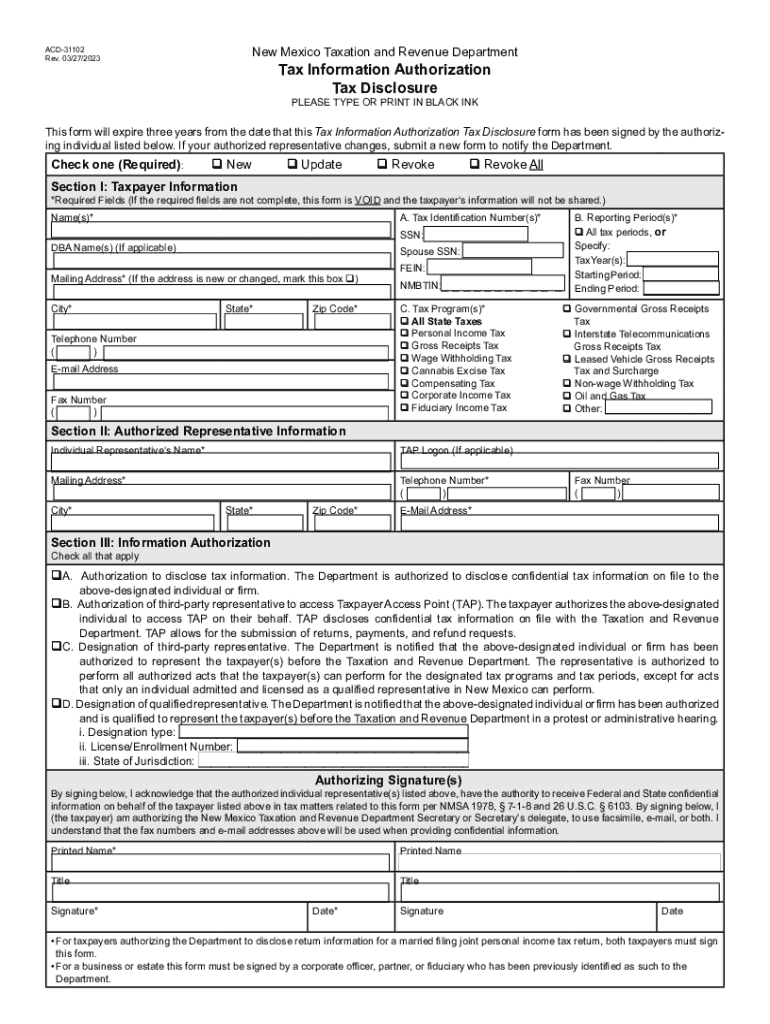
The Tax Information Authorization Tax Disclosure is a legal document that allows taxpayers to grant specified individuals or entities access to their confidential tax information. This authorization is crucial for scenarios where a taxpayer needs someone, like a tax professional or a legal advisor, to represent them in tax-related matters. Through this form, taxpayers can ensure their representative has the necessary information to assist with tax preparation, audits, or queries from the tax authority. The authorization is generally valid for a specified period and can be revoked at the taxpayer's discretion.
How to Use the Tax Information Authorization Tax Disclosure
Using the Tax Information Authorization Tax Disclosure involves a few critical steps. Firstly, taxpayers must accurately complete the form by providing detailed information about themselves and the designated representative. The form includes fields for names, addresses, and identification numbers. Also, taxpayers should specify the type of information that the representative is authorized to access. Once completed, the form must be submitted to the relevant tax authority, ensuring all sections are accurately filled to prevent processing delays. Taxpayers may also need to provide supplementary documentation as requested by the jurisdiction processing the form.
Steps to Complete the Tax Information Authorization Tax Disclosure
- Gather Required Information: Collect all necessary details, including taxpayer identification numbers, representative contact information, and specific tax records involved.
- Fill Out Taxpayer Details: Enter the full name, current address, and social security number or taxpayer identification number of the taxpayer.
- Provide Representative Details: Include the name, address, and other relevant contact information for the individual or firm being authorized.
- Specify Scope and Duration: Clearly define what information the representative has access to and the length of time the authorization is valid.
- Sign and Date the Form: Ensure both the taxpayer and, if required, the representative sign the form to validate the authorization.
- Submit the Form: Deliver the completed form through the accepted submission method (online, mail, or in-person) as stipulated by the local tax authority.
Important Terms Related to Tax Information Authorization Tax Disclosure
- Authorized Representative: The individual or entity given permission to access and use the taxpayer's information.
- Confidential Tax Information: Any data concerning the taxpayer that is protected under tax privacy laws.
- Revocation: The process of canceling the authorization, which the taxpayer can initiate at any time.
- Scope of Authorization: The breadth of information and specific tax years that the authorization covers.
Key Elements of the Tax Information Authorization Tax Disclosure
Certain sections within the Tax Information Authorization Tax Disclosure demand careful attention. These include:
- Taxpayer Details: Comprehensive information about the taxpayer is mandatory.
- Representative Identification: Accurate details about the authorized representative must be provided.
- Scope of Disclosure: The extent of information disclosed defines what data the representative can access.
- Duration: The period the authorization is active impacts the representative's rights.
Legal Use of the Tax Information Authorization Tax Disclosure
This document is legally binding and compliance with its requirements is governed by federal and state laws. It protects the taxpayer's rights by ensuring their information is only disclosed to authorized parties. Moreover, signing this form holds both the taxpayer and the representative to a legal agreement about what information can be disclosed, requiring strict adherence to the stated terms. Misuse or unauthorized disclosure can result in penalties or legal consequences.
Why Should You Use the Tax Information Authorization Tax Disclosure
Using this form is advantageous because it facilitates smoother interactions with tax authorities via a designated representative. This is particularly useful for those unable to manage their tax affairs personally, such as individuals with complex tax situations or businesses requiring professional tax services. It assures that representatives have the official backing needed to access relevant tax information efficiently and legally.
Who Typically Uses the Tax Information Authorization Tax Disclosure
The form is primarily used by individuals who require third-party assistance with tax matters. This includes self-employed individuals seeking help with complex filings, businesses that need their accountants to liaise directly with tax authorities, and anyone involved in tax disputes or audits. It is also utilized by tax professionals and attorneys who need authorized access to their clients’ tax information. The form's scope makes it integral for ensuring proper representation across various tax-related engagements.


Required Documents
The submission of the Tax Information Authorization Tax Disclosure might require additional documents depending on the jurisdiction. Commonly requested elements include government-issued IDs for identity verification and, if applicable, documents demonstrating the authority of the person or firm being authorized (such as a power of attorney). Failure to submit these along with the form can impede processing or result in rejection. Ensuring all requisite documentation accompanies the form is necessary for a streamlined authorization process.




