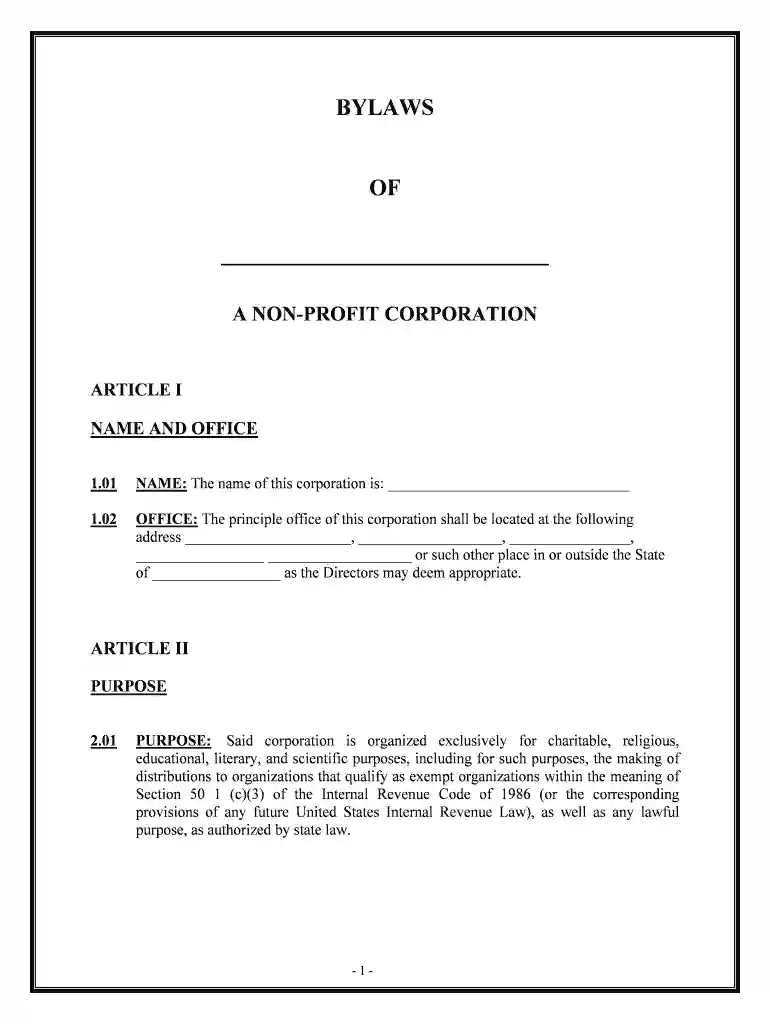
Bylaws nonprofit organization 2026

Get Form
501c3 bylaws template Preview on Page 1

Here's how it works

01. Edit your 501c3 bylaws template online
Type text, add images, blackout confidential details, add comments, highlights and more.

02. Sign it in a few clicks
Draw your signature, type it, upload its image, or use your mobile device as a signature pad.

03. Share your form with others
Send nonprofit bylaws template word via email, link, or fax. You can also download it, export it or print it out.

Definition and Meaning of Bylaws for Nonprofit Organizations

Bylaws for a nonprofit organization are formal written rules that govern the internal management and operations of the organization. These regulations serve as the foundation of the organization, outlining how it will operate, including the responsibilities of its members, the structure of its board of directors, and the processes for meetings and decision-making. Bylaws typically cover essential aspects such as:

  • Purpose of the Organization: Clearly defines the mission and objectives the nonprofit aims to accomplish.
  • Membership Regulations: Specifies the criteria for membership, rights, and obligations of members.
  • Board of Directors Composition: Outlines the number of directors, the election process, terms, and the roles and responsibilities of board members.
  • Meetings Protocols: Details the frequency of meetings, quorum requirements, and procedures for conducting meetings.
  • Amendment Process: Describes how amendments to the bylaws can be proposed and adopted.

These bylaws are crucial as they not only serve as a roadmap for internal governance but also ensure compliance with state and federal regulations, specifically when applying for tax-exempt status under Section 501(c)(3).

Key Elements to Include in Nonprofit Bylaws

A well-structured set of bylaws typically includes several key elements crucial for effective governance. Each component enhances the clarity and operability of the nonprofit organization:

  • Name and Location: The legal name and principal office address of the organization.
  • Mission Statement: A concise statement reflecting the organization's purpose and goals.
  • Board Composition: Details about the board structure, including the minimum and maximum number of board members, their powers, and the process of their election or appointment.
  • Officers' Duties: A section that outlines the specific roles and responsibilities of the board officers (such as President, Secretary, Treasurer).
  • Membership Provisions: Information about different classes of members, if applicable, the rights, obligations, and methods for membership termination.
  • Financial Provisions: Clarification regarding the fiscal year, budgets, audits, and financial management practices.
  • Conflict of Interest Policy: A statement that describes how conflicts of interest will be managed to maintain transparency.
  • Amendment Procedures: A process for how changes to the bylaws can be proposed, deliberated, and approved.

These elements ensure the organization's operations are transparent, accountable, and guided by a clear governance framework.

How to Use Bylaws in Nonprofit Organizations

Understanding how to effectively utilize bylaws within a nonprofit organization is essential for ensuring good governance. Here’s how bylaws can be put into practice:

  1. Referencing Governance Issues: Bylaws should be consulted when addressing governance challenges, such as disputes between board members or questions about the responsibilities of officers.
  2. Guiding Meetings: During board meetings, bylaws dictate the process for conducting these meetings, including how decisions are made and how members can participate.
  3. Documentation of Procedures: The bylaws serve as a reference for documenting the organization's procedures, ensuring consistency and adherence to established protocols.
  4. Compliance with Regulations: They ensure the organization remains compliant with state laws and IRS regulations regarding nonprofit operations.
  5. Change Management: Bylaws facilitate change management by clearly outlining the procedures for amending rules, thereby ensuring adaptability in governance.

Usage of bylaws is a foundational component of effective nonprofit management, influencing operations at all levels.

Legal Use and Compliance Requirements for Nonprofit Bylaws

The legal standing of bylaws in nonprofit organizations is significant, as these documents help fulfill both state law and IRS requirements. Understanding legal compliance is vital for maintaining the organization’s tax-exempt status:

  • State Requirements: Most states require nonprofits to adopt and submit bylaws when filing for incorporation. These bylaws must comply with state nonprofit corporation laws, ensuring that the organization follows established regulations for governance and transparency.
  • IRS Compliance: For organizations applying for tax-exempt status under section 501(c)(3), compliance with IRS guidelines is critical. Bylaws should clearly articulate the organization’s mission, restrict earnings to non-profit purposes, and delineate procedures for handling conflicts of interest.
  • Amendments: Any amendments made to the bylaws need to be documented and followed according to the amendment procedures established in the bylaws. This ensures legal validation of organizational changes over time.
  • Record Keeping: It is advisable to keep a copy of the bylaws with other important organizational documents, regularly reviewing and updating them as necessary to reflect current practices.

Adherence to legal requirements through properly structured bylaws not only promotes organizational integrity but also helps mitigate risks associated with legal disputes.

Obtaining and Formatting Nonprofit Bylaws

Obtaining a bylaws template specific to nonprofit organizations can simplify the process of establishing solid governance structures. Organizations can gain access to templates through various means:

  • Online Resources: Many organizations, including legal aid entities and nonprofit support groups, offer free nonprofit bylaws templates in multiple formats such as Word or PDF. Examples include free nonprofit bylaws template PDFs or customizable templates for various nonprofit types, including 501(c)(3) organizations.
  • Creating Your Own: Nonprofits can create their bylaws by following specific guidelines and best practices tailored to their mission, structure, and state regulations. Utilizing examples of sample bylaws for nonprofit organizations can provide a foundational structure.
  • Legal Assistance: Consulting with attorneys specializing in nonprofit law can ensure that the bylaws meet required legal standards and reflect the organization's needs accurately.
  • Software Tools: Editing software, like word processors or document management platforms, can streamline the process of drafting and formatting bylaws. This is especially useful for organizations wishing to customize their bylaws to suit specific operational needs.

When drafting bylaws, it is essential to follow a clear structure and maintain consistency in language and format to enhance clarity and usability.

be ready to get more

Complete this form in 5 minutes or less

Get form

Got questions?

We have answers to the most popular questions from our customers. If you can't find an answer to your question, please contact us.
Contact us

Yes, electronically drawing your signature is appropriate, but only if you use a tool that complies with industry regulations and policies. Try DocHub, which guarantees eSignature validity under ESIGN and UETA requirements. All you need to approve your non profit bylaws template electronically is an account with DocHub and an internet connection. When you open your paperwork in our editor, click Sign and choose the Draw tool.

Using a swift editing platform like DocHub, you do not need anything but a browser and connection to the internet to edit your free bylaws template for nonprofit organization pdf online quickly. Add your file or find the relevant form in DocHub’s catalog, open our editor with a single click, and finish it digitally. To edit your forms anytime, sign up a free profile with DocHub.

Security and compliance

At DocHub, your data security is our priority. We follow HIPAA, SOC2, GDPR, and other standards, so you can work on your documents with confidence.

Learn more
ccpa2
pci-dss
gdpr-compliance
hipaa
soc-compliance
be ready to get more

Complete this form in 5 minutes or less

Get form