




01. Edit your 2024 schedule a online
Type text, add images, blackout confidential details, add comments, highlights and more.

Type text, add images, blackout confidential details, add comments, highlights and more.

Draw your signature, type it, upload its image, or use your mobile device as a signature pad.

Send schedule a via email, link, or fax. You can also download it, export it or print it out.
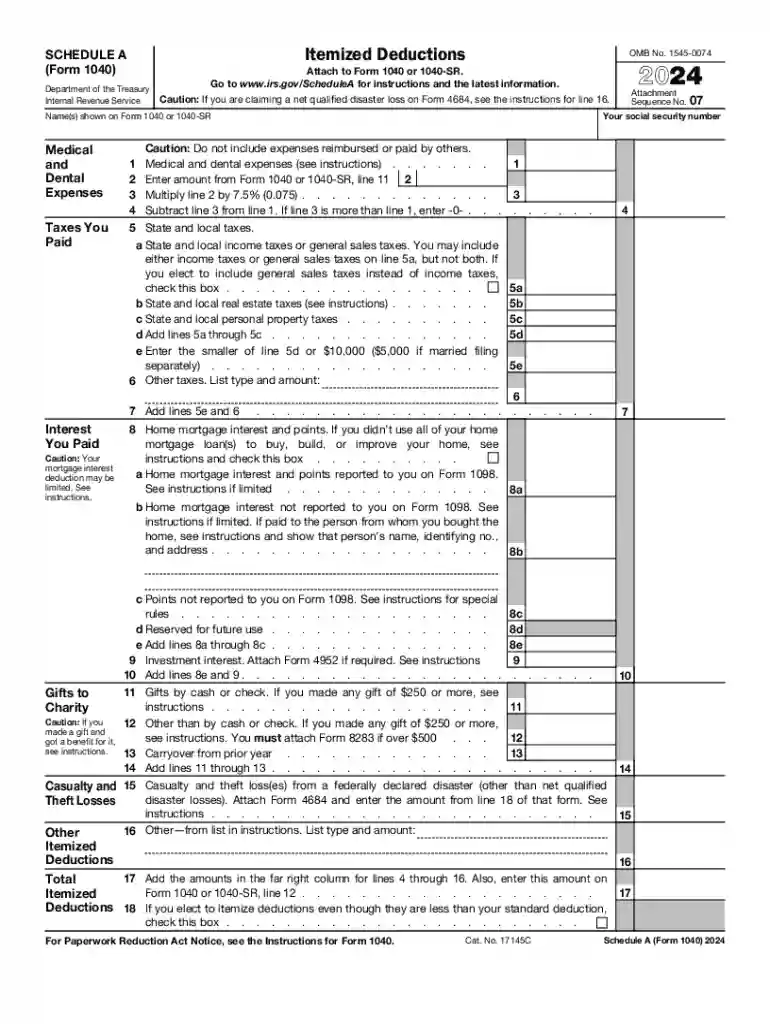
Schedule A (Form 1040) is a critical component of the U.S. federal income tax return for individuals opting to itemize their deductions instead of taking the standard deduction. Itemized deductions allow taxpayers to reduce their taxable income by listing qualifying expenses, potentially resulting in a lower overall tax liability. The 2024 form includes several sections, such as medical and dental expenses, taxes paid, interest paid, gifts to charity, casualty and theft losses, and other miscellaneous deductions. Each category requires specific documentation and adherence to IRS regulations to ensure accuracy.
Taxpayers may itemize medical and dental expenses incurred for themselves, their spouse, or dependents. Only expenses exceeding 7.5% of a taxpayer's adjusted gross income (AGI) are deductible. Examples of allowable expenses include payments for doctors, dental work, prescription medications, and medical equipment. It's crucial to maintain thorough records, as the IRS may request proof of payment.
Using Schedule A involves detailed documentation of eligible expenses and adherence to IRS guidelines. Begin by gathering receipts, bills, and financial statements for potential deductions. Evaluate each category to determine eligibility based on personal financial activity throughout the year. Using tax software or consulting a tax professional can facilitate accurate completion and ensure compliance with IRS requirements.
This section covers state and local income taxes, real estate taxes, and personal property taxes. Taxpayers can choose between sales taxes and income taxes for deduction but not both. Documentation such as property tax bills and income tax records is vital for maximizing deductions and avoiding errors.
Gather Necessary Documents: Collect all relevant financial documents, including medical bills, property tax statements, and charitable donation receipts.
Calculate Itemized Deductions: Total up eligible expenses in each section of the form.
Compare to Standard Deduction: Verify whether itemizing offers a greater tax benefit than taking the standard deduction.
Complete the Form Accurately: Enter the collected information precisely on Schedule A.
Review for Accuracy: Double-check calculations and entries for potential errors or omissions.
Interest deductions may include home mortgage interest and investment interest. Taxpayers need Form 1098 from their mortgage lender and records of interest paid to qualify. Certain limitations apply, such as the amount of acquisition debt used to buy or improve a home.
Several critical components of Schedule A contribute to a comprehensive tax return:
Taxpayers must keep proper documentation for all charitable contributions. For cash donations, a bank record or receipt from the organization is necessary. Non-cash contributions must be appraised if valued over a certain amount, typically $500.
The deadline for submitting Schedule A alongside Form 1040 is the same as the federal income tax deadline, typically around April 15. Filing extensions are available but require proactive submission of Form 4868 to qualify. Late submission could result in penalties and interest on owed taxes.
Understanding certain terms used throughout the form is essential for accurate completion:
Individuals with substantial qualifying expenses that exceed the standard deduction amount benefit from using Schedule A. These often include homeowners, taxpayers in high-tax states, or individuals with significant medical expenses.



We've got more versions of the 2024 schedule a form. Select the right 2024 schedule a version from the list and start editing it straight away!
| Versions | Form popularity | Fillable & printable |
|---|---|---|
| 2025 | 4.1 Satisfied (27 Votes) | |
| 2024 | 4.9 Satisfied (59 Votes) | |
| 2023 | 4.9 Satisfied (45 Votes) | |
| 2022 | 4.6 Satisfied (38 Votes) | |
| 2021 | 4.8 Satisfied (181 Votes) | |
| 2020 | 4.3 Satisfied (81 Votes) | |
| 2019 | 4.1 Satisfied (40 Votes) | |
| 2018 | 4.2 Satisfied (65 Votes) | |
| 2017 | 4.4 Satisfied (61 Votes) | |
| 2016 | 4.4 Satisfied (673 Votes) | |
| 2015 | 4 Satisfied (35 Votes) | |
| 2014 | 4.3 Satisfied (52 Votes) | |
| 2013 | 4 Satisfied (21 Votes) | |
| 2012 | 3.9 Satisfied (29 Votes) | |
| 2010 | 4 Satisfied (56 Votes) |
At DocHub, your data security is our priority. We follow HIPAA, SOC2, GDPR, and other standards, so you can work on your documents with confidence.
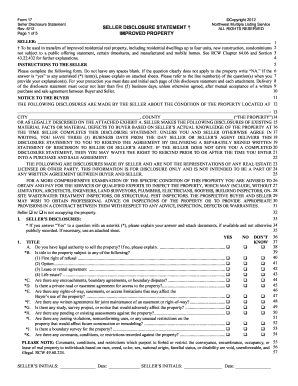


Jan 21, 2026 1040 Schedule A Itemized Deductions Instructions. Individual Income Tax Return. You must file your return by Monday, April 15, 2024 1040
Jun 5, 2026 You should itemize deductions on Schedule A (Form 1040), Itemized Deductions if the total amount of your allowable itemized deductions isRead more


