




01. Edit your form online
Type text, add images, blackout confidential details, add comments, highlights and more.

Type text, add images, blackout confidential details, add comments, highlights and more.

Draw your signature, type it, upload its image, or use your mobile device as a signature pad.

Send it via email, link, or fax. You can also download it, export it or print it out.
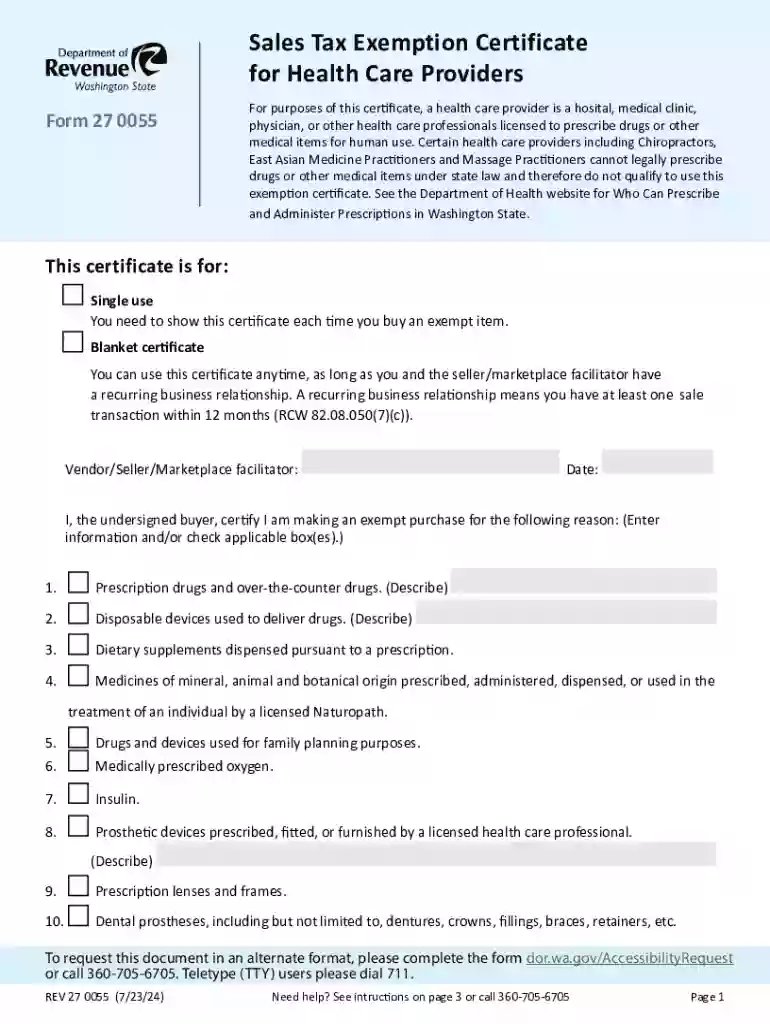
The Sales Tax Exemption Certificate for Health Care Providers is a form utilized by eligible healthcare professionals in Washington State to make purchases of specific medical items and services without being subject to sales tax. This certificate attests that certain transactions are tax-exempt, directly benefiting healthcare providers by reducing overall costs on critical supplies. It is specifically meant for licensed practitioners who are authorized to prescribe medications. However, it excludes certain providers, such as chiropractors and massage practitioners. Such specificity ensures that only qualifying professionals benefit from the exemption.
Eligibility for the Sales Tax Exemption Certificate is strictly defined, centered on healthcare providers who are licensed to prescribe medication. This includes medical doctors, osteopaths, dentists, and similar professionals. One must hold a valid medical license and be actively practicing in the healthcare field to qualify. Providers excluded from eligibility, like chiropractors or massage therapists, must adhere to the standard taxation laws applicable to their practice. This targeted eligibility is designed to assist practitioners involved in direct medical treatment regimens involving prescribed medications.


To obtain the Sales Tax Exemption Certificate, eligible healthcare providers must complete and submit the appropriate application form to the relevant state department. The application requires detailed information, including the provider's licensing details and practice information. Applicants should review the state guidelines to ensure all information is correctly provided. Processing timelines can vary, but the state will typically provide an approval or denial notice within a specified timeframe.
The Sales Tax Exemption Certificate encompasses several key elements vital for its proper execution. These include the healthcare provider's identification details, licensing information, a precise description of the exempt items or services, and any restrictions on usage. The document must strictly adhere to the state-specific requirements to maintain its validity. Understanding these key elements ensures compliance and facilitates the accurate application of the exemption where applicable.
Examples of purchases that can be made using this certificate include medical supplies such as bandages, diagnostic equipment, or prescription drugs used in patient care. A hospital in Washington State, for instance, might use the certificate to buy sterile gloves and wound dressings needed for surgical procedures without incurring sales tax. Such exemptions can lead to significant cost savings, directly impacting the operational budgets of healthcare facilities.
The lawful use of the Sales Tax Exemption Certificate is governed by state regulations and is strictly intended for transactions that meet the outlined criteria. Misuse of the certificate, such as applying it to non-exempt items or for personal purchases, can result in penalties, including fines or loss of exemption privileges. Practitioners are obliged to keep detailed records of exempt purchases to justify them during audits.
While this guide primarily focuses on Washington State, it is important to recognize that rules surrounding sales tax exemptions can vary significantly from state to state. In Washington, the exemption is tightly coupled with prescribing credentials, and the rules underscore rigorous compliance with both state-specific medical and tax laws. Providers in other states should consult their local Department of Revenue for guidance tailored to their regional regulations.
Engaging in non-compliant behaviors with this certificate can lead to serious repercussions. Penalties for misuse or fraudulent activities can include monetary fines, legal action, and revocation of the ability to use the exemption certificate. Healthcare providers must conduct their exempt transactions with full adherence to legal stipulations to avoid such penalties. This necessitates a thorough understanding and execution of the rules governing the exemption's utilization.
We've got more versions of the Sales tax exemption certificate for health care providers form. Select the right Sales tax exemption certificate for health care providers version from the list and start editing it straight away!
At DocHub, your data security is our priority. We follow HIPAA, SOC2, GDPR, and other standards, so you can work on your documents with confidence.




The following is a suggested exemption certificate to be issued to purchase qualified medical products, supplies, or devices exempt from tax at the time of
Jul 10, 2017 See our Sales Tax Exemption Certificate for Health Care Providers (PDF). Clinics responsibility to send and pay deferred sales or use tax.Read more


