






Definition & Meaning
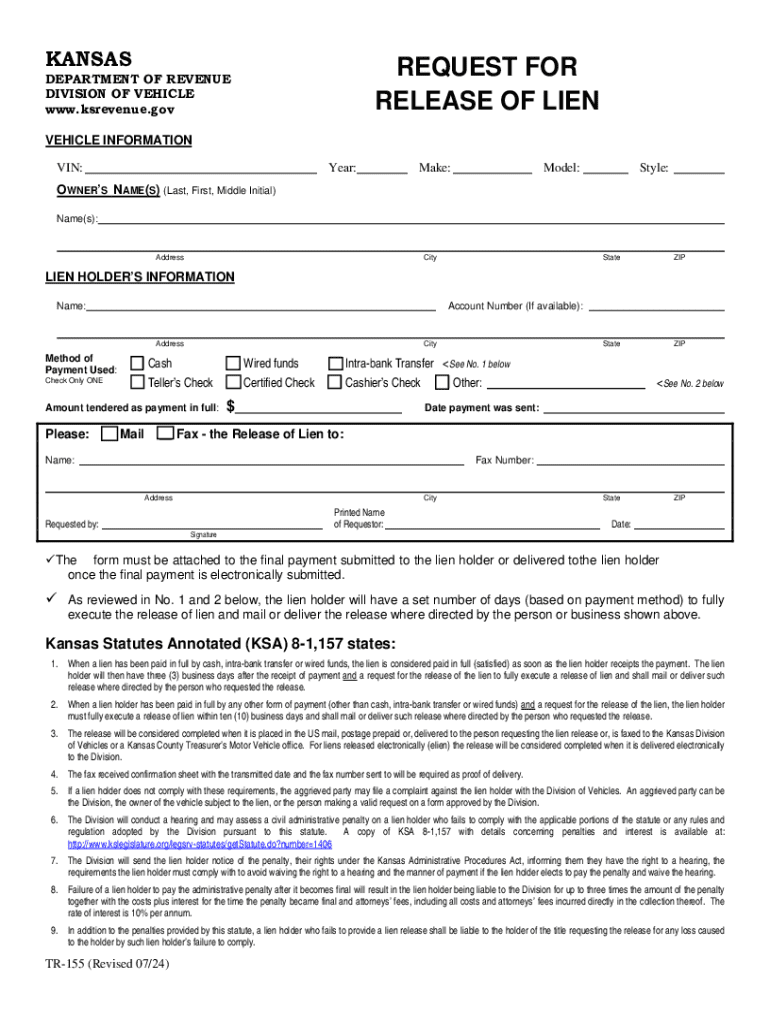
The TR-155 Lien Release form is a crucial document used to officially cancel a lien on a vehicle title, indicating that the lienholder no longer has a legal claim over the vehicle. This form is typically issued by the Kansas Department of Revenue, Division of Vehicles, and is necessary to clear the title of a vehicle once the loan or lien is fully paid off. Completing and submitting the TR-155 Lien Release signifies that the vehicle owner has met all financial obligations to the lienholder, allowing them to transfer or sell the vehicle without any legal encumbrances.
How to Use the TR-155 Lien Release
The TR-155 Lien Release form is used by vehicle owners to document the release of a lien from their vehicle title. Here are the general steps for using this form:
-
Obtain the Form: Ensure you have the correct TR-155 Lien Release form, which you can typically find on the Kansas Department of Revenue website or by contacting their office.
-
Complete the Vehicle Information: Fill in the necessary vehicle details, including the make, model, year, and vehicle identification number (VIN).
-
Provide Lienholder and Owner Information: Enter the names and addresses of both the lienholder and the vehicle owner. Ensure this information matches records to avoid delays.
-
Submit the Form: Once completed, submit the form to the appropriate authorities or retain it for personal records, depending on specific guidelines provided by the lienholder or the DMV.
Steps to Complete the TR-155 Lien Release
Completing the TR-155 Lien Release form involves several key steps, each crucial for ensuring the lien is properly released and recorded:
-
Gather Required Information: Collect all necessary information, including the vehicle's VIN, and details of the lienholder and owner.
-
Complete the Form Accurately: Fill out the form using accurate and up-to-date information. Any discrepancies can lead to processing delays or rejection.
-
Signatures and Authorization: Obtain the signature of the lienholder to validate the release consent. Depending on regulations, a notary public may also need to witness the signing.
-
Submit the Form: Deliver the completed form to the Kansas Department of Revenue or the relevant office as instructed. Keep a copy for your records.
Why You Should Obtain a TR-155 Lien Release
Obtaining a TR-155 Lien Release is essential for several reasons:
- Clear Title Transfer: Ensures the vehicle's title is free of liens, which is necessary for legally transferring ownership or selling the vehicle.
- Proof of Payment Completion: Provides official proof that all financial obligations to the lienholder have been satisfied, thus protecting both seller and buyer.
- Legal Compliance: Helps avoid potential legal disputes regarding vehicle ownership by maintaining up-to-date documentation.
Important Terms Related to TR-155 Lien Release
Understanding certain terms related to the TR-155 Lien Release is fundamental:
- Lien: A legal right or interest a lender has on a property until the borrower meets the financial obligation.
- Lienholder: The entity that holds the lien, typically a financial institution or individual lender.
- Release of Lien: Legal documentation confirming the lienholder has rescinded their claim on the vehicle.
Key Elements of the TR-155 Lien Release
The TR-155 Lien Release form comprises several critical components, all of which must be addressed:
- Vehicle Information: Details such as make, model, year, and VIN.
- Lienholder Details: Full name and contact information of the lienholder for verification purposes.
- Owner Information: Current registered owner’s details to ensure accurate title update.
- Signature Section: Area for lienholder’s signature, which is crucial for the release's validity.
Penalties for Non-Compliance
Failing to properly execute and file a TR-155 Lien Release form can result in several issues:
- Delayed Title Transfer: If the lien is not officially released, future sales or transfers of the vehicle can be delayed or denied.
- Legal Complications: Potential for disputes over vehicle ownership status, which could lead to costly legal proceedings.
- Financial Consequences: Possible fines or penalties associated with delinquent or improper lien release documentation.
Form Submission Methods (Online / Mail / In-Person)
There are various ways to submit the TR-155 Lien Release form. It is important to follow the preferred method as specified by the issuing authority:
- Online Submission: Some services may allow for digital submission via a secure online portal.
- Mail: Traditional submission through postal services is often accepted and can be convenient for sending original signed documents.
- In-Person: Visiting the local DMV or designated office can be the quickest method for submitting the form and confirming its filing.
This comprehensive guide provides essential details and steps for understanding and handling the TR-155 Lien Release form effectively, catering to the needs of vehicle owners, lienholders, and other involved parties.