Definition & Meaning
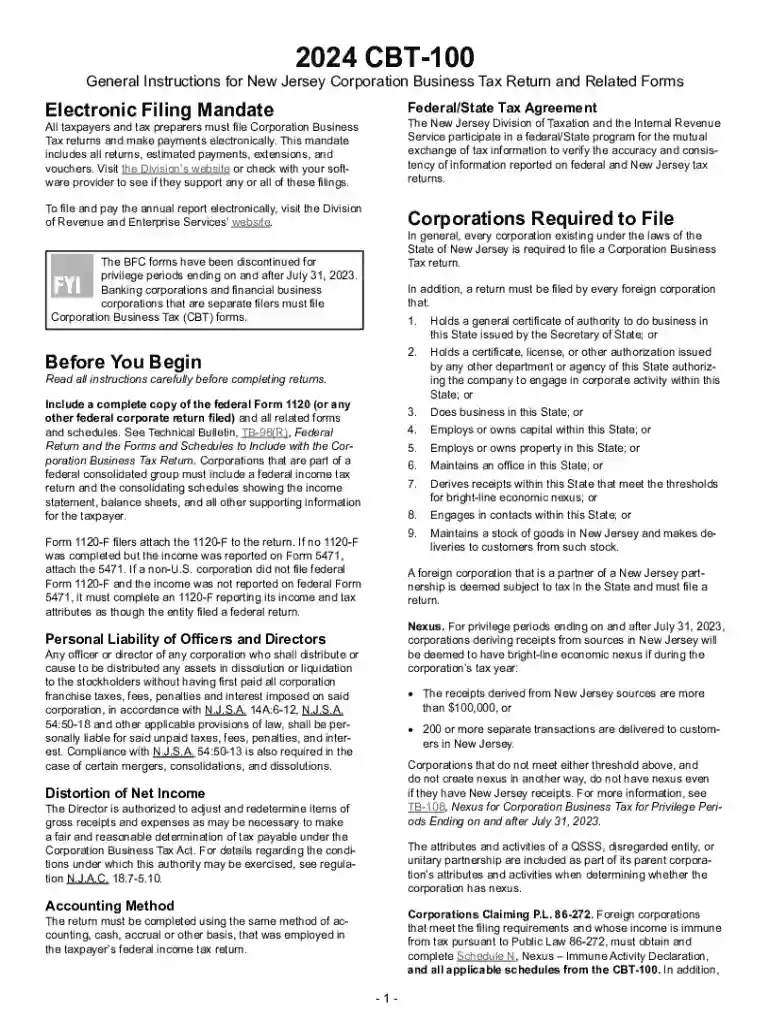
The "Prior Year Corporation Business Tax Returns - NJ" refers to the forms and documentation required by the state of New Jersey for corporations to report business taxes from previous financial years. It encompasses all necessary entries regarding income, deductions, and credits applicable to businesses operating within or having ties to New Jersey. This form is pivotal for compliance with state tax laws, ensuring that corporations accurately declare past business activities and fulfill taxation obligations.
How to Use the Prior Year Corporation Business Tax Returns - NJ
Filing this form involves multiple steps:
- Gather Financial Documents: Collect all financial statements, invoices, and receipts pertinent to the prior year.
- Complete the Form: Use the financial data to fill out sections detailing income, expenses, credits, and other deductions.
- Review for Accuracy: Double-check all entries to ensure that the information accurately reflects your company's financial situation.
- File Electronically or by Mail: Choose between electronic submission through the state's tax portal or mailing a physical copy to the New Jersey Division of Taxation.
Steps to Complete the Prior Year Corporation Business Tax Returns - NJ
When filling out the form, follow these detailed instructions:
- Identify the Business: Include legal name, address, and unique identification numbers.
- Report Income: Accurately record all sources of income. Cross-reference with bank statements for precision.
- Calculate Deductions: Deductible expenses such as business costs and charitable donations must be itemized.
- Determine Tax Liability: Use the deductions and credits to calculate your net taxable income and resulting tax liability.
- Submit Payment: If taxes are owed, remit payment via the state's approved methods. Electronic payments are recommended for their speed and convenience.
Why Should You File the Prior Year Corporation Business Tax Returns - NJ
Filing this return is crucial for several reasons:
- Compliance: It is a legal requirement for corporations with a tax presence in New Jersey.
- Avoid Penalties: Timely submission helps avoid fines and interest that accrue from late filings.
- Financial Accuracy: Provides an accurate financial record that can aid in strategic business planning and securing financing.
- State Benefits: Ensures eligibility for any state-specific credits or refunds your corporation may qualify for.
Important Terms Related to Prior Year Corporation Business Tax Returns - NJ
Understanding specific terminology is essential:
- Nexus: Refers to a corporation's business activities in New Jersey that subject it to state tax obligations.
- Tax Credits: Reductions in tax liability for qualifying expenses or activities, such as R&D initiatives.
- Net Operating Loss (NOL): A business loss that can be carried forward to offset future taxable income.
State-Specific Rules for the Prior Year Corporation Business Tax Returns - NJ
Corporations must adhere to:
- Nexus Criteria: Any business with a physical or economic presence in New Jersey must file.
- Electronic Filing Mandate: Corporations are generally required to file electronically unless granted specific exemptions.
- Specific Forms: Depending on the nature of the business, additional forms such as those for financial institutions may be necessary.
Filing Deadlines / Important Dates
The state mandates:
- Annual Deadline: April 15 is the conventional deadline, but extensions can be requested.
- Extension Requests: Filing an extension grants extra time to file, not to pay taxes owed.
- Amended Returns: Can be filed after April 15 if corrections are needed, typically within three years of the original filing deadline.
Required Documents
To facilitate accurate filing, gather:
- Previous Year’s Tax Returns: For reference and ensuring consistency.
- Business Financial Records: Include profit and loss statements, balance sheets, and receipts.
- Employee Information: If applicable, documents related to payroll taxes need to be included.
Form Submission Methods (Online / Mail)
Corporations have various options:
- Online Filing: Preferred for its efficiency and ease of keeping a digital record.
- Mail Submission: Whereas some smaller corporations may still choose this traditional route, acknowledgment of receipt can be slower.
Penalties for Non-Compliance
Failure to file or incorrect filing can result in:
- Monetary Fines: These vary based on the lateness of the submission and the amount of tax owed.
- Interest Payments: Accrued on unpaid taxes from the due date until payment is made.
- Legal Repercussions: Continuous non-compliance may lead to more severe penalties including audits or legal action.