01. Edit your 2024 form ptr 1 online
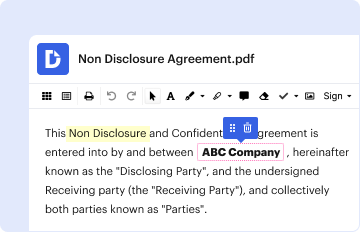
Type text, add images, blackout confidential details, add comments, highlights and more.

Type text, add images, blackout confidential details, add comments, highlights and more.
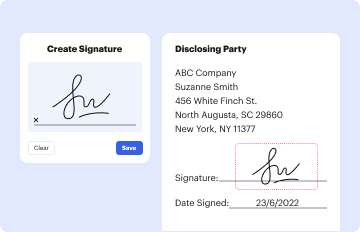
Draw your signature, type it, upload its image, or use your mobile device as a signature pad.

Send 2023 form ptr 1 via email, link, or fax. You can also download it, export it or print it out.
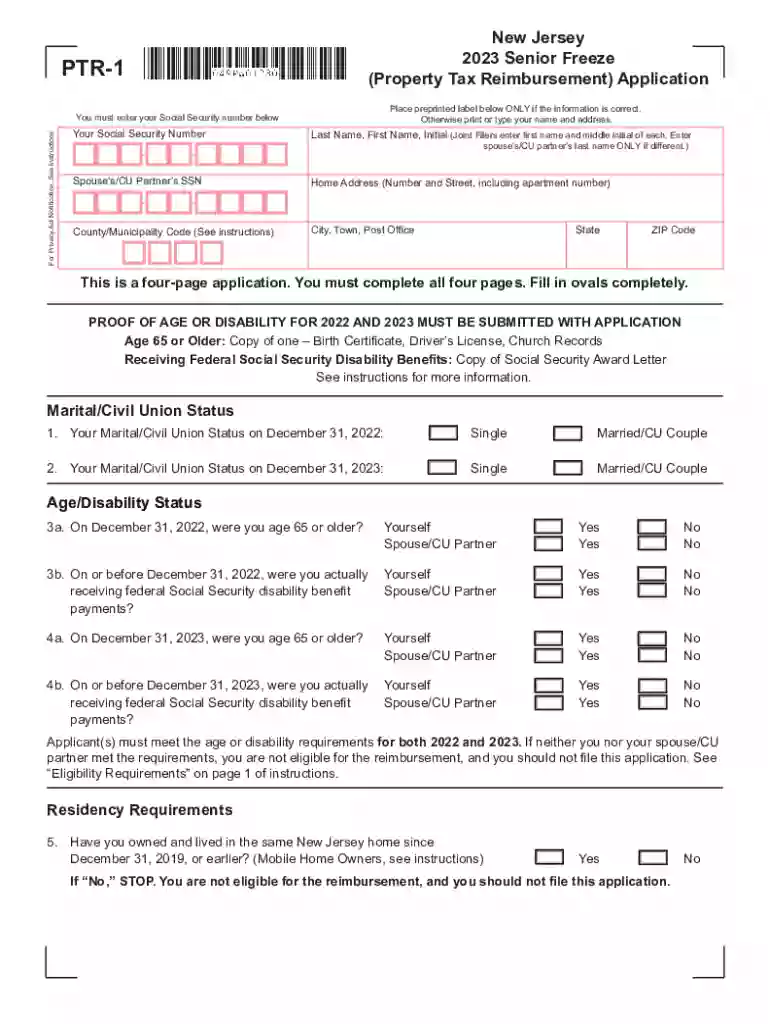
The NJ Form PTR-1 2 serves as the Senior Freeze (Property Tax Reimbursement) Application. This application is designed for New Jersey residents, particularly targeting senior citizens and individuals with disabilities who seek reimbursement for property taxes. The "Senior Freeze" program aims to stabilize property taxes for eligible individuals by reimbursing them for any increases since their base year.
Using the NJ Form PTR-1 requires precision and understanding of its sections. Applicants must fill out personal details, demonstrate their eligibility by providing relevant documents, and accurately report their income for the years covered by the form. The process is facilitated by the online platform, DocHub, which allows easy form filling and submission.
Eligibility for the NJ Form PTR-1 is primarily based on age, income, and residency. To qualify:


Gather Required Documents: Include proof of income, property tax bills, and verification of age or disability.
Fill Out Personal Information: Provide accurate personal details, including name, address, and Social Security number.
Report Income: Detail annual income for the years required, ensuring accuracy to avoid processing delays.
Submit the Form: Use the DocHub platform to finalize and submit the form online. For those who prefer traditional methods, submission via mail is also an option.
To complete the NJ Form PTR-1, applicants need to provide the following:
Failure to supply correct documents can result in application denial.
Adhering to filing deadlines is crucial. The deadlines may vary, but typically, applications should be submitted by June 1st of the year following the tax year for which reimbursement is sought. These dates are subject to change, so checking the official state's announcements is recommended.
The NJ Form PTR-1 can be submitted through:
Each method has its own timeline, so choose based on personal convenience and processing speed needs.
The form is legally used to apply for property tax reimbursement and requires honest reporting. Misrepresentation or falsification of information can lead to penalties, including disqualification from the program and potential legal repercussions. Understanding these legal obligations ensures compliance and eligibility continuity.
Familiarize yourself with key terms that appear frequently in the form:
Knowledge of these terms aids in successfully completing and understanding the form.
New Jersey imposes specific rules that govern the Senior Freeze program, such as:
These rules ensure that only eligible residents benefit, maintaining the program's sustainability and integrity.
We've got more versions of the 2024 form ptr 1 form. Select the right 2024 form ptr 1 version from the list and start editing it straight away!
| Versions | Form popularity | Fillable & printable |
|---|---|---|
| 2023 | 4.9 Satisfied (49 Votes) | |
| 2022 | 4.9 Satisfied (36 Votes) | |
| 2021 | 4.8 Satisfied (78 Votes) | |
| 2020 | 4.8 Satisfied (76 Votes) | |
| 2019 | 4.3 Satisfied (171 Votes) | |
| 2017 | 4.3 Satisfied (77 Votes) | |
| 2016 | 4.4 Satisfied (102 Votes) | |
| 2015 | 4.3 Satisfied (73 Votes) | |
| 2014 | 4 Satisfied (58 Votes) | |
| 2013 | 4.3 Satisfied (50 Votes) | |
| 2012 | 4 Satisfied (46 Votes) |
At DocHub, your data security is our priority. We follow HIPAA, SOC2, GDPR, and other standards, so you can work on your documents with confidence.