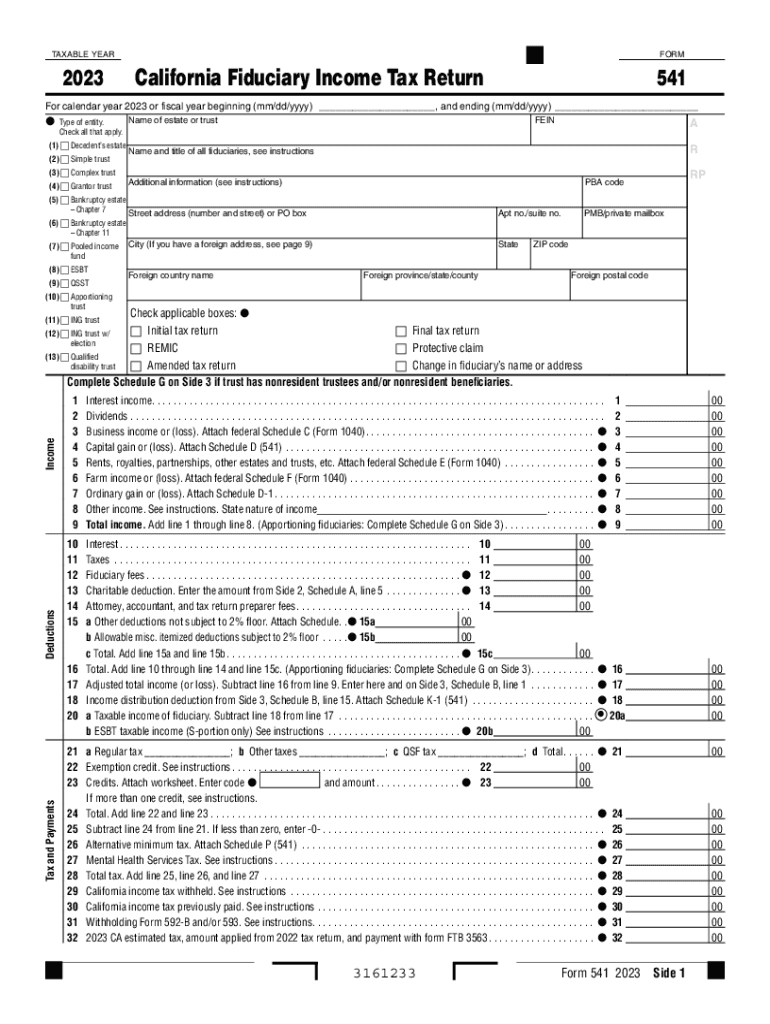







Definition and Meaning of 2023 Form 541 California Fiduciary Income Tax
The 2023 Form 541, also known as the California Fiduciary Income Tax Return, is a crucial tax document for estates and trusts. This form is used to report income, deductions, and tax liabilities specific to these entities. Trusts and estates must file this form to disclose financial activities, ensuring compliance with California's state tax regulations. By completing this form, entities can determine the amount of state tax owed or any potential refunds due. The data captured includes income types such as interest, dividends, and capital gains.
How to Use the 2023 Form 541
- Identify the Entity Type: Begin by specifying whether it is a decedent's estate, simple trust, complex trust, qualified funeral trust, pooled income fund, or other applicable classifications.
- Report Income: Record all types of income, including interest, dividends, rents, and royalties.
- Detail Deductions: Outline eligible deductions such as administrative expenses or distribution deductions.
- Calculate Tax Obligations: Sum up the tax liability using applicable rates, potentially augmented by alternative minimum tax (AMT) figures where applicable.
Steps to Complete the 2023 Form 541
- Gather Necessary Documents: Collect detailed records of income, deductions, and any previous tax credits or payments.
- Identify Income Sources: Compile details of all income earned by the trust or estate.
- Compute Total Income: Use this section to reflect the compilation of all incomes.
- List Deductions: Identify deductions allowable under California tax law to reduce taxable income.
- Reconcile Taxable Income: Calculate taxable income by subtracting deductions from total income.
Eligibility Criteria for 2023 Form 541
Form 541 must be filed by estates and trusts operating within California. Eligibility requires that the entity has income or gains attributable to California or other business activities within the state. Understanding these criteria ensures compliance with state tax regulations and helps avoid unnecessary penalties or audits.


Key Elements of the 2023 Form 541
- Income Reporting: Details various categories of income pertinent to estates and trusts.
- Deductions: Allows for deduction reporting, helping reduce overall taxable income.
- Total Tax Calculation: Determines the amount of tax due based on the remaining taxable income after deductions.
Filing Deadlines / Important Dates
The deadline for filing Form 541 aligns generally with standard tax filing deadlines, typically around April 15th, unless it falls on a weekend or holiday, which could extend the date. Instances of natural disasters or other exceptional circumstances may also alter deadlines, so it is advisable to confirm current year deadlines.
Penalties for Non-Compliance
Failing to file or provide accurate details on Form 541 can result in penalties. These may include fines based on a percentage of the unpaid tax, with additional interest accruing over time. Non-compliance not only results in financial penalties but can also trigger audits, prompting further scrutiny of the estate or trust's financial practices.
Software Compatibility
Preparing Form 541 can be facilitated by software like TurboTax, QuickBooks, or other dedicated tax preparation tools compatible with California tax forms. These programs offer step-by-step guidance, ensuring complete accuracy and compliance in filling out each section of the form.
State-Specific Rules for Form 541
California-specific rules often dictate unique income reporting and deduction protocols for estates and trusts. Unlike other states, California requires specific considerations in trust income and legal deductions, making understanding state nuances essential for accurate reporting.
Taxpayer Scenarios
- Retired Individuals: May manage an estate or serve as fiduciaries needing detailed tax documentation.
- Business Owners: With trusts established for business continuity or estate preservation, they will have specific filings relevant to 2023 Form 541.
These various taxpayer scenarios demonstrate the breadth of applicability for Form 541 beyond simple estate taxation, underscoring its utility in diverse financial and legal contexts.