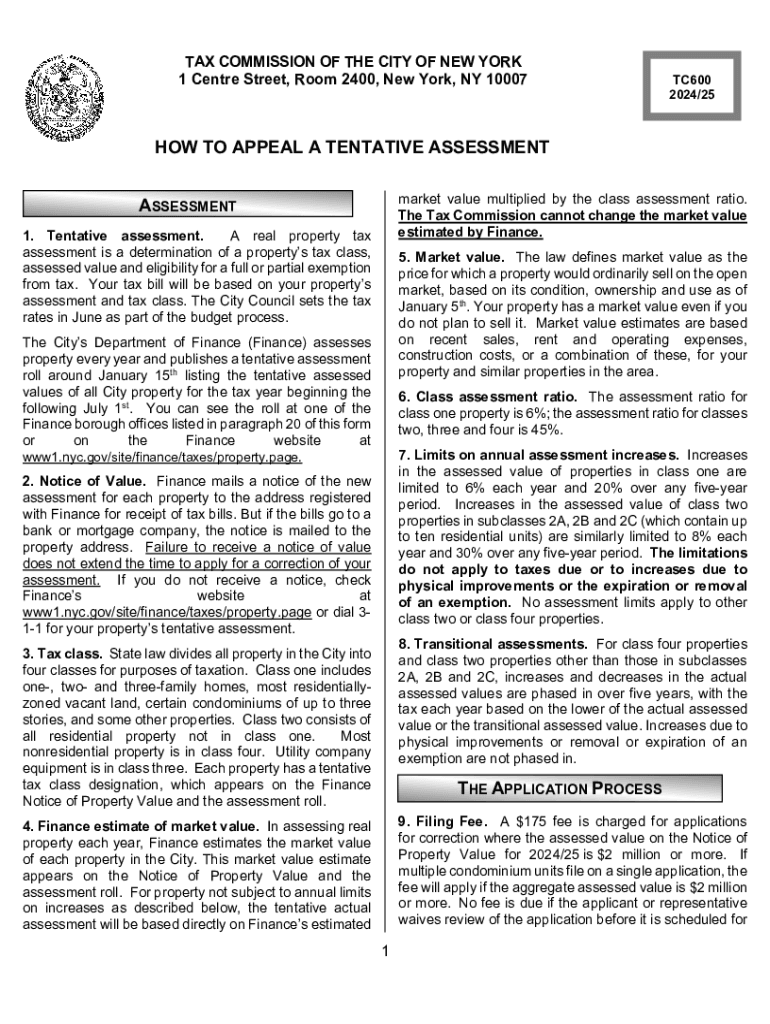







Introduction to Contesting Your Assessment in New York State
A "Contest your assessment - Tax ny - New York State" form is a critical tool for property owners in New York. It allows individuals to challenge their property tax assessments, which can lead to tax relief if successful. Understanding the nuances of this form and how to use it effectively is essential.
How to Use the Contest Your Assessment Form
Navigating the process of contesting a property tax assessment requires careful attention to detail. Here’s a step-by-step guide to using the form effectively:
-
Review Your Assessment Notice: Your first step is to thoroughly examine the assessment notice you received. Verify the details to ensure accuracy and that they reflect your property’s current market value.
-
Gather Supporting Evidence: Collect documentation and evidence that support your claim for a lower assessment. This could include recent property sales records, independent appraisals, or photographs showing discrepancies in property conditions.
-
Complete the Form Correctly: Fill out each section of the form with accurate and truthful information. Any inaccuracies could delay the review process or result in a dismissal of your application.
-
Attach Required Documentation: Ensure all required evidence is attached to your form. This includes property descriptions, market value analyses, and any additional substantiating evidence you plan to present.
-
Submit the Form: Follow the prescribed submission method, whether online, by mail, or in person. Ensure that you adhere to the specific guidelines and deadlines set by New York State.
Steps to Complete the Contest Your Assessment Form
When completing the "Contest your assessment - Tax ny - New York State" form, divide the task into manageable steps:
-
Gather Necessary Information: List all relevant details such as property address, parcel number, and owner identification.
-
Describe Grounds for Appeal: Detail the reasons for contesting the assessment. Clearly outline why you believe the assessment is inaccurate.
-
Provide Comparable Properties: Present details of similar properties with lower assessments. Highlight the comparability in terms of size, location, and condition.
-
Include Personal and Property Details: Furnish all requested personal information alongside the property’s specifics.
-
Finalize Submission: Double-check all entries for accuracy before submitting. All documentation, whether submitted online or in a physical format, should be neatly organized and complete.
Key Elements of the Contest Your Assessment Form
Several key components within the form require careful attention:
- Assessment Details: Verify the specific assessment details provided by the state, including the unequivocal assessed value.
- Owner's Statement: Clearly articulate your rationale for contesting the assessment, substantiated by factual evidence.
- Supporting Documents: Attach relevant evidence like market value data, comparative analysis, and any professional appraisals.
- Signature and Date: Ensure all documents are signed and dated correctly to uphold the form's validity.
Filing Deadlines and Important Dates
To ensure that your form is considered:
- Understand State Timelines: New York State requires submissions within a specific period post-notification – typically within 30 days of receiving the assessment notice.
- Mark Your Calendar: Keep track of all deadlines to avoid late submissions, which could invalidate your contest.
Why You Should Contest Your Assessment
There are several benefits to challenging your property assessment:
- Potential Tax Savings: Successful appeals can result in a reduced tax burden, offering direct savings.
- Property Value Accuracy: Ensures that the assessment reflects an accurate market value, maintaining fair property valuations across the board.
- Financial Accountability: Actively contesting your assessment encourages fairness and accuracy in taxation, promoting equitable assessments across the community.
Legal Use and Compliance
Using the "Contest your assessment" form inaccurately or dishonestly can have legal repercussions:
- Honest Representation: All information provided must be accurate and truthful. Intentionally misleading statements can result in penalties.
- State Regulations: Adherence to New York State’s legal framework is mandatory to avoid compliance issues.
Examples of Using the Contest Your Assessment Form
Consider these practical scenarios:
- Property Discrepancies: A homeowner discovers that their property’s assessed value is significantly higher than similar properties on their street.
- Recent Purchases: A property owner who recently bought a home notes discrepancies between the purchase price and the assessed value.
- Economic Changes: Fluctuations in the local real estate market lead to significant discrepancies in property valuations across a neighborhood, motivating widespread assessments contests.
Eligibility Criteria
Not everyone can contest their property tax assessment:
- Property Ownership: Only current property owners or authorized agents can file an assessment contest.
- Assessment Type: Ensure that the type of assessment under contestation is eligible under New York State guidelines.
- Timely Filing: Adherence to filing deadlines is critical; late submissions are typically not entertained.
Familiarizing yourself with these elements and processes ensures that you are well-prepared to handle your property tax assessment contest in New York efficiently and effectively.