Definition and Meaning of the Business License Tax Application LPLLC
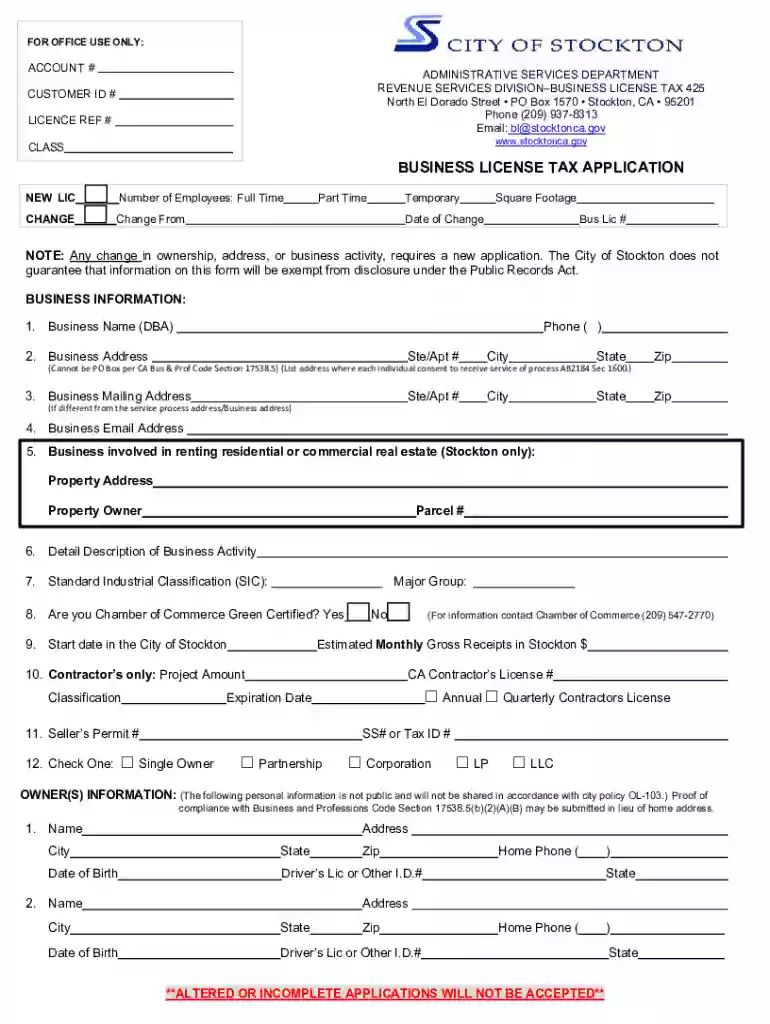
The Business License Tax Application LPLLC serves as an official document that businesses use to register for a license to legally operate within a specific jurisdiction. This form collects crucial information regarding your business operations and financial standing to comply with local and state taxation laws. This application specifically applies to Limited Liability Companies (LLCs), highlighting any nuances in licenses required for different business structures.
Legal Implications and Requirements
- Compliance with Local Regulations: Obtaining this business license is a legal requirement for LLCs, ensuring compliance with state and municipal regulations.
- Verification of Business Operations: The application acts as a verification tool for governments to monitor and regulate business activities within their jurisdiction.
- Impact on Business Legitimacy: Possessing a business license provides authenticity and legitimacy, instilling trust among clients and partners.
How to Obtain the Business License Tax Application LPLLC
Acquiring the Business License Tax Application is a critical step towards formalizing your LLC's operations. Here's a general overview of the process involved.
Step-by-Step Process
- Research Requirements: Identify the specific application form required by your state's licensing board, as variations exist depending on jurisdiction.
- Prepare Documentation: Collate necessary documents, such as proof of business existence, EIN, and corporate documents, before completing the application.
- Complete Application: Fill out the application form with accurate details on business structure, location, and ownership information.
- Submit Application: Follow stated guidelines for submission, which may involve online submissions, mailing, or in-person visits.
Important Considerations
- State-Specific Guidelines: Each state might have variances in application requirements, emphasizing the need for state-specific research.
- Fees and Associated Costs: Be aware of any application fees or additional costs that might be incurred during the application process.
Steps to Complete the Business License Tax Application LPLLC
Completing the Business License Tax Application requires meticulous attention to detail to ensure accuracy and compliance. Here's a breakdown of the steps involved in completing this form.
Detailed Completion Guide
-
Section A: Business Information
- Provide a comprehensive overview of the business, including its name, address, contact information, and business type.
- Specify the formation date and intended business activities within the area of operation.
-
Section B: Ownership and Management Details
- Include information about primary business owners and members, such as names, titles, and contact information.
- Highlight changes in ownership if applicable, referencing prior applications or statements.
-
Section C: Financial and Tax Data
- Input financial data, including estimated annual revenue and any applicable state or local taxes.
- Attach any required financial statements or tax documents.
Common Mistakes
- Omitting Important Details: Avoid leaving sections incomplete as missing information can delay the approval process.
- Providing Outdated Information: Ensure that all data is current and reflective of recent changes within the business.
Key Elements of the Business License Tax Application LPLLC
The application consists of specific sections that must be accurately completed to fulfill state requirements. Understanding each element is crucial for ensuring compliance.
Core Components
- Identification Details: Unique identifiers such as the EIN and state registration numbers ensure correct filing and processing by authorities.
- Compliance Verification: Sections focusing on regulation adherence and legal standing validate that the business meets operational standards.
- Signatory Requirements: Authorized signatures from business representatives confirm the accuracy and verification of all provided data.
Required Documents for Submission
Filing the Business License Tax Application requires specific documentation to verify your business claims. Here’s an overview of the necessary paperwork.
Essential Documents
- Corporate Documents: Articles of Organization and operating agreements that verify business structure and ownership.
- Proof of Address: Valid evidence of business location, such as a lease or utilities bill, is required to demonstrate physical operation.
Additional Documentation
- Tax Identification: Include state and federal tax IDs to align records with government databases for tax purposes.
- Supplementary Financial Records: Supplemental financial documentation provides insight into business financial health when requested.
State-Specific Rules for the Business License Tax Application LPLLC
Every state has its own set of rules and requirements when it comes to completing and submitting the Business License Tax Application for LLCs. These rules can significantly impact how you prepare and file your application.
Variances by State
- Different Licensing Fees: Certain states may impose varying licensing fees based on the business scale or industry sector.
- Application Formats: Some jurisdictions might require additional forms or submissions that pertain specifically to local business regulations or industry types.
Compliance and Best Practices
- Regular Updates: Keep apprised of ongoing changes in state regulations that may affect your application status or renewal requirements.
Penalties for Non-Compliance
Failure to submit the Business License Tax Application as required can incur significant penalties. Understanding these can help avoid unnecessary legal or financial consequences.
Consequences of Non-Compliance
- Monetary Fines: Financial penalties that might escalate based on the length of non-compliance.
- Operational Halts: Risk of business suspension pending submission or re-submission of application and associated documentation.
- Legal Repercussions: Potential for lawsuits or further legal action if operational without a valid business license.
Preventative Measures
- Timely Submissions: Ensure applications are submitted well in advance of any legal deadlines.
- Compliance Audits: Regular audits of business licenses and applications can preempt costly oversight and non-compliance.
Digital vs. Paper Version of the Business License Tax Application LPLLC
While traditional paper applications have been the standard, digital submissions are becoming increasingly popular due to convenience and speed. Both have their pros and cons.
Paper Applications
- Pros: Familiarity and physical record-keeping can be beneficial for traditionalists.
- Cons: Longer processing times and a greater chance of manual errors.
Digital Applications
- Pros: Faster processing, easier updates and edits, and confirmation of receipt within minutes.
- Cons: Needs access to internet and computer systems, which might not be available to all businesses.
Choosing the Right Method
- Review the application requirements and consider factors such as processing speed, record-keeping preference, and access to digital infrastructures before deciding on the submission method.