




01. Edit your city of seattle contractor disclosure form online
Type text, add images, blackout confidential details, add comments, highlights and more.

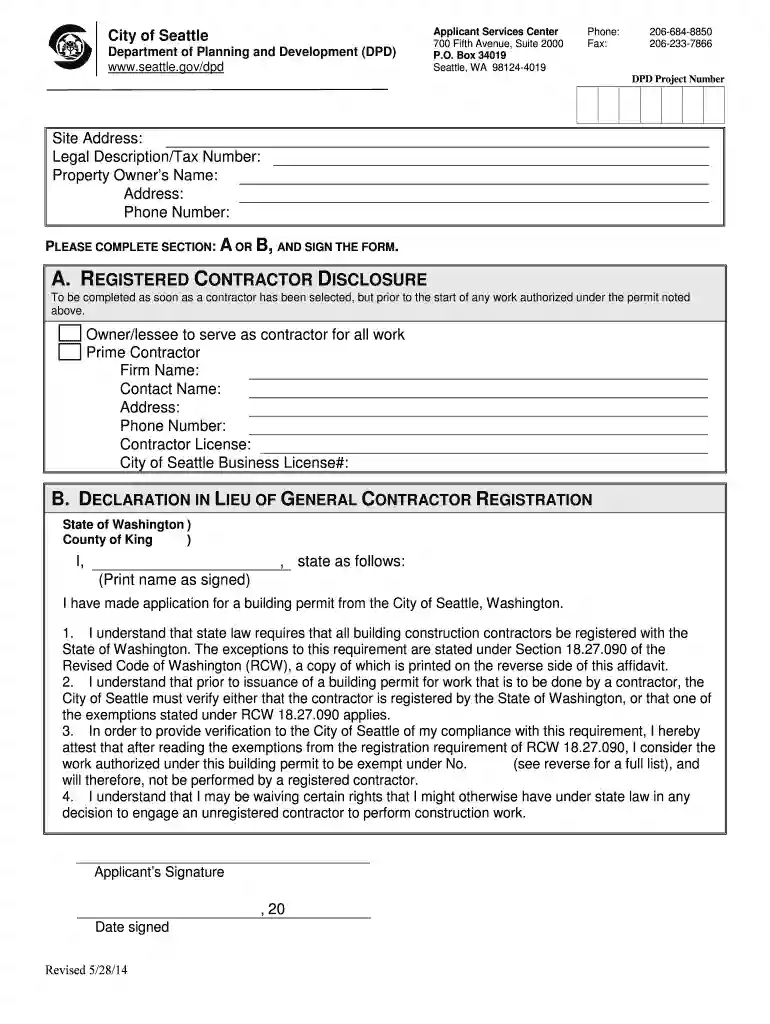
Type text, add images, blackout confidential details, add comments, highlights and more.

Draw your signature, type it, upload its image, or use your mobile device as a signature pad.

Send contractor disclosure form via email, link, or fax. You can also download it, export it or print it out.
The contractor disclosure form is essential for ensuring compliance with local regulations regarding building permits and contractor registrations. This document is primarily used in the context of construction projects where a building permit is required. It serves as a declaration for registered contractors and assists in identifying exemptions under certain state laws, such as those in Washington. By completing this form, property owners and contractors clarify their roles and responsibilities, mitigate legal risks, and ensure that proper regulatory compliance is maintained throughout the construction process.
To effectively utilize the contractor disclosure form, you should start by ensuring you have the required information about the construction project and the contractors involved. Follow these steps to ensure accurate completion:
Collect Contractor Information: Gather details about the contractor's registration, including the license number, business name, and contact information.
Specify Project Details: Clearly explain the scope of the project, including the type of construction and any pertinent details that could affect the contractor's responsibilities.
Identify Exemptions: Determine any applicable exemptions from registration requirements under state law, and indicate these clearly on the form.
Sign and Submit: Both the property owner and contractor should review the completed form for accuracy, provide signatures, and then submit it to the relevant municipal department, usually the local planning or building office.
To obtain a contractor disclosure form, visit the municipal government's website in the area where the construction project is planned. Many cities, such as Seattle, provide downloadable versions of forms on their government portals. Alternatively, you can contact the Department of Planning and Development directly to request a physical copy or additional guidance on accessing the form.
Completing the contractor disclosure form requires careful attention to detail. Follow these steps to ensure it's properly filled out:
Review Instructions: Before filling out the form, read any instructions or guidelines provided to understand what's required.
Fill Out Contractor Information: Input all necessary contractor details, ensuring accuracy to avoid processing delays.
Enter Project Details: Provide comprehensive information about the project that might influence compliance requirements.
Check for Exemptions: Review state laws to ascertain if any exemptions apply to your project or contractor.
Complete the Declaration: Ensure all declarations and attestations are accurately stated, specifically if claiming any exemptions.
Attach Supporting Documents: If needed, attach any additional documentation that supports the claims made within the form.
Submit the Form: Deliver the completed form to the designated municipal office by the prescribed deadline, and retain a copy for your records.
The form is crucial for several reasons:
The contractor disclosure form includes several critical sections that must be completed accurately:
The form is primarily used to comply with legal requirements regarding contractor and project registration. It plays a critical role in legal proceedings if disputes arise related to contractual obligations or compliance with building codes. A completed contractor disclosure form serves as official evidence that all necessary registration and exemption verifications were made prior to project commencement.
While the contractor disclosure form can be generally applicable, it's crucial to note state-specific regulations that might affect its use:
Recognizing these state-specific variations ensures the form meets all applicable legal requirements, preventing future complications.
At DocHub, your data security is our priority. We follow HIPAA, SOC2, GDPR, and other standards, so you can work on your documents with confidence.


This form allows contractors to comply with the reporting requirements in the Federal Acquisition Regulation amendment, 73 Fed. Reg. 67064, effective DecemberRead more
Contractors making disclosures under contracts which do not contain the clause at (FAR) 48 CFR 52.203-13 are encouraged to also use this electronic form. [77 FR


