






Definition and Function of the TOT Reporting Form
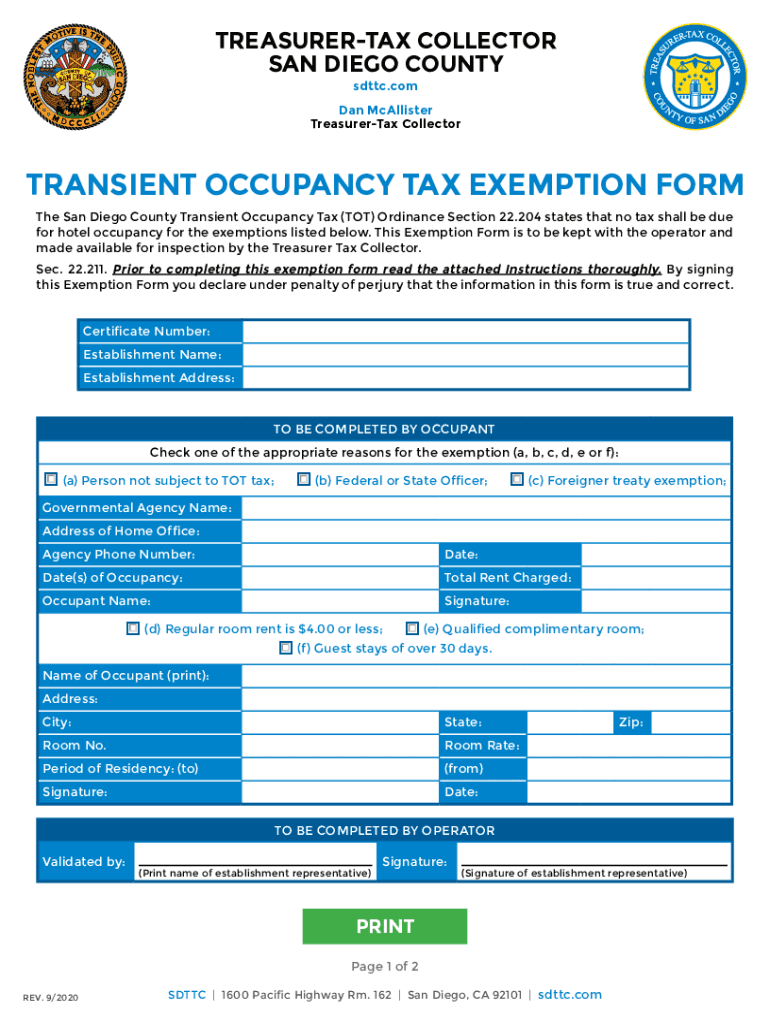
The TOT Reporting Form is a critical tool used to manage the Transient Occupancy Tax (TOT), a levy applied to hotel lodgings within San Diego County. This form documents details about hotel guests who might be exempt from the tax, such as government officials or certain long-term guests. By capturing this data, operators ensure appropriate tax collection and compliance with local tax regulations. The form is a joint responsibility of the hotel operator and the guest and requires both parties to ensure all sections are properly filled out to declare any applicable exemptions.
Key Elements of the TOT Reporting Form
The TOT Reporting Form comprises several essential components that must be addressed:
- Guest Information: Includes the name, contact details, and length of stay, ensuring clear identification of the individual claiming an exemption.
- Exemption Criteria: Enumerates specific categories under which an exemption is allowable, such as government work or international treaties.
- Operator Certification: Signed declarations verifying the truthfulness and accuracy of the information provided, safeguarding the establishment against potential audits.
- Documentation Proofing: May require additional documentation, such as government ID or official orders, to substantiate exemption claims.
Legal Requirements and Use
The use of the TOT Reporting Form is governed by specific municipal laws designed to ensure proper taxation or exemption application. Inaccurate or fraudulent filings can lead to audits or penalties. The form must be completed in accordance with the instructions provided by the Treasurer-Tax Collector's Office of San Diego County, which issues comprehensive guidelines to prevent misuse and facilitate thorough understanding.
How to Obtain the TOT Reporting Form
Individuals and businesses can acquire the TOT Reporting Form through:
- Online Access: Most municipalities, including San Diego, provide downloadable versions on their official websites, allowing easy access to the latest form version.
- In-Person Requests: Forms can be physically collected from the Treasurer-Tax Collector's office for those preferring or requiring manual handling of documents.
- Mail Requests: Some jurisdictions may offer the ability to request forms to be mailed, giving access to those who have limited internet access.
Form Submission Methods
Submitting the TOT Reporting Form can typically be done via several channels to accommodate different preferences:
- Online Submission: Many offices allow forms to be submitted electronically, streamlining the process and ensuring quick delivery and receipt confirmation.
- Mail: Traditional mailing remains an option for those without internet capability or who prefer physical documentation.
- In-Person: Direct submissions to the Treasurer-Tax Collector’s office ensure immediate receipt and can often provide an opportunity to ask questions directly.
Steps to Complete the TOT Reporting Form
Filling out the TOT Reporting Form involves a detailed process to ensure all relevant information is collected:
- Fill in Guest Details: Input all necessary information regarding the guest, such as their identity and contact details.
- Select the Appropriate Exemption Category: Consult the provided guidelines to identify the classification under which the exemption is requested.
- Provide Supporting Documentation: Attach any required documents that prove the validity of the exemption claim, such as governmental assignments or foreign diplomat status.
- Operator and Guest Verification: Both parties should check the information and sign in designated areas to affirm the accuracy.
Common Errors and Tips
- Ensure that signatures are acquired from both the guest and the operator.
- Double-check the exemption category and corresponding justification documentation before submission.
- Maintain a copy of the completed form for records in case of future reference or audit.
Importance of the TOT Reporting Form
Understanding and utilizing the TOT Reporting Form is crucial for hotel operators as it mitigates the risk of legal repercussions and ensures optimally managed tax obligations. Failure to file correctly can result in audits and significant fines, impacting both guest experience and the financial health of the business.
Who Typically Uses the TOT Reporting Form
The TOT Reporting Form is primarily used by:
- Hotel and Lodging Operators: To manage their responsibilities under local tax law efficiently.
- Government Officials: Ensuring transparency and legality for necessary exemption claims during official duties.
- Visitors Eligible for Exemptions: Including military personnel, diplomats, and other individuals qualifying for tax exemptions under specific circumstances.


State-Specific Rules for the TOT Reporting Form
State-specific guidelines might affect how the TOT Reporting Form is used. In San Diego, specific attention is given to treaties and military orders, affecting the applicability of exemptions. It's crucial for operators to familiarize themselves with local variations and stay updated on any changes issued by legislative bodies to maintain compliance.
By thoroughly understanding and engaging with the TOT Reporting Form's requirements, operators can manage their tax obligations transparently, fostering a smooth operational environment and a positive guest experience.