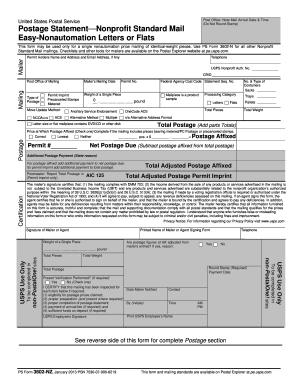
01. Edit your form online
Type text, add images, blackout confidential details, add comments, highlights and more.

Type text, add images, blackout confidential details, add comments, highlights and more.

Draw your signature, type it, upload its image, or use your mobile device as a signature pad.

Send it via email, link, or fax. You can also download it, export it or print it out.
The Taxpayer Identification Number (TIN) is a unique identifier assigned to individuals and entities for tax reporting purposes in the United States. It serves as a critical element for accurate tax assessment and processing by the Internal Revenue Service (IRS). There are several types of TINs, including Social Security Numbers (SSNs), Employer Identification Numbers (EINs), Individual Taxpayer Identification Numbers (ITINs), and Adoption Taxpayer Identification Numbers (ATINs). Each type is designated for specific categories of taxpayers, such as individuals, businesses, foreign nationals, and adopted children in the U.S.
Acquiring a TIN involves different processes depending on the type of number required. For a Social Security Number, U.S. citizens and permanent residents can apply through the Social Security Administration. Employers can obtain an Employer Identification Number (EIN) by applying directly through the IRS website or by contacting the IRS Business & Specialty Tax Line. The process is relatively quick, with applications typically processed immediately if completed online. For those needing an Individual Taxpayer Identification Number (ITIN), the application process requires submission of Form W-7 along with necessary documentation to verify identity and status.
Completing the documentation to acquire or renew a TIN involves:
A TIN is legally required for a range of financial transactions, including filing tax returns, opening bank accounts, and applying for credit. It is essential for reporting income, claiming tax benefits, and ensuring compliance with U.S. tax laws. Using a TIN accurately is necessary to avoid legal repercussions such as fines or audits. Additionally, financial institutions and employers must use TINs for withholding and reporting purposes to the IRS.
The IRS provides clear guidelines on when and how a TIN should be used. TINs are mandatory on all tax-related documents and forms submitted to the IRS. They must be included on individual income tax returns, business tax forms, and various informational returns, such as Forms 1099 and W-2. Failure to provide a correct TIN when required can result in penalties, including disallowance of deductions or tax credits.
Non-compliance with TIN regulations can lead to several penalties. These include fines for failing to provide a valid TIN, inaccuracies in tax filings, or mistakes on information returns. Continuous negligence in providing accurate TIN details may lead to larger financial penalties and extensive IRS scrutiny. It’s important for both individuals and businesses to ensure their TINs are correct and up-to-date to avoid such consequences.
Practical scenarios where a TIN is essential include the filing of annual tax returns by individuals and businesses, registering a new LLC, or an employer reporting employee wages. Additionally, foreign nationals applying for work in the U.S. need an ITIN for tax-related processes. Businesses will use an EIN to establish corporate bank accounts or apply for business permits and licenses.
Understanding TIN-related terminology is vital for compliance and efficient tax management. Key terms include:
While TINs are federally regulated, some states have additional requirements or processes for state tax reporting. For example, certain states might require additional documentation when applying for a state tax ID number. It is crucial for taxpayers to be aware of state-specific rules and ensure compliance with both federal and state tax regulations.
At DocHub, your data security is our priority. We follow HIPAA, SOC2, GDPR, and other standards, so you can work on your documents with confidence.