IDR Releases Updated Tax Guidance: Disaster Emergency 2026

Get Form
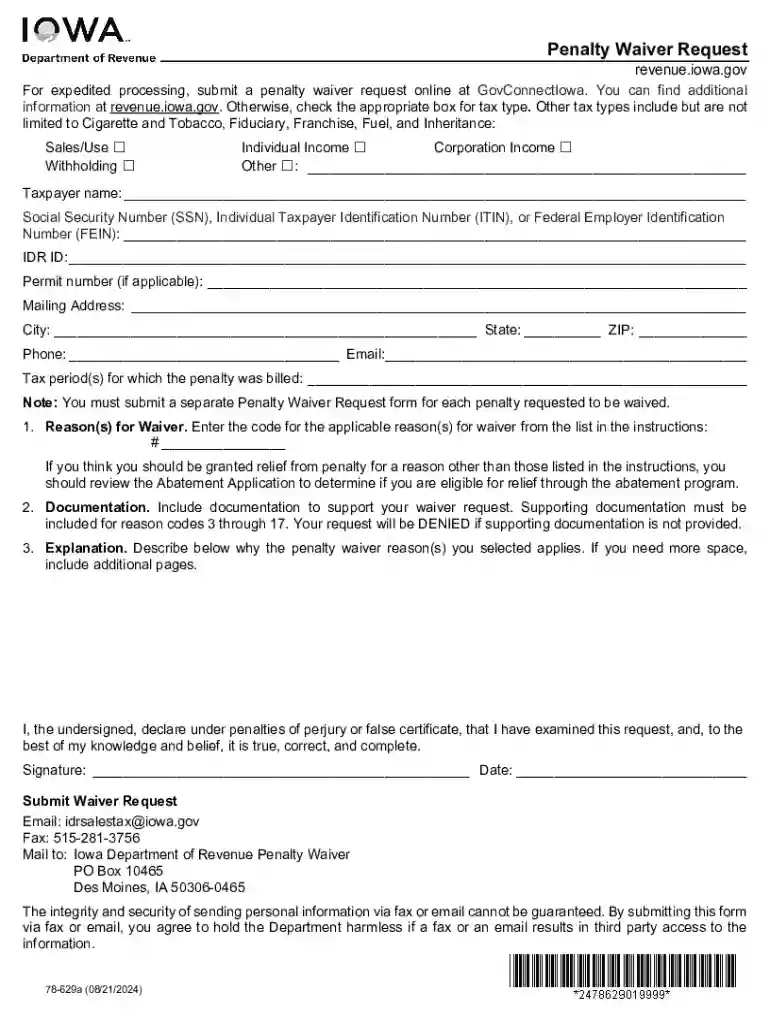
IDR Releases Updated Tax Guidance: Disaster Emergency Preview on Page 1

Here's how it works

01. Edit your form online
Type text, add images, blackout confidential details, add comments, highlights and more.

02. Sign it in a few clicks
Draw your signature, type it, upload its image, or use your mobile device as a signature pad.

03. Share your form with others
Send it via email, link, or fax. You can also download it, export it or print it out.

Definition & Meaning

The "IDR Releases Updated Tax Guidance: Disaster Emergency" refers to updated instructions and regulations issued by the Iowa Department of Revenue (IDR) regarding tax relief during disaster emergencies. This guidance is designed to provide clarity for taxpayers in disaster-affected areas, detailing temporary adjustments or relief measures in tax filing and payment obligations.

The guidance serves as an essential resource for individuals and businesses impacted by state-declared disaster emergencies, explaining how they can access tax relief and what specific measures are being implemented to ease the financial burden associated with natural disasters or other emergencies.

How to Use the IDR Releases Updated Tax Guidance: Disaster Emergency

To effectively utilize this guidance, taxpayers should carefully review the document to understand the scope of relief available. Key steps include:

  1. Identify the eligible disaster period specified in the guidance to determine if you qualify for relief.
  2. Review which taxes are covered by the guidance, such as state income tax, sales tax, or property tax.
  3. Follow the outlined procedures for claiming relief, which may include adjusting withholding, applying for extensions, or requesting penalty waivers.

It's crucial to adhere to any specific criteria or deadlines mentioned, as these ensure that your application for relief is processed efficiently and accurately.

Steps to Complete the IDR Releases Updated Tax Guidance: Disaster Emergency

The process for implementing the tax guidance involves several critical steps:

  1. Assess Eligibility: Determine if you qualify for relief based on the disaster's impact on your personal or business circumstances.
  2. Gather Required Documentation: Collect relevant documents that support your claim for tax relief, such as damage assessments or insurance claims.
  3. Complete Necessary Forms: Fill out any forms specified in the guidance, like penalty waiver request forms or extension applications.
  4. Submit Forms Correctly: Ensure submission via the correct methods—email, fax, or mail—as stated in the guidance. Confirm receipt if possible.

Each of these steps must be followed precisely to maximize the chances of successfully obtaining the intended tax relief.

Who Typically Uses the IDR Releases Updated Tax Guidance: Disaster Emergency

The primary users of this tax guidance are individuals, businesses, and tax professionals in Iowa:

  • Individuals: Homeowners or small business owners whose property has been damaged during a disaster.
  • Businesses: Corporate entities, especially those in disaster-affected zones, that need temporary relief from state taxes.
  • Tax Professionals: Accountants and advisors who aid clients in understanding and applying for disaster-related tax adjustments.

These stakeholders utilize the guidance to navigate the tax implications of disaster-affected activities to reduce financial burdens legally.


decoration image ratings of Dochub

Key Elements of the IDR Releases Updated Tax Guidance: Disaster Emergency

The guidance document consists of several important components:

  • Definitions: Clarifications on terms related to tax relief and disaster conditions.
  • Eligibility Criteria: Specific guidelines on who can apply for relief, including both geographic and financial criteria.
  • Filing Instructions: Detailed steps on how to apply for extensions, waivers, or other relief measures.
  • Deadline Adjustments: Extensions or modifications to existing tax filing and payment deadlines.
  • Compliance Requirements: Obligations that must still be met despite the disaster emergency, ensuring continued compliance with federal and state tax laws.

Each element is aimed at providing comprehensive guidance to help taxpayers handle their tax responsibilities amid challenging times.

State-Specific Rules for the IDR Releases Updated Tax Guidance: Disaster Emergency

The guidance is tailored specifically to Iowa and aligns with state regulations concerning natural disasters. Important state-specific considerations include:

  • Identification of Disaster Areas: Only taxpayers in officially designated disaster areas, as recognized by state authorities, are eligible for certain relief measures.
  • Interaction with State Laws: The guidance outlines how it integrates with other Iowa state taxation rules and existing disaster relief measures.

Because each state may have unique regulations and procedures, Iowa-specific provisions are critical for ensuring compliance and valid applications for relief.

Examples of Using the IDR Releases Updated Tax Guidance: Disaster Emergency

Several practical scenarios illustrate the application of this guidance:

  • Homeowner Claim: An Iowa resident whose home was significantly damaged by flooding uses the guidance to apply for a filing extension and a possible waiver of late payment penalties.
  • Small Business Adjustment: A local business severely affected by tornado damage claims a temporary sales tax relief, utilizing the guidance to defer payments and seek penalty waivers.
  • Agricultural Impact: Farmers experiencing crop loss due to extreme weather apply for adjustments on their property tax assessments using instructions from the guidance.

Each example showcases the versatility of the guidance in offering critical tax relief to various affected parties.

Filing Deadlines / Important Dates

Key deadlines are set within the guidance, ensuring timely application and compliance:

  • Extension Request Deadlines: Specific dates by which taxpayers must submit requests for filing extensions or other relief measures.
  • Payment Deferral Dates: Periods during which tax payments can be deferred without incurring interest or penalties, leading up to a defined date post-disaster.

Adhering to these deadlines is crucial for making use of the tax relief opportunities provided in the guidance.

Required Documents

Application for relief as outlined in the guidance typically requires submission of certain documents:

  • Proof of Impact: Documentation of the disaster's impact on property or business operations, such as photographs or reports.
  • Tax Records: Copies of recent tax returns or correspondence with the Iowa Department of Revenue.
  • Insurance Claims: Copies of filed insurance claims relevant to the disaster event may be necessary to justify the need for tax relief.

Thorough preparation of required documentation ensures swift processing and reduces the likelihood of delays in receiving relief.

be ready to get more

Complete this form in 5 minutes or less

Get form

Got questions?

We have answers to the most popular questions from our customers. If you can't find an answer to your question, please contact us.
Contact us
Individuals whose principal residence is located in a covered disaster area and their spouse, if filing jointly. Business entities or sole proprietors whose principal place of business is located in a covered disaster area.
Yes, if you were in a federally declared disaster area, you can deduct your total loss (minus $500 and any amount covered by insurance) along with your usual Standard Deduction, whether you amend 2020 or file as usual for tax year 2021.
Affected taxpayers that have an estimated income tax payment originally due on or after Aug. 1, 2024, are postponed through Feb. 3, 2025, will not be subject to penalties for failure to pay estimated tax installments as long as such payments are paid on or before Feb. 3, 2025.
What qualifies for casualty deduction? Casualty deductions apply to losses from unexpected events like natural disasters, theft, or accidents that damage your property. You may be able to claim the loss if its sudden, accidental, and unreimbursed by insurance.
The law ensures that families and communities facing the aftermath of a disaster arent burdened with immediate tax filing requirements while focusing on their recovery. And, it ensures that survivors benefit from at least 120 days of filing relief, double the previous minimum extension of 60 days.

Security and compliance

At DocHub, your data security is our priority. We follow HIPAA, SOC2, GDPR, and other standards, so you can work on your documents with confidence.
Learn more
ccpa2
pci-dss
gdpr-compliance
hipaa
soc-compliance
be ready to get more

Complete this form in 5 minutes or less

Get form