



01. Edit your sample elected official letter online
Type text, add images, blackout confidential details, add comments, highlights and more.

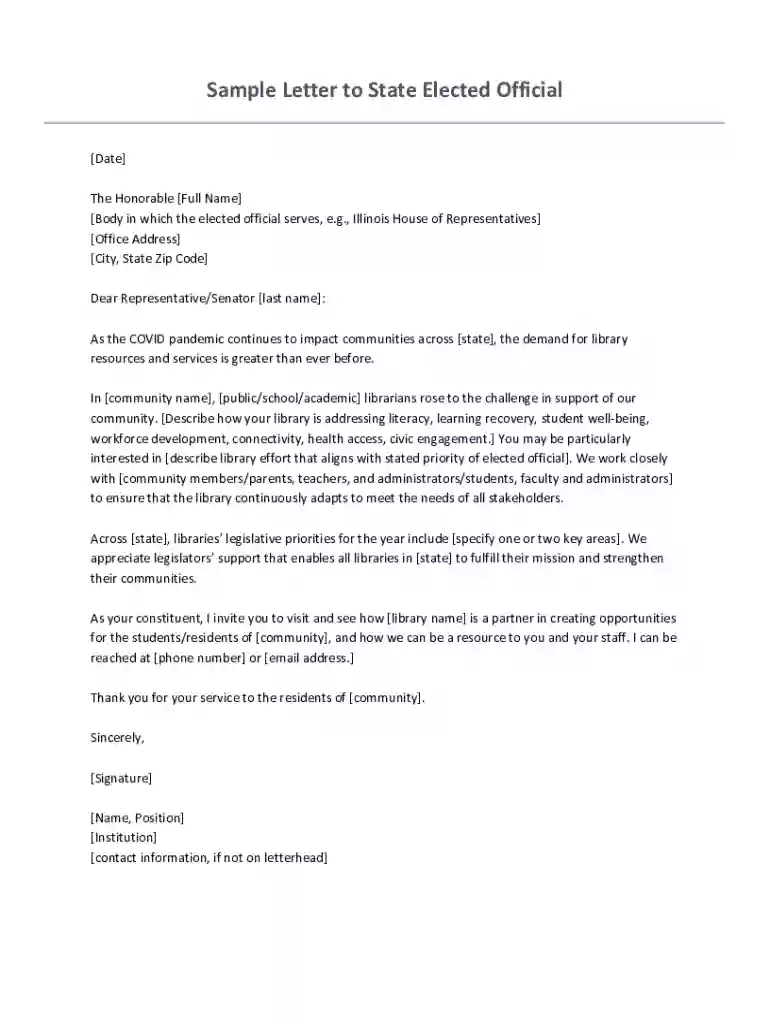
Type text, add images, blackout confidential details, add comments, highlights and more.

Draw your signature, type it, upload its image, or use your mobile device as a signature pad.

Send it via email, link, or fax. You can also download it, export it or print it out.
A "Sample Letter to State Elected Official" is a template or guide designed for individuals or organizations wishing to communicate specific issues, concerns, or requests to their state representatives. Often, these letters are crafted to address particular matters, like public policies, community needs, or legislative priorities. By standardizing the structure and content, such letters ensure that communication with lawmakers is clear, focused, and professional, thereby increasing the likelihood of eliciting a meaningful response or action.
Identify the Recipient: Determine which state official is most relevant to the issue you are addressing. Each elected official typically oversees different community aspects, so ensuring you contact the right person is critical.
Customize the Template: Adjust the sample letter to fit your particular situation. Replace placeholder text with specific details, such as names, personal stories, and data that illustrate the impact of the issue.
Focus on Key Points: Stick to one or two main issues to avoid overwhelming your elected official. Clarity and conciseness enhance the effectiveness of your letter.
Support with Evidence: Include any relevant statistics, case studies, or personal anecdotes that underscore the significance of the issue.
Proofread the Document: Ensure there are no grammatical errors or typos. A polished letter reflects well on the sender and helps maintain the reader's attention.
Send the Letter: Deliver the letter through the preferred method of communication for the elected official, whether that's via email, traditional mail, or an online submission form.
Using a sample letter provides a structured format that simplifies the process of reaching out to government officials. It offers several advantages:
The sample letter can be used by a wide range of individuals and organizations, including:


A standardized letter often includes several crucial elements:
Different states may have unique protocols for engaging with elected officials. Some countries might have:
Library Resources: A citizen writes to a state representative advocating for increased funding and support for local library services during challenging times, highlighting the vital role libraries play in community education and development.
Environmental Concerns: An advocacy group might use the letter to push for legislative measures addressing climate change, providing specific data on local environmental impacts and requesting support for clean energy initiatives.
Education Policy Changes: Educators or school boards may use the letter to request changes in education policies, focusing on areas such as curriculum enhancements, teacher salaries, or classroom sizes.
Understanding these methods and how to utilize them effectively can ensure that your message is both sent and received efficiently, maximizing the impact of your advocacy efforts.
We've got more versions of the sample elected official letter form. Select the right sample elected official letter version from the list and start editing it straight away!
| Versions | Form popularity | Fillable & printable |
|---|---|---|
| 2021 | 4.1 Satisfied (42 Votes) |
At DocHub, your data security is our priority. We follow HIPAA, SOC2, GDPR, and other standards, so you can work on your documents with confidence.





If you are writing to an elected official, show respect for the position by using the title of the office, and the officials full name.
Jan 20, 2023 State lawmakers introduced nearly 2900 bills based on ALEC templates from 2010 through 2018. More than 600 of them became law.
Begin the letter with an appropriate phrase, such as Secretary Doe has asked me to reply, The Ambassador appreciated your letter of, In the absenceRead more


