Definition & Meaning
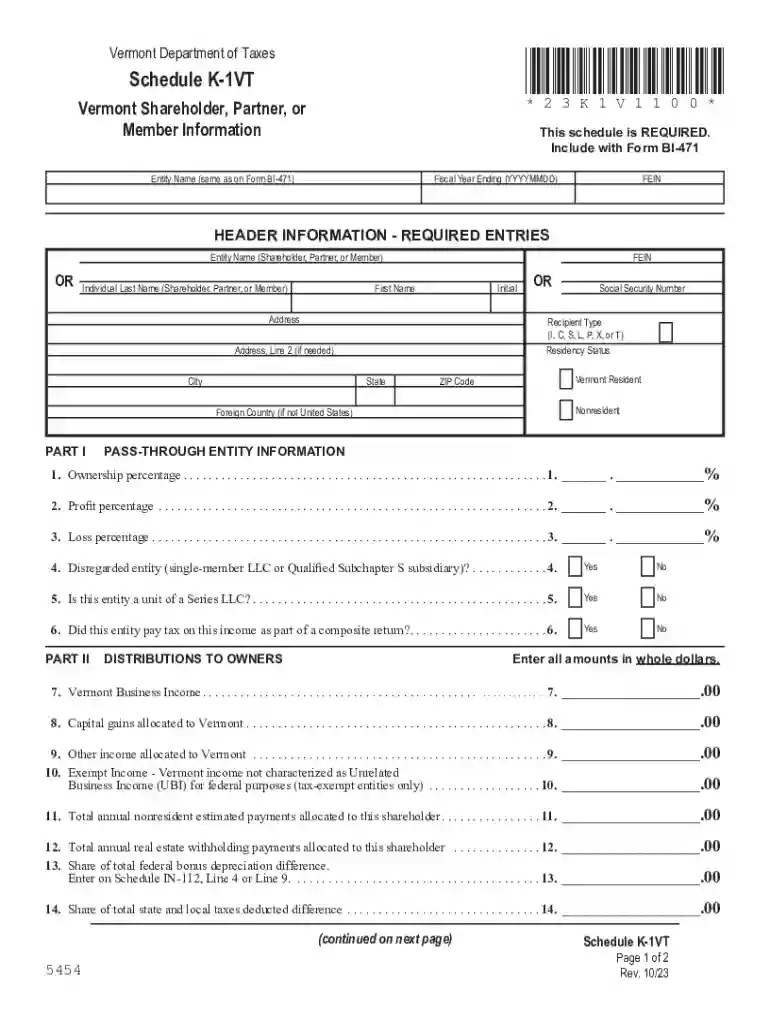
The Schedule K-1VT is a tax form issued by the Vermont Department of Taxes. It is specifically designed for shareholders, partners, or members of pass-through entities, such as S corporations, partnerships, and LLCs taxed as partnerships. This form is essential for reporting an individual's share of the entity's income, deductions, credits, and other pertinent tax items. The form helps ensure that the individual taxpayer accurately accounts for and pays taxes on their allocated share of the pass-through entity's earnings.
Key Components
- Entity Information: Includes details about the pass-through entity, such as its name, address, and federal identification number. It serves to identify the source of the reported income and deductions.
- Recipient Information: Provides the necessary data about the individual shareholder, partner, or member. This section captures the recipient's name, address, and taxpayer identification number, ensuring the IRS knows who is receiving the reported tax information.
Steps to Complete the SCHEDULE K-1VT Shareholder, Partner, or Member
Completing Schedule K-1VT requires attention to detail and adherence to tax regulations. Here's a step-by-step breakdown:
- Gather Necessary Information: Collect the pass-through entity's income, deductions, credits, and apportionment factors. Verify the accuracy of the entity and recipient details.
- Fill in Entity and Recipient Data: Ensure all identifying information is accurately entered. Cross-check with federal tax documents and entity records to confirm correctness.
- Report Ownership Percentage: Specify the ownership interest of the individual in the pass-through entity. This percentage is crucial for determining their share of income or loss.
- Allocate Income & Deductions: Calculate the individual's share of income, deductions, and credits based on their ownership percentage and the entity's financial performance.
- Complete Apportionment Factors: If necessary, detail how income is divided among different jurisdictions, especially relevant for multi-state operations.
- Review for Accuracy: Double-check all entries for precision and consistency with other tax documents. Errors can lead to audits or penalties.
Potential Variations
- Complex Entities: For entities with multiple subsidiaries or affiliates, ensure each entity's data is accurately aggregated and reported.
- State-Specific Allocations: Consider Vermont-specific tax rules that might affect the apportionment of income and deductions.
Key Elements of the SCHEDULE K-1VT Shareholder, Partner, or Member
Understanding the crucial parts of the Schedule K-1VT form ensures thorough and accurate completion:
- Profit and Loss Allocations: Specifies how the entity distributes profits and losses to its members. Each participant receives a share based on their ownership percentage.
- Distributions: Details any distributions made to shareholders or partners. These are essential for tax reporting, as distributions can sometimes be non-taxable returns of capital.
- Apportionment Factors: These factors provide a breakdown of how the income is allocated among different states. It's crucial for entities operating in multiple jurisdictions.
IRS Guidelines
The IRS has established guidelines on how Schedule K-1VT integrates with federal tax obligations:
- Use with Form 1040: Information from the Schedule K-1VT is essential for completing individual federal tax returns. It ensures all income and deductions from the entity are reported correctly.
- Cross-Verification: Taxpayers should cross-check information on their Schedule K-1VT with their federal Schedule K-1 to confirm alignment and avoid discrepancies.
Filing Deadlines / Important Dates
It's critical to adhere to strict filing deadlines to avoid penalties:
- General Deadline: The Schedule K-1VT is typically due when the entity files its Vermont tax return, which aligns with federal deadlines, usually March 15 for S corporations and partnerships.
- Extensions: Entities can apply for an extension, but any taxes owed must still be paid by the original due date to avoid interest and penalties.
Penalties for Non-Compliance
Failure to comply with filing requirements can result in significant consequences:
- Late Filing Penalties: Vermont imposes penalties on entities and individuals who fail to file on time. These can accumulate rapidly and affect overall tax liabilities.
- Audit Risks: Incomplete or inaccurate Schedule K-1VT filings can trigger audits, exposing entities to further scrutiny and potential fines.
Legal Use of the SCHEDULE K-1VT Shareholder, Partner, or Member
Schedule K-1VT serves several legal purposes in tax reporting:
- Ensuring Compliance: Demonstrates adherence to Vermont tax laws and regulations for pass-through entities.
- Tracking Financial Interests: Provides a legal record of an individual's financial interests and received income from the entity.
State-Specific Rules for the SCHEDULE K-1VT Shareholder, Partner, or Member
Vermont has particular tax policies pertaining to the Schedule K-1VT:
- Apportionment and Allocation: Vermont-specific rules may affect how income is apportioned across state lines, impacts part-year residents, or impacts non-residents conducting business within the state.
- Filing Requirements for Non-residents: Special considerations might apply to non-resident members receiving Vermont-sourced income through a pass-through entity.