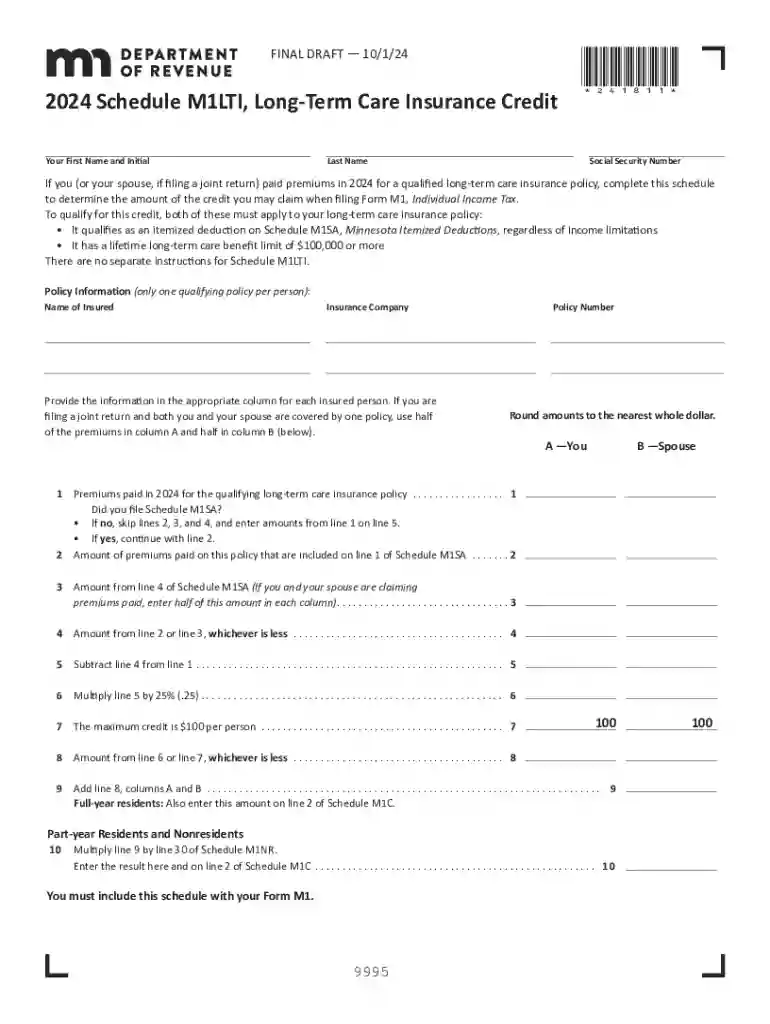
Definition and Meaning of Minnesota Long Term Care Insurance
Minnesota Long Term Care Insurance is designed to cover the cost of services required by individuals who have chronic illnesses or disabilities, primarily focusing on the needs of the elderly. This insurance assists with the costs of care in settings such as nursing homes, home health care, and other long-term facilities that offer assisted living services. The main objective of this insurance is to alleviate financial burdens by offering coverage for services that traditional health insurance or Medicare typically do not cover.
Eligibility Criteria for Minnesota Long Term Care Insurance
To determine eligibility for Minnesota Long Term Care Insurance, several factors need to be considered:

- Age Requirements: Most policies are available to individuals between 40 to 79 years old. Purchasing at a younger age often means lower premiums.
- Health Status: Underwriters will assess your current health status, reviewing medical history and any pre-existing conditions.
- Benefit Triggers: Eligibility may depend on the inability to perform at least two activities of daily living (ADLs) such as bathing, dressing, eating, transferring, etc., without assistance.
Application Process and Approval Time
Understanding and following the application process correctly is crucial:
- Initial Consultation: It is recommended to consult with a financial advisor or insurance agent to understand policy options and requirements.
- Application Submission: Complete the application form accurately, providing necessary personal and health information.
- Underwriting Assessment: After submission, the insurance company will assess your application. This may include health screenings or interviews.
- Approval or Denial: The process usually takes 30 to 60 days. Approved applicants will receive a policy agreement outlining terms and premiums.
Key Elements of the Insurance Policy
The key components that are typically outlined in a Minnesota Long Term Care Insurance policy include:
- Daily or Monthly Benefit Amounts: The maximum coverage amount available for each day or month of care.
- Benefit Periods: Defined durations for coverage, ranging from two to ten years, or offer a lifetime benefit.
- Elimination Period: A waiting period from the onset of need until benefit payouts begin, often spanning 30 to 90 days.
- Inflation Protection: Options to increase benefit amounts to keep up with inflation, ensuring future costs are covered.
State-Specific Rules for Minnesota Long Term Care Insurance
Minnesota has unique regulations that govern long-term care insurance policies:
- Partnership Policies: Minnesota offers the Long Term Care Partnership Program, which provides asset protection benefits as part of Medicaid eligibility.
- Consumer Protections: The state mandates a "free-look" period within which a policyholder may cancel and receive a full refund.
- Regulatory Oversight: Policies must comply with standards established by the Minnesota Department of Commerce, ensuring consumer rights and fair practices.
Required Documents for Application
Several documents are typically required to complete your application:
- Proof of Age: A birth certificate or government-issued ID is necessary to verify age eligibility.
- Health Records: Documentation from healthcare providers detailing recent medical history and conditions.
- Financial Statements: Proof of income and assets to determine premium payments and policy structure.
Examples of Using Minnesota Long Term Care Insurance
Consider the following scenarios where long-term care insurance may be beneficial:
- Retired Individuals: A retired person may use this insurance to cover home health care, enabling them to live independently for longer.
- Chronic Illness: Someone with a progressive medical condition like Parkinson’s might rely on these benefits for nursing home coverage.
- Family Caregivers: Insurance can offer respite care options, providing temporary relief for family members who serve as primary caregivers.
Digital vs. Paper Version of the Application
Considerations when deciding between digital and paper applications:
- Digital Application: Offers convenience and speed, allowing submission via secure online platforms. Ideal for those comfortable with technology.
- Paper Application: Suitable for those who prefer traditional methods. Provides a physical record of submission and can be mailed directly to the provider.
Penalties for Non-Compliance
Failing to comply with policy requirements or providing inaccurate information may result in:
- Revocation of Policy: Coverage may be canceled if obligations, such as premium payments, are not met.
- Claim Denials: Inaccurate information or unmet conditions could lead to claim denials, leaving policyholders without needed support.
- Financial Loss: Without coverage, individuals may face significant out-of-pocket expenses for long-term care services.