







Definition & Meaning
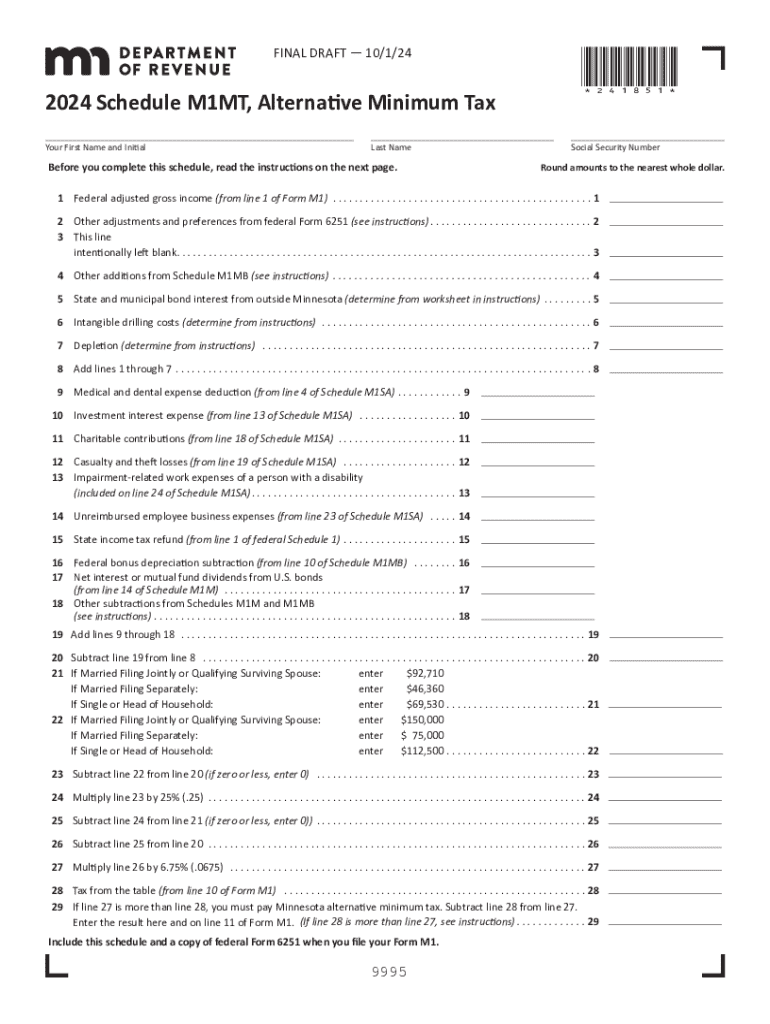
The Schedule M1MT Form for 2 is used by individuals to determine the Minnesota Alternative Minimum Tax (AMT) they owe. This form is crucial for taxpayers whose federal tax returns trigger AMT considerations. It outlines the necessary steps and calculations involved, providing taxpayers with a structured method to report their income, modifications, and applicable deductions. By completing the federal Form 6251 first, individuals can ascertain whether they are subject to state-level AMT based on their financial activities.
Steps to Complete the Schedule M1MT Form
-
Gather Your Federal Tax Information: Before starting the Schedule M1MT, ensure that you have completed your federal tax returns. The calculations begin from your federal income, adjustments, and deductions.
-
Calculate Adjustments and Preferences: Identify any items that require adjustments or preferences, such as specific income types or deductions, which are treated differently for AMT purposes in Minnesota.
-
Fill in Income and Deductions: Enter the necessary information on the available lines for income, exemptions, and deductions that reflect your specific scenario.
-
Determine Tentative Minimum Tax: Calculate your tentative minimum tax by following the form's instructions, which usually involve comparing regular Minnesota tax with AMT calculations to determine any additional owed tax.
-
Complete the Form and Review: Double-check all entries and calculations to ensure accuracy. This step is vital to prevent errors that could lead to overpayment or the necessity for amendments later.
Important Terms Related to Schedule M1MT Form
-
Alternative Minimum Tax (AMT): A parallel tax system that ensures that high-income earners pay a minimum amount of tax.
-
Adjustment Items: Income or deductions that are modified for AMT calculations. These may not align precisely with regular state tax guidelines.
-
Federal Form 6251: A federal document that determines your AMT liability. Completing this form is crucial before addressing Schedule M1MT.
-
Tentative Minimum Tax: The estimated AMT calculated during the form’s completion which is then compared against regular tax to establish any additional amounts due.
Legal Use of the Schedule M1MT Form
The Schedule M1MT is a legal document designed to ensure fairness in the Minnesota state tax system by enforcing minimum tax contributions from taxpayers benefiting from deductions and exemptions. Ensuring accurate completion is crucial for compliance; errors or omissions might lead to penalties or interest charges. Additionally, familiarity with both federal and state guidelines will aid in correct form completion, reflecting true liabilities.
IRS Guidelines
The IRS requires individuals to complete the federal Form 6251 to ascertain their federal AMT obligations. This IRS form serves as the foundation for filling out the Schedule M1MT. It is important for taxpayers to ensure consistency between federal and state filings to avoid discrepancies that can lead to audits or penalties.
Filing Deadlines / Important Dates
The Schedule M1MT must be submitted in conjunction with the Minnesota state tax return. Generally, this aligns with the federal tax filing deadline of April 15 each year. Extensions may be available, but it's essential to file Form M13, the Minnesota Extension form, to receive additional time, typically until October 15.
Required Documents
-
Federal Tax Returns: Ensure your completed federal tax forms, particularly Form 1040 and Form 6251, are accessible.
-
Income Statements: W-2s, 1099s, and other documentation that provides comprehensive income details.
-
Deduction and Credit Records: Maintain an accurate calculation of deductions and credits relevant to AMT.
Form Submission Methods
Online
-
Minnesota Department of Revenue Website: Offers an electronic submission option, which can be faster and more efficient.
-
Third-Party Tax Software: Many programs such as TurboTax and H&R Block support Schedule M1MT e-filing.
- Paper Copies: Can be mailed directly to the Minnesota Department of Revenue. Always ensure any mailed forms are postmarked by the applicable deadline to avoid late submission penalties.
Penalties for Non-Compliance
Failing to file the Schedule M1MT or incorrectly completing the form can result in penalties. These might include:
-
Fines: Significant monetary penalties may be imposed based on the amount of unpaid taxes due to errors or late filings.
-
Interest Charges: Accruing daily based on the total owed amount if payments are late.
-
Legal Consequences: Persistent non-compliance can lead to more severe repercussions, including liens.
Understanding and adhering to all requirements involved with the Schedule M1MT form will ensure compliance and aid in accurate reporting of Minnesota's Alternative Minimum Tax.




