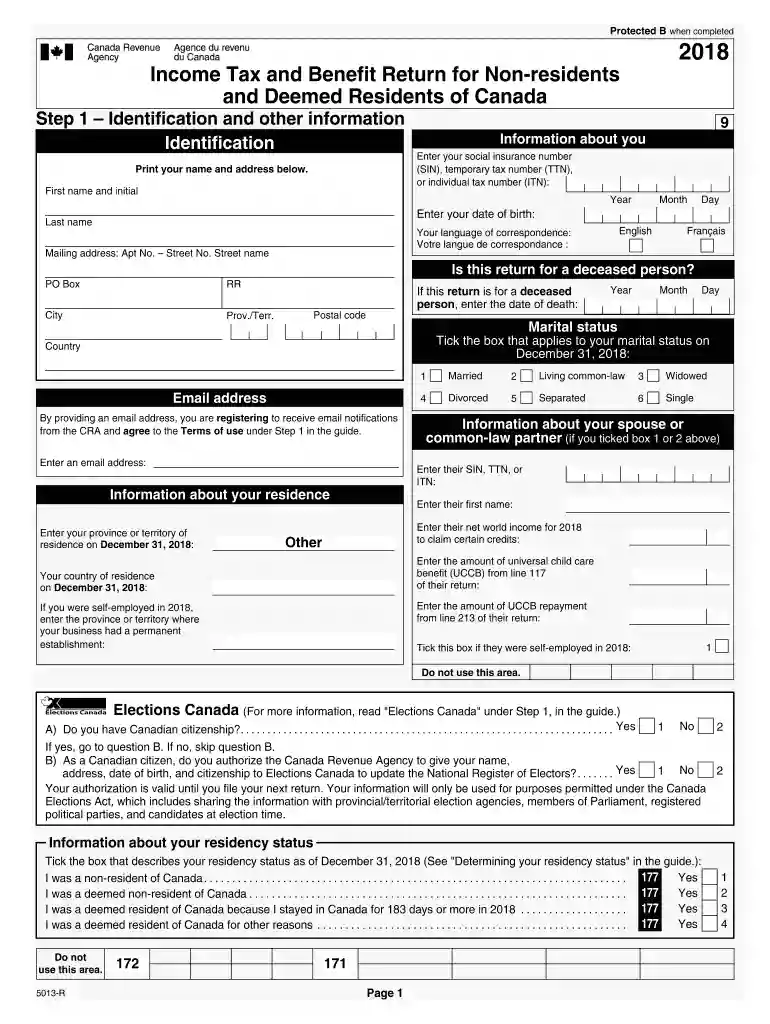
Definition and Meaning of T1 General Sample
The T1 General sample refers to a tax form—specifically, the T1 General Income Tax and Benefit Return—used by individuals in Canada to file their annual income tax. The T1 General includes all necessary information for reporting income, calculating deductions and credits, and determining tax liability. This form serves as a comprehensive template for the collection of personal tax information, ensuring compliance with Canadian tax regulations. In the United States context, the T1 form can help individuals prepare similar documents for their tax obligations or familiarize themselves with tax structures.
Key Components of the T1 General Form
- Identification Information: This section requires personal details such as name, address, and social insurance number (SIN).
- Income Reporting: Here, taxpayers list all sources of income, ensuring they comply with the requirements for accurate income declaration.
- Deductions and Credits: This part allows for various tax deductions and credits applicable to the individual's situation, which can significantly affect overall tax liability.
- Tax Calculation: At the end of the form, individuals compute their total tax owed or the refund they can expect, culminating the filing process.
Understanding the components of the T1 General form enables users to grasp its relevance in the tax system, facilitating smooth tax filing annually.
Steps to Complete the T1 General Sample
Completing the T1 General sample involves several methodical steps to ensure accurate filing.
- Gather Necessary Documentation: Before starting, collect all documents that report income and applicable deductions, such as T4 slips, statements of investment income, and receipts for eligible expenses.
- Begin with Identification Details: Enter your identification information accurately, as this will ensure the Canada Revenue Agency (CRA) processes your return without issues.
- List All Sources of Income: Detail each source of income, including salary, rental income, and investment earnings. Be cautious to follow the income declaration guidelines provided by the CRA.
- Claim Deductions and Credits: Identify and enter all relevant personal deductions and applicable tax credits, which can reduce the amount of tax owed.
- Calculate Tax Owed or Refund Expected: Use the formula provided in the T1 General to compute your total income, deductions, credits, and tax liability.
- Review for Accuracy: Double-check all entries to ensure there are no errors, as mistakes can lead to penalties or delays in processing.
- Submit the Form: Once all information is confirmed, submit the T1 General form either electronically through the CRA’s online services or by mailing a completed paper form.
These steps provide a structured approach to utilizing the T1 General sample effectively, helping individuals fulfill their annual tax obligations efficiently.
How to Obtain the T1 General Sample
Acquiring a T1 General sample can be achieved using various straightforward methods:
- Visit the CRA Website: The most direct way to obtain a T1 General sample is to visit the official Canada Revenue Agency (CRA) website. They provide PDF versions of the form that individuals can download and print.
- Tax Preparation Software: Many tax preparation applications, such as TurboTax or H&R Block, offer access to the T1 General form within their platforms, enabling users to fill out and file electronically.
- Libraries or Community Centers: Local libraries or community service organizations often have hard copies of tax forms available for public use, including the T1 General sample, particularly during the tax season.
- Accountants or Tax Professionals: Consulting with a tax advisor can also provide you with a T1 General sample, along with expert assistance in completing it accurately.
Acquiring this form is straightforward, ensuring individuals have access to the necessary information to fulfill their tax responsibilities.
Important Terms Related to T1 General Sample
Familiarity with specific terminology can facilitate a better understanding of the T1 General sample. Here are essential terms associated with this tax form:
- Income Tax: A tax imposed on individuals or entities based on their income or profit.
- Deductions: Allowable expenses that reduce gross income and overall tax liability, such as contributions to Registered Retirement Savings Plans (RRSPs).
- Tax Credits: Direct reductions of tax owed; these may be non-refundable or refundable.
- Filing Status: The classification of taxpayer status, influencing rates, and eligibility for credits.
- Assessment: The process in which the CRA evaluates the submitted tax return to confirm accuracy and compliance.
- Non-Compliance: Failure to meet tax obligations, which can result in penalties or interest charges.
Understanding these terms equips individuals with the language needed to navigate the tax system effectively, enabling informed discussions and decision-making regarding their tax responsibilities.
Filing Deadlines and Important Dates for T1 General Sample
Awareness of deadlines is crucial for successful tax filing. Generally, the following important dates apply to filing the T1 General sample:
- April 30: The standard filing deadline for individuals who do not own a business. Submissions must be received by the CRA by this date to avoid late penalties.
- June 15: For self-employed individuals, the deadline is extended to June 15; however, any taxes owed must still be paid by April 30.
- Payment Deadline: Payment for any estimated taxes due must be made by the usual April date, even if the submission date for the T1 General is later.
- Amendments or Adjustments: If you need to adjust a previously filed T1 General, you can generally do so within three years of the original filing date.
Keeping these deadlines in mind prevents complications and ensures compliance with Canadian tax laws.