
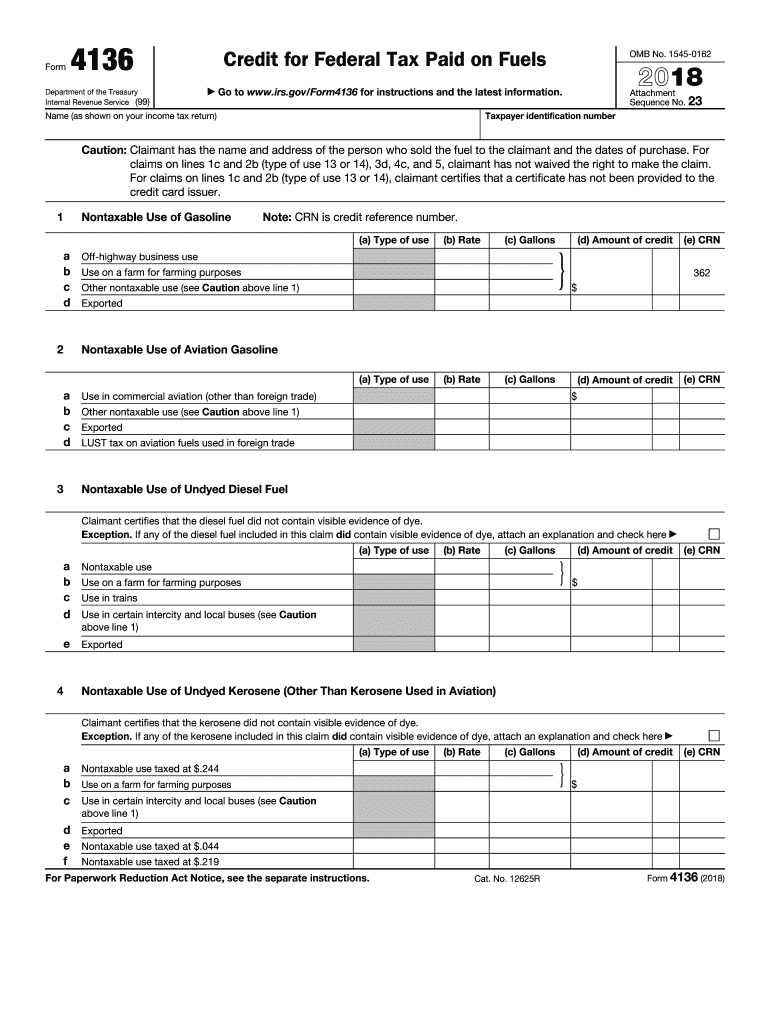







Definition & Purpose of IRS Form 4136
IRS Form 4136 is used by taxpayers to claim credits for federal taxes paid on specific types of fuels, such as gasoline, aviation gasoline, undyed diesel fuel, and kerosene. It is primarily utilized for reporting nontaxable fuel use and calculating the corresponding tax credit. The form contains detailed sections for documenting gallons used and the total credit claimed, making it essential for businesses involved in transportation or heavy fuel use sectors.
How to Use IRS Form 4136 Instructions for 2017
The 2017 version of IRS Form 4136 instructions provides guidance on correctly filling out the form to ensure accurate tax credit claims. Key steps include:
- Determining the eligible fuel uses and types listed in the form.
- Accurately recording the volume of each fuel category used.
- Applying the correct tax credit rates as outlined in the instructions.
Completing the form accurately is crucial to avoid discrepancies and potential penalties.
Obtaining the IRS Form 4136 Instructions
IRS Form 4136 instructions for 2017 can be obtained through multiple channels:
- Downloading directly from the IRS website in PDF format.
- Requesting a physical copy by contacting the IRS tax forms division.
- Accessing through tax preparation software that includes this form.
Having the instructions on hand ensures clarity during the filing process.
Steps to Complete IRS Form 4136
Filling out IRS Form 4136 involves several distinct steps:
- Identify the Fuel Types: Review each fuel type and their applicable uses.
- Calculate Usage: Log the gallons used for each nontaxable purpose.
- Apply Rates: Use the rate table to apply the appropriate credit per gallon.
- Calculate Total Credit: Add up individual credit claims for the total amount.
- Review and Submit: Double-check calculations and submit the form with your tax return.
These steps help secure the correct credits against fuel taxes paid.
Who Typically Uses IRS Form 4136
IRS Form 4136 is commonly used by:
- Transportation Companies: Engage in operations like airline services or freight transport where fuel use is significant.
- Agricultural Businesses: Use large amounts of fuel for machinery.
- Governmental Bodies: Utilize fuel for public service vehicles and operations.
These entities benefit most from the credits applied to bulk fuel usage.
Key Elements of IRS Form 4136
Important components on IRS Form 4136 include:
- Nontaxable Use Categories: Specify which uses qualify for tax credits.
- Credit Computation Chart: Provides rates for different fuel types.
- Claims Certification: Requires affirmation of compliance with requirements.
Understanding these elements ensures accurate form completion and compliance with IRS regulations.
Eligibility Criteria for IRS Form 4136
To be eligible to claim credits using IRS Form 4136, applicants must:
- Have paid taxes on fuels listed in the form.
- Utilize these fuels for exempt purposes such as farming, nonprofit educational operations, or export.
- Accurately document and maintain records of fuel usage.
These criteria help determine qualification and entitlement to credits.


IRS Guidelines for Form 4136
The IRS guidelines for Form 4136 are designed to ensure:
- Correct application of credit rates.
- Compliance with federal fuel tax requirements.
- Accurate documentation for audit purposes.
These guidelines help safeguard taxpayers from errors that could lead to audits or penalties.
Filing Deadlines & Important Dates
IRS Form 4136 has specific filing deadlines:
- Must be filed with the taxpayer's annual federal income tax return.
- Late submissions may be subject to penalties unless an extension is granted.
- Filling it out promptly ensures timely credit application.
Meeting these deadlines is crucial for maintaining compliance and securing tax benefits.
Penalties for Non-Compliance
Failing to comply with IRS Form 4136 regulations can result in:
- Denied credits, leading to higher unpaid taxes.
- Potential penalties for incorrect or fraudulent claims.
- Increased scrutiny and potential audits by the IRS.
Understanding non-compliance risks encourages accurate and honest reporting.




