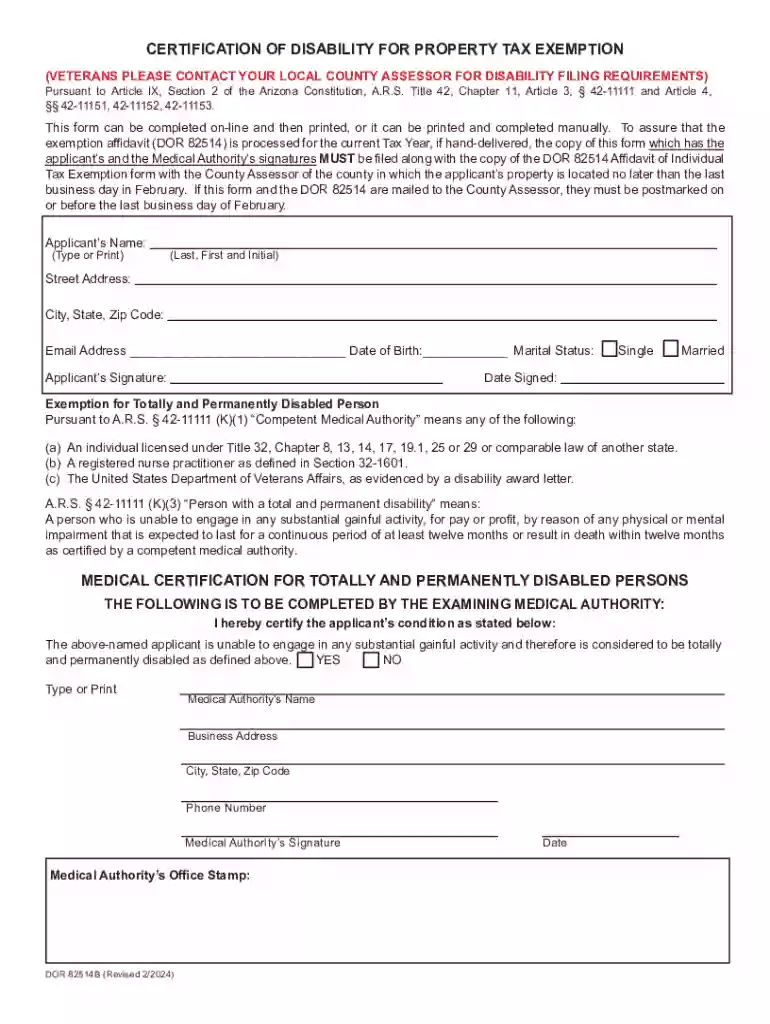
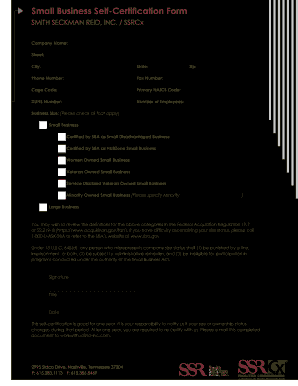
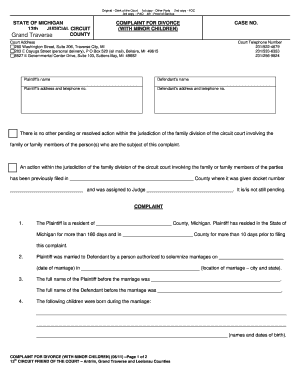
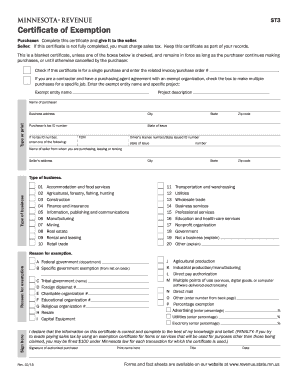
AFFIDAVIT FOR ORGANIZATIONAL TAX EXEMPTION 2026

Get Form
AFFIDAVIT FOR ORGANIZATIONAL TAX EXEMPTION Preview on Page 1

Here's how it works

01. Edit your form online
Type text, add images, blackout confidential details, add comments, highlights and more.

02. Sign it in a few clicks
Draw your signature, type it, upload its image, or use your mobile device as a signature pad.

03. Share your form with others
Send it via email, link, or fax. You can also download it, export it or print it out.

Definition & Meaning

An "AFFIDAVIT FOR ORGANIZATIONAL TAX EXEMPTION" is a legal document used by organizations to certify their eligibility for tax-exempt status under specific provisions of tax law. It serves as a sworn statement detailing how the organization meets the necessary criteria for exemption from certain taxes, such as property or income tax. This affidavit must often be notarized to confirm the authenticity of the information provided. The primary purpose is to establish the organization's intent and compliance with the requirements set forth by tax authorities to maintain its tax-exempt status legally.

How to Use the Affidavit for Organizational Tax Exemption

Using an affidavit involves several critical steps. First, an organization must assess its eligibility based on the relevant tax legislation. Then, it should gather all necessary supporting documents that demonstrate compliance with these requirements, such as articles of incorporation, financial statements, and evidence of the organization's primary activities.

  1. Preparation: Review the specific instructions associated with the affidavit to ensure you understand the information required.
  2. Completion: Fill out the form accurately, including all necessary details about the organization, such as its legal name, tax identification number, and the basis for exemption.
  3. Verification: Attach all requisite documents to substantiate your claims.
  4. Notarization: Sign the affidavit in front of a notary public to validate the authenticity of the affidavit.
  5. Submission: Submit the completed affidavit to the appropriate tax authority by the specified deadline, taking note of any additional submission guidelines.

Steps to Complete the Affidavit for Organizational Tax Exemption

Completing the affidavit involves meticulous attention to detail. Organizations must follow these steps to ensure accuracy and compliance:

  1. Identify Legal Requirements: Understand the tax laws and exemptions applicable to your organization.
  2. Gather Documentation: Collect all necessary supporting documents, including organizational bylaws, tax returns, and any certifications or licenses.
  3. Fill Out the Affidavit: Provide accurate information on the form, including organizational details and the specifics of the tax exemption being sought.
  4. Review for Accuracy: Double-check the form for any errors or omissions that could delay the process.
  5. Notarize the Document: Arrange for a notary to witness the signing of the affidavit to meet legal requirements.
  6. File the Affidavit: Submit it along with all required documentation to the relevant tax authority.

Eligibility Criteria

To qualify for an organizational tax exemption, an entity must meet certain criteria defined by the tax authorities. Generally, these include:


  • Non-profit Status: Being recognized as a non-profit organization under tax law, typically by having a 501(c) status.
  • Charitable Purpose: Operating mainly for religious, charitable, scientific, educational, or similar purposes.
  • Public Benefit: Demonstrating that the organization's activities primarily benefit the public.
  • Financial Transparency: Providing audited financial statements that show income, expenses, and operational costs.
  • Organizational Structure: Having a formally recognized structure (e.g., a board of directors) that aligns with non-profit objectives.
decoration image ratings of Dochub

Required Documents

Compiling the correct documentation is crucial for a successful application. Key documents include:

  • Articles of Incorporation: Official documents that establish the existence of your organization.
  • Financial Statements: Detailed reports of income, expenses, and assets.
  • Proof of Non-Profit Status: IRS designation letters proving tax-exempt status.
  • Mission Statement: A clear explanation of the organization's goals and objectives.
  • Activity Reports: Documentation of past activities demonstrating the organization's alignment with its stated mission.

Form Submission Methods (Online / Mail / In-Person)

Submitting the affidavit is flexible and may be done through various methods, depending on the requirements of the tax authority:

  • Online Submission: Some authorities offer electronic filing options, allowing the upload of scanned documents and digital signatures.
  • Mail: Traditional mailing is often available, requiring the organization to send complete packets with all affidavits and documents.
  • In-Person: Direct submission at specified tax offices may be required in certain jurisdictions to verify authenticity further.

Penalties for Non-Compliance

Failing to submit the affidavit according to regulations may result in significant consequences. Penalties can include:

  • Fines: Monetary penalties imposed for late or incorrect submissions.
  • Loss of Exempt Status: Risk of losing tax-exempt status, which can affect the organization's financial stability.
  • Legal Repercussions: Possible legal actions for fraudulent claims or omissions of critical information.

State-Specific Rules for the Affidavit for Organizational Tax Exemption

While general criteria apply nationwide, individual states may have additional requirements:

  • Varying Definitions of Public Benefit: Some states emphasize different aspects of public benefit organizations must address.
  • Additional Documentation: Certain states may require further documents, such as environmental impact reports or community benefit statements.
  • Special Submission Deadlines: States may have unique deadlines that organizations must adhere to for successful exemption claims.

Digital vs. Paper Version

Organizations can choose between digital and paper submissions based on their preferences and capabilities:

  • Digital Version: Enables faster processing, offers secure electronic signatures, and simplifies tracking submission status.
  • Paper Version: Provides a tangible record but may require more time for processing and higher mailing costs.

Both versions have specific advantages, and the choice often depends on organizational convenience and the requirements of the tax authority.

be ready to get more

Complete this form in 5 minutes or less

Get form

Got questions?

We have answers to the most popular questions from our customers. If you can't find an answer to your question, please contact us.
Contact us
501(c)(3) means a nonprofit organization that has been recognized by the IRS as being tax-exempt by virtue of its charitable programs. Tax-exemption is the result of a nonprofit organization being recognized by the IRS as being organized for any purpose allowable under 501(c)(3) 501(c)(27).
Organizations organized and operated exclusively for religious, charitable, scientific, testing for public safety, literary, educational, or other specified purposes and that meet certain other requirements are tax exempt under Internal Revenue Code Section 501(c)(3).
You can search Pub.78 data (for 501(c)(3) or other organizations eligible to receive deductible charitable contributions) or the exempt organizations business master file extract (for other 501(c) organizations) to find out if the organizations tax- exempt status has been reinstated.
A 501(c)(3) determination letter is an official document issued by the United States Internal Revenue Service (IRS) signifying that a nonprofit organization gains tax-exempt status under section 501(c)(3) of the Internal Revenue Code (IRC).
Most organizations use Form 1023, Application for Recognition of Exemption Under Section 501(c)(3) of the Internal Revenue Code, and the related instructions to apply. (Organizations applying for recognition of exemption under Section 501(c)(4) use Form 1024-A and its instructions.

Security and compliance

At DocHub, your data security is our priority. We follow HIPAA, SOC2, GDPR, and other standards, so you can work on your documents with confidence.
Learn more
ccpa2
pci-dss
gdpr-compliance
hipaa
soc-compliance

People also ask

Second, to be recognized as tax-exempt under Section 501(a), most organizations must file an application for recognition of exemption with the IRS. Most organizations use Form 1023, Application for Recognition of Exemption Under Section 501(c)(3) of the Internal Revenue Code, and the related instructions to apply.
The request should be submitted using Form 4506-A, or in a letter containing the name and employer identification number of the organization along with the name, address, and phone number of the requester. Securing a copy of the original determination letter to send to you may take up to 60 days or longer.
A sales tax exemption certificate is an official document that allows a business to make purchases without paying the standard sales tax. This certificate is proof that the purchases are not subject to sales tax due to specific exemptions that apply to the business.

Related links