
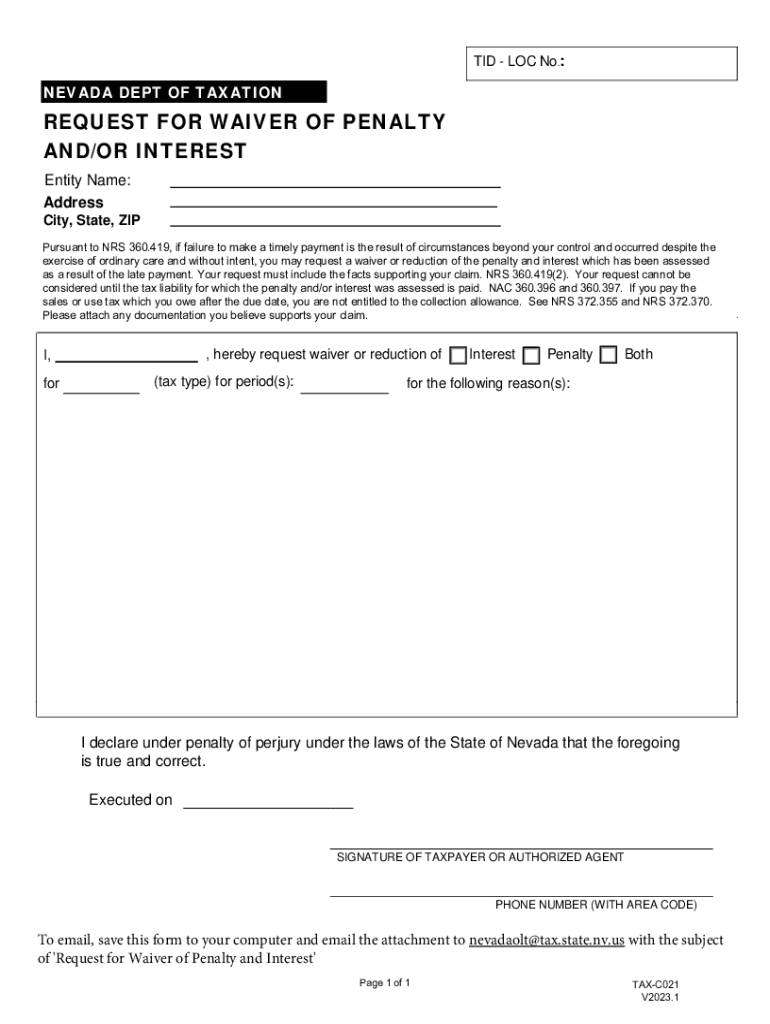







Definition and Purpose of the Waiver Request Form
The Nevada Request for Waiver of Penalty and Interest Form is a document designed for Nevada taxpayers who request relief from penalties or interest due to late tax payments. This request serves to explain the circumstances that led to delayed payments, and it requires the submission of supportive documentation. The form underscores that the underlying tax liability must be settled before any waiver considerations are made.
How to Use the Nevada Request for Waiver of Penalty and Interest Form
To effectively utilize this form, taxpayers need to provide a detailed account of the reasons for their late payment. This may include personal or financial hardships, natural disasters, or other unforeseen circumstances. Proper documentation should accompany the narrative to substantiate the claims, enhancing the chances for a waiver approval. Once completed, the form must be submitted to the Nevada Department of Taxation for review.
Steps to Complete the Form
- Gather Necessary Documents: Collect all relevant documents that support the reasons for the waiver request. This may include medical records, financial statements, or any official notices regarding the event or situation causing the delay.
- Complete the Form: Enter personal identification, business details if applicable, and a comprehensive explanation of the request using clear and concise language.
- Provide Supporting Evidence: Attach all gathered documents that back up the claim. Ensure each piece of evidence is clear and directly relevant to the situation described.
- Submit the Form: Review the completed form for accuracy and then submit it to the Nevada Department of Taxation either via mail or through authorized electronic submission portals if available.
- Follow Up: After submission, keep track of any correspondence from the Department and be ready to provide additional information if required.
Eligibility Criteria for Filing
Eligibility to file this form typically depends on the taxpayer's ability to demonstrate a legitimate reason for the delay in payment. Acceptable reasons might include error in filing, financial hardship, or a natural disaster. Importantly, the tax owed must have been paid before submitting the waiver request. Individuals and businesses must confirm that their case matches the criteria outlined by the Department of Taxation.


Key Elements of the Form
- Taxpayer Information: Includes full legal name, address, taxpayer ID, and contact details.
- Explanation of Circumstances: A detailed section where taxpayers describe the reason for the late payment and justify their request for a waiver.
- Signature Line: The form requires the taxpayer's signature to certify the truthfulness of the information provided.
- Instructions for Submission: Directions on how to file the form, including mailing addresses or information on electronic submission.
State-Specific Rules and Requirements
Nevada may have distinctive requirements compared to other states regarding the submission of a waiver request form. Taxpayers should be aware that each state has its jurisdiction-specific regulations about acceptable waiver reasons and documentation requirements. In Nevada, accurate and honest reporting, along with complete and robust documentation, is crucial for waiver approval.
Legal Use of the Waiver Form
Using the Nevada Request for Waiver of Penalty and Interest Form legally involves providing true and accurate information. Misrepresentation or omission of key facts can result in penalties and invalidate the waiver request. The form is designed to be a good faith effort on the taxpayer’s part to comply with Nevada tax laws while seeking relief from financial penalties.
Examples of Waiver Request Scenarios
- Natural Disasters: If a taxpayer was impacted by a natural disaster, like a wildfire or flood, they might seek a waiver explaining how the event affected their ability to make timely tax payments.
- Medical Emergencies: A sudden medical emergency, such as hospitalization or a critical illness, rendering the taxpayer unable to meet the tax payment deadline, may also serve as a basis for requesting a waiver.
- Technical Errors: Mistakes or errors in a tax software that led to unintentional payment delays can be grounds for filing a waiver if documented thoroughly.
Important Terms Regarding the Waiver Form
- Penalty and Interest: Fees imposed by the tax authority on overdue tax payments.
- Waiver: The act of formally relinquishing the penalty or interest fee as set by the taxpayer's request.
- Documentation: Supporting documents that verify the taxpayer's claim, crucial for the waiver approval process.
- Tax Liability: The total amount of tax that a taxpayer is legally obligated to pay to the tax authority.
These sections are designed to provide comprehensive guidance on the Nevada Request for Waiver of Penalty and Interest Form, clarifying its purpose, procedural steps, and contextual importance within Nevada's tax framework.




