
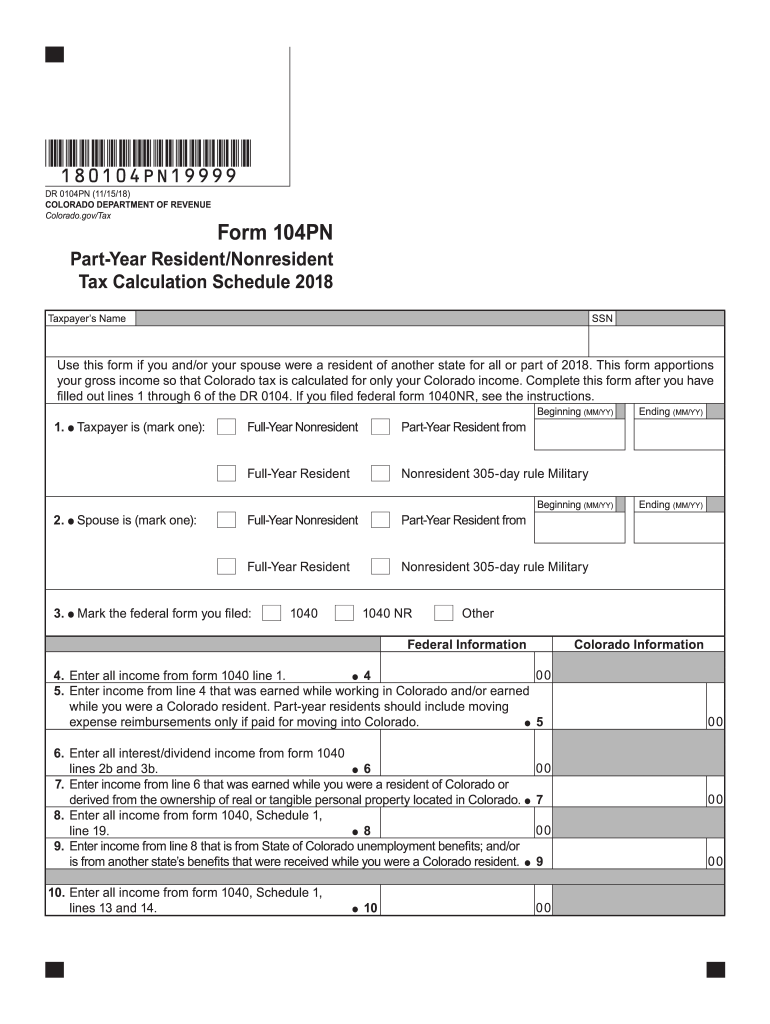







Definition & Purpose of 2015 Colorado Tax Form 104
The 2015 Colorado Tax Form 104 is an essential document for taxpayers residing in the state of Colorado during the 2015 tax year. This form is primarily used for reporting income earned within the state and calculating the appropriate amount of tax owed to the Colorado Department of Revenue. The form is applicable to both full-year and part-year residents, as well as nonresidents who have earned income from Colorado sources.
Key Features
-
Income Reporting: The form requires detailed reporting of different types of income earned, whether from employment, business operations, or other sources within the state.
-
Adjustments & Deductions: Taxpayers can input various deductions and adjustments such as retirement contributions, student loan interest, and health savings account deductions that may affect the taxable amount.
-
Credits & Exemptions: Sections are included for applying available credits and exemptions, which can reduce the overall tax liability when applicable.
How to Obtain the 2015 Colorado Tax Form 104
Taxpayers needing to file the 2015 Colorado Tax Form 104 can access it through several convenient avenues:
Sources
-
Online Access: The Colorado Department of Revenue's official website provides a downloadable PDF version of the form, ensuring ease of access.
-
Tax Software: Many tax preparation software packages like TurboTax or QuickBooks typically include this form and offer guided completion features.
-
Local Agencies: Physical copies can often be obtained from local libraries or government offices in Colorado.
Advantages of Digital Access
-
Immediate Availability: Download and print immediately from any location.
-
Built-in Calculations: Many digital formats include automatic calculations that reduce errors.
Steps to Complete the 2015 Colorado Tax Form 104
Completing the 2015 Colorado Tax Form 104 involves several systematic steps to ensure accuracy and compliance:
Step-by-Step Instructions
-
Gather Required Documents: Collect W-2s, 1099s, and records of other income or deductions.
-
Personal Information: Fill in the taxpayer’s full name, address, and Social Security number in the designated areas.
-
Income Details: Enter all relevant income sources such as wages, dividends, and other taxable income.
-
Adjustments & Deductions: Report eligible adjustments to reduce the taxable amount.
-
Tax Calculation: Use the enclosed tax tables to determine the base tax owed.
-
Credits and Payments: Apply any eligible credits and record any prepayments made.
-
Review & Submit: Double-check entries for accuracy before signing and submitting the form.
Tips for Accuracy
-
Double-Check Totals: Ensure all mathematical calculations are correct.
-
Consistent Information: Verify that all personal details align with other submitted information.
Who Typically Uses the 2015 Colorado Tax Form 104
This form is relevant to a variety of taxpayers in specific situations:


Typical Users
-
Full-Year Residents: Individuals who resided in Colorado for the entire year need to report their total income.
-
Part-Year Residents: Those who lived in Colorado for only part of the year must report income earned during their residency.
-
Nonresidents with Colorado Income: Individuals residing elsewhere but earning income from Colorado sources.
Special Considerations
- Students and Retirees: Special sections and line items may apply based on unique income types often pertinent to these groups.
Important Terms Related to the 2015 Colorado Tax Form 104
Understanding relevant terminology is crucial for accurate form completion:
Glossary
-
Adjusted Gross Income (AGI): The total income from all sources minus specific deductions, forming the base for taxable income.
-
Tax Credit: A direct reduction in tax liability for various eligible scenarios.
-
Filing Status: Classification of taxpayer type, affecting tax rates and brackets (e.g., single, married filing jointly).
-
Exemption: A claimable reduction in taxable income typically related to dependents.
Filing Deadlines & Important Dates
Being aware of deadlines ensures timely compliance:
Critical Dates
-
Initial Filing Date: April 15, 2016, for the 2015 tax year.
-
Extension Filing Date: October 17, 2016, if an extension was filed.
-
Payment Due Dates: Taxes owed were required to be paid by the initial filing deadline to avoid penalties.
Consequences of Missing Deadlines
- Penalties & Interest: Filing late without an extension can result in penalties and accrued interest on unpaid taxes.
Form Submission Methods
Options for submitting the 2015 Colorado Tax Form 104 include:
Methods
-
Online Submission: Taxpayers can file electronically through the state’s electronic filing system or with the help of tax preparation software.
-
Mailing Paper Forms: Completed forms can be mailed to the Colorado Department of Revenue using the address provided in the form instructions.
Advantages of Electronic Filing
-
Faster Processing: Electronic submissions are processed more quickly than mailed forms, leading to faster refunds.
-
Reduced Error Rates: Automated checks can catch common mistakes before submission.
Penalties for Non-Compliance
Non-compliance with filing and payment requirements can have serious financial implications:
Potential Penalties
-
Late Filing Penalty: Issued when the form is not submitted by the deadline.
-
Underpayment Penalty: Occurs when estimated tax payments are insufficient throughout the year.
-
Accuracy-Related Penalty: Applied for substantial understatement of tax or negligence.
Mitigation Strategies
-
Timely Extensions: Filing an extension does not extend the payment deadline but protects against late submission penalties.
-
Amending Returns: If errors are discovered post-submission, filing an amended return can rectify discrepancies and avoid penalties.




