







Definition & Meaning
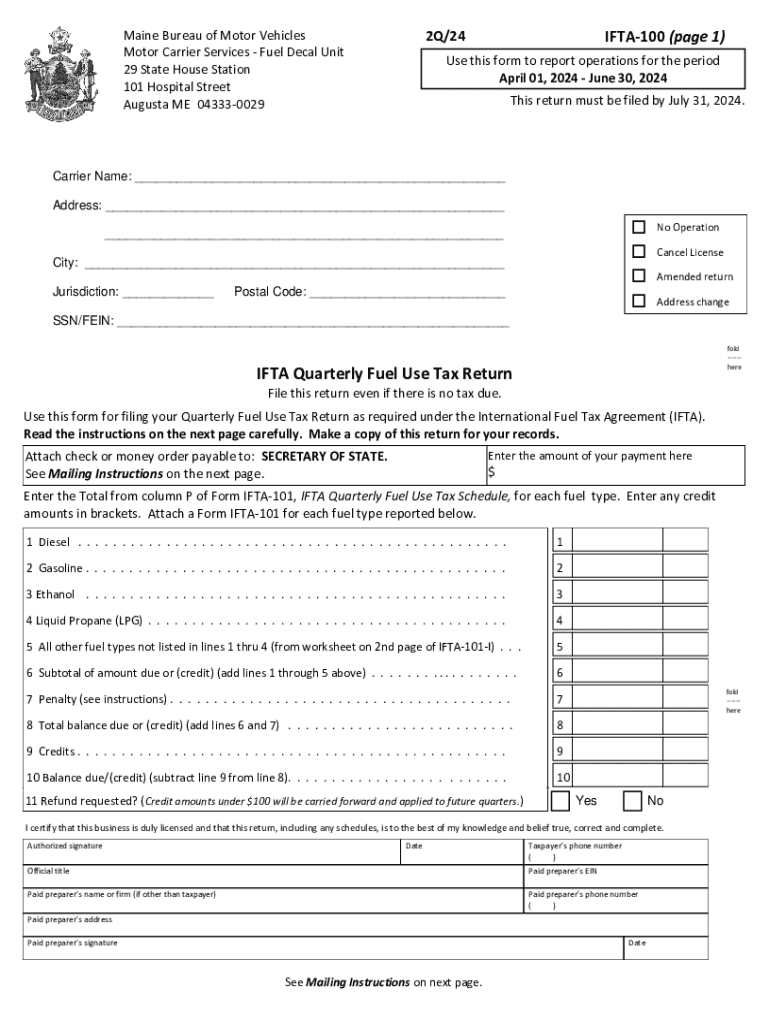
The "STATE OF MAINE International Fuel Tax Agreement Application" is a form used by individuals and businesses to report fuel usage across jurisdictions under the International Fuel Tax Agreement (IFTA). This application is crucial for those who operate commercial vehicles in multiple states and provinces, as it facilitates the equitable distribution of fuel taxes paid and used across various regions. The purpose of this application is to simplify the reporting of fuel use and ensure compliance with interstate tax obligations.
How to Obtain the STATE OF MAINE International Fuel Tax Agreement Application
To obtain the "STATE OF MAINE International Fuel Tax Agreement Application," applicants can visit the official website of the Maine Department of Transportation or contact their local jurisdiction's motor vehicle office. The application is typically available for download in a PDF format, ensuring accessibility. It's important for applicants to ensure they access the most current version of the form to avoid submission of outdated information.
Steps to Complete the STATE OF MAINE International Fuel Tax Agreement Application
-
Gather Required Information: Start by collecting all necessary documentation, including vehicle details, business information, and previous fuel tax records if applicable.
-
Complete Personal and Business Details: Fill in the initial sections of the form with your name, business entity type, and contact information.
-
Provide Vehicle Information: Accurately list each vehicle subject to the IFTA, including make, model, and vehicle identification number (VIN).
-
Fuel Usage and Tax Details: Detail the fuel types used and mileage covered in each jurisdiction. Use the IFTA-100 as a reference for accurate reporting.
-
Review and Sign: Before submission, review your form for completeness and accuracy. Sign and date the document to verify all information provided.
-
Submit the Form: Depending on the application requirements, submit via mail, in-person, or through an approved online submission portal.
Required Documents
Applicants need to prepare a range of documents to accompany the IFTA application:
- Business Registration Certificate: Proof of business registration with the state of Maine.
- Vehicle Registration: Current vehicle registration documents for each listed vehicle.
- Fuel Purchase Receipts: Detailed and comprehensive fuel receipts that align with mileage and jurisdiction use.
- Tax Identification Number: A valid EIN or social security number for individual applicants.
These documents validate the information entered on the application and help streamline the approval process.
Important Terms Related to the STATE OF MAINE International Fuel Tax Agreement Application
- Base Jurisdiction: The state where the licensee's operational control and records are based, and where fleet distance is accrued.
- IFTA Decal: Required stickers for each qualified vehicle indicating that the vehicle is registered under IFTA.
- Distance Records: Detailed logs of distance traveled by each vehicle across different jurisdictions.
- Tax Reporting Period: Typically a quarterly interval during which fuel use and tax liabilities are calculated and reported.
Understanding these terms ensures applicants can accurately complete and comply with IFTA requirements.
Eligibility Criteria
Eligibility for the "STATE OF MAINE International Fuel Tax Agreement Application" is determined by several factors:
- Qualified Motor Vehicles: Vehicles that have two axles and a gross vehicle weight exceeding 26,000 pounds, or vehicles with three or more axles regardless of weight.
- Business Operation: The applicant must engage in inter-jurisdictional transportation for commercial purposes.
Failing to meet these criteria may result in the rejection of the application or a delay in processing.


Penalties for Non-Compliance
Failure to comply with IFTA regulations can result in penalties, such as:
- Late Filing Penalty: Submitting reports after deadlines incurs financial penalties and possible interest on unpaid amounts.
- Failure to Display IFTA Decal: Operating without visible decals can lead to fines or vehicle impoundment.
- Incorrect Tax Reporting: Providing inaccurate information may lead to audits, additional penalties, and potential license suspension.
These penalties underscore the importance of adhering to all IFTA rules and reporting guidelines.
State-Specific Rules for the STATE OF MAINE International Fuel Tax Agreement Application
While IFTA provides a standardized framework across member jurisdictions, Maine has specific rules:
- Auditing Practices: Maine conducts random audits to ensure compliance, focusing on accurate distance and fuel records.
- License Renewal: Renewal applications must be submitted without lapse before the year's end to avoid penalties.
- Local Tax Variations: Certain local jurisdictions may have additional requirements or surcharges.
Applicants should familiarize themselves with these peculiarities to ensure compliance with both state and broader IFTA regulations.




