01. Edit your form online
Type text, add images, blackout confidential details, add comments, highlights and more.

Type text, add images, blackout confidential details, add comments, highlights and more.

Draw your signature, type it, upload its image, or use your mobile device as a signature pad.

Send it via email, link, or fax. You can also download it, export it or print it out.
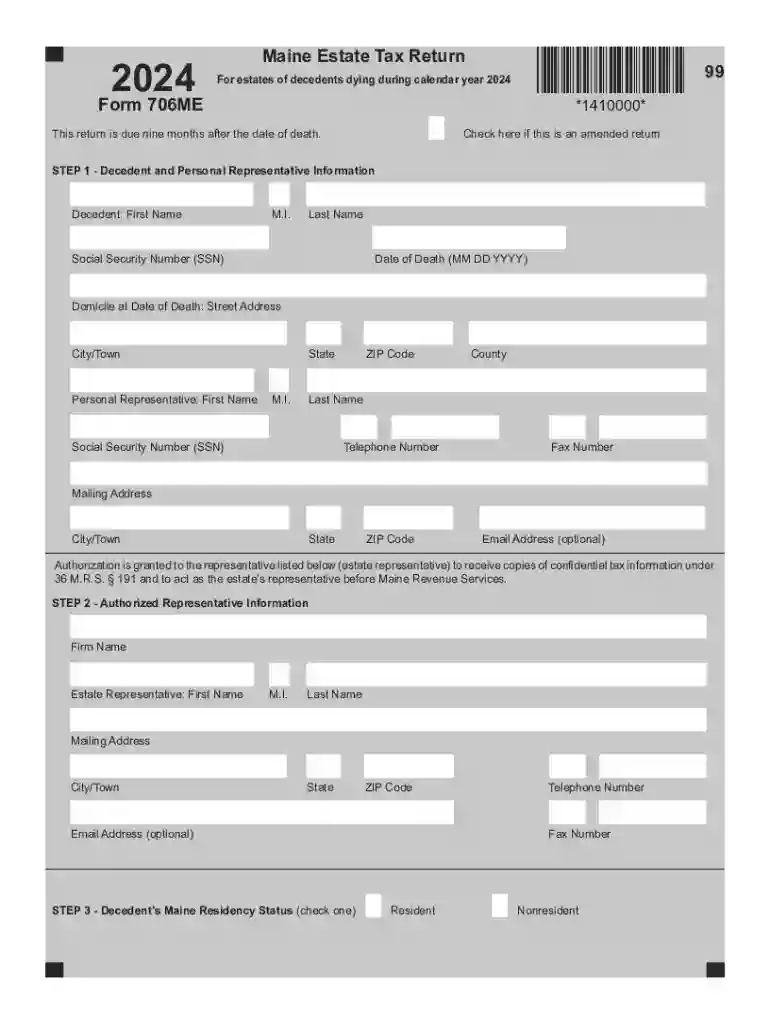
The 99 Form 706ME, also known as the Maine Estate Tax Return, is a tax document required for the estate of a decedent in the state of Maine. This form is used to calculate the estate tax owed to the state, similar to the federal estate tax return but with specific requirements that reflect Maine's statutes. It is obligatory if the decedent was a resident of Maine or if the estate holds real or tangible property in the state, thereby ensuring compliance with state tax regulations.
The form is utilized to report the estate’s total value, tax payable, and other required financial information. Executors or personal representatives must compile detailed information about the decedent’s assets, including property, cash, securities, and other investments. Once the comprehensive data is gathered, fill each section accurately according to the form's instructions. Verification of these details is crucial to avoid later complications.
To acquire Form 706ME, you can download it from the Maine Revenue Services website. This ensures that the most current version is used. Alternatively, copies might be available from financial advisors or estate planning attorneys familiar with estate management in Maine. It’s also advisable to ensure you secure any associated guidance notes or instructions to accurately fill out the form.
The filing deadline for Form 706ME aligns with specific thresholds. Generally, the return must be filed within nine months following the decedent's date of death. Extensions can be requested, typically granting an additional six months, but this does not postpone any due tax payments. Being aware of these dates helps avoid penalties or interest on unpaid taxes.
Supporting documents for Form 706ME include the decedent's last will and testament, federal estate tax returns, and detailed appraisals of assets and real estate. Additional necessary paperwork might consist of previous tax returns, records of debts and liabilities, and any relevant legal agreements. Assembling these beforehand streamlines the filing process and ensures accuracy.
Form 706ME is legally binding, a requirement under Maine law for estate representatives managing the closure of a decedent’s tax obligations. It ensures the estate is assessed fairly against Maine’s estate tax laws. Accurate completion safeguards the estate’s interests and compliance with state tax enforcement procedures, reducing the risk of audits or legal disputes.
Failing to file the 99 Form 706ME on time or inaccurately declaring estate values can result in significant penalties and interest charges from Maine Revenue Services. The state may impose fines for late filing or payments, potentially leading to enforcement actions. To mitigate risk, timely filing and full disclosure are essential. This underscores the importance for estate representatives to fully understand and comply with all filing conditions.
We've got more versions of the 99 Form 706ME Maine Estate Tax Return form. Select the right 99 Form 706ME Maine Estate Tax Return version from the list and start editing it straight away!
| Versions | Form popularity | Fillable & printable |
|---|---|---|
| 2025 | 4.8 Satisfied (53 Votes) | |
| 2024 | 4.4 Satisfied (58 Votes) | |
| 2023 | 4.5 Satisfied (24 Votes) | |
| 2022 | 4.6 Satisfied (52 Votes) | |
| 2021 | 4.3 Satisfied (48 Votes) | |
| 2020 | 4.3 Satisfied (223 Votes) | |
| 2018 | 4.3 Satisfied (127 Votes) | |
| 2017 | 4.4 Satisfied (52 Votes) | |
| 2014 | 4.4 Satisfied (531 Votes) | |
| 2013 | 4.2 Satisfied (35 Votes) | |
| 2012 | 3.9 Satisfied (46 Votes) | |
| 2011 | 4 Satisfied (49 Votes) | |
| 2008 | 4.4 Satisfied (426 Votes) |
At DocHub, your data security is our priority. We follow HIPAA, SOC2, GDPR, and other standards, so you can work on your documents with confidence.