
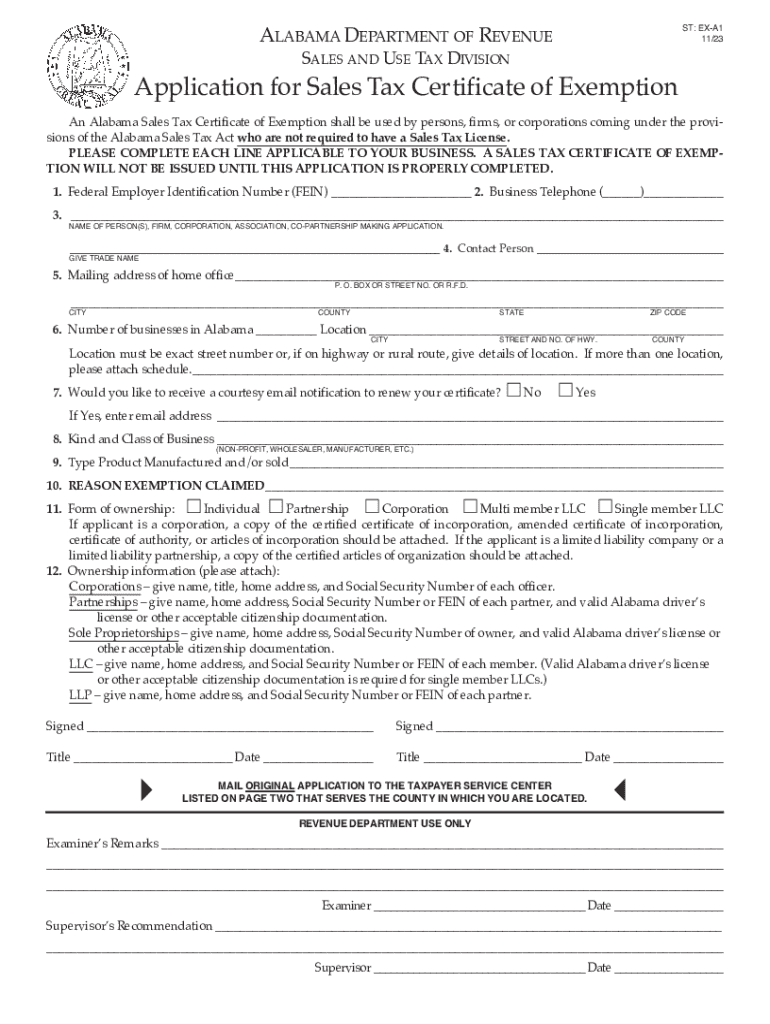







Definition and Meaning
The Fillable Application for Sales Tax Certificate of Exemption is a document used by businesses or individuals to apply for exemption from paying sales tax on qualifying purchases. This exemption is typically granted to organizations that fulfill specific criteria, such as being non-profit or operating within certain industries. Completing this form accurately ensures that qualified entities can benefit from tax relief, which can significantly impact their financial operations.
How to Use the Fillable Application for Sales Tax Certificate of Exemption
Using the fillable application form involves several straightforward steps. First, download or access the document via a suitable platform like DocHub. Once opened, the interactive features allow you to input necessary information directly into the fields provided. You will need to provide details, such as your business name, address, tax identification numbers, and the nature of your exemption claim. After filling out the form, verify that all information is correct before proceeding with the submission process, whether online, via mail, or in-person.
Steps to Complete the Fillable Application for Sales Tax Certificate of Exemption
-
Access the Form: Start by downloading or opening the fillable application for the sales tax certificate of exemption from a reliable source like the state's Department of Revenue website or a document management platform.
-
Populate Required Fields: Enter the necessary details, including your company's name, address, federal tax ID, and specific exemption category. Be precise and double-check each entry to avoid errors.
-
Provide Supporting Documentation: Attach any required documents that substantiate the exemption claim, such as proof of non-profit status or industry-specific qualifications.
-
Review and Sign: Thoroughly examine the completed form for accuracy. Use a legally compliant electronic signature if submitting digitally, or sign physically if sending a paper copy.
-
Submit the Form: Choose an appropriate submission method based on the guidelines provided—online submission is often the most efficient, but mailing or delivering in person may be necessary in some cases.
Eligibility Criteria
Eligibility for a Sales Tax Certificate of Exemption typically varies by state but generally includes non-profit organizations, educational institutions, and government entities. Some businesses operating in special industries, like manufacturing or agriculture, might also qualify. Documentation proving eligibility, such as IRS determination letters or state certifications, must accompany the application.


Key Elements of the Fillable Application for Sales Tax Certificate of Exemption
- Applicant Information: This section requires details such as the business name, address, and contact information.
- Exemption Details: Clearly state the exemption category you are applying for, with corresponding codes or descriptions.
- Supporting Evidence: Any relevant documentation or previous certifications that support the exemption claim.
- Signature Field: The form must include a signature section to authenticate the information provided.
Legal Use of the Fillable Application for Sales Tax Certificate of Exemption
Applicants must ensure the truthful and accurate completion of this form to remain compliant with tax regulations. Misuse or fraudulent claims can result in penalties, including fines or legal action. Therefore, only eligible applicants should apply, providing comprehensive and accurate information.
State-Specific Rules for the Fillable Application for Sales Tax Certificate of Exemption
Different states may have varying rules concerning the application process and qualifying criteria for sales tax exemptions. It's crucial to refer to the specific guidelines issued by the state's Department of Revenue to determine eligibility, required documentation, and procedural norms. These rules often determine the exemption's scope and applicability to different business entities.
IRS Guidelines
Federal tax laws, primarily those enforced by the IRS, might impact the conditions under which a sales tax exemption can be applied. The IRS rules often intersect with state taxation policies, especially in organizations with tax-exempt status like non-profits, educational institutions, and religious entities. Understanding these guidelines is essential for ensuring that businesses and organizations adhere to federal standards while also meeting state-specific requirements.
Penalties for Non-Compliance
Failure to comply with the proper use of a sales tax exemption certificate can result in severe penalties. These may include but are not limited to, fines, revoked exemption status, or legal action. Businesses are advised to maintain thorough records and ensure that exemptions are only applied to qualifying purchases to avoid non-compliance repercussions.
Examples of Using the Fillable Application for Sales Tax Certificate of Exemption
Consider a non-profit organization purchasing office supplies for operational needs. By using the Sales Tax Certificate of Exemption, the organization can procure these supplies without the added cost of sales tax, thereby reducing overhead expenses. Similarly, a manufacturing business might use the certificate for machinery purchases, benefiting from a substantial cost saving on high-value items.




