
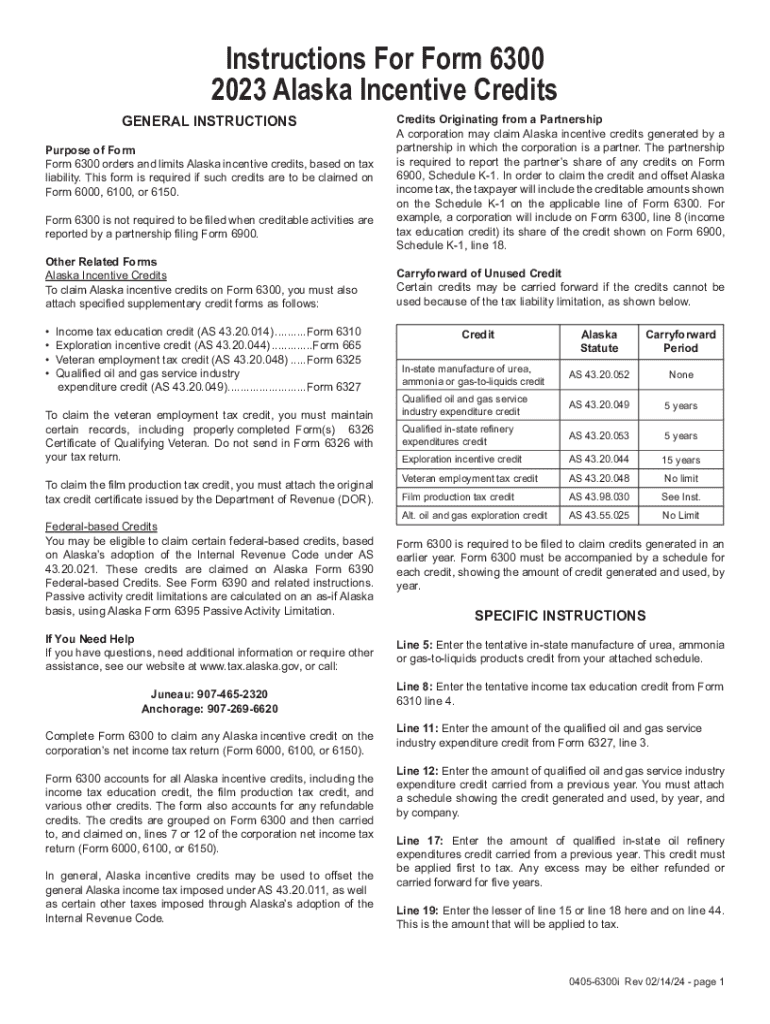







Definition and Purpose of the Form
The "Alaska - Priority of Credits - Income Taxes, Corporate" form, often referred to as Form 6300, is a critical document used by corporations that need to claim various tax credits offered by the state of Alaska. Its primary purpose is to facilitate the application of incentive credits towards the corporate tax liability, ensuring businesses can benefit from state-backed fiscal benefits aimed at promoting economic activity. Corporations utilize this form to systematically organize and prioritize their credit claims, which aids in accurate tax calculations and compliance with state regulations.
Key Elements and Sections
Form 6300 is composed of several sections that guide corporations in correctly reporting and applying for credits. These sections include:
- General Information: Captures essential details about the corporation, such as name and tax identification number.
- Credit Application: Allows the taxpayer to detail credit types and amounts, ensuring proper application against tax liabilities in a prioritized manner.
- Supplementary Forms: Corporations must use these for specific credits, e.g., energy efficiency credits or rural economic development credits.
Steps to Complete the Form
Completing Form 6300 involves several sequential steps to ensure accuracy and compliance. These steps include:
- Gathering Required Documents: Corporations need documentation supporting each credit claimed.
- Filling General Information on the Form: Enter corporate name, address, and contact information.
- Listing Tax Credits: Systematically add credits available to the corporation, detailing each type and amount.
- Prioritizing Credits: According to Alaska's guidelines, prioritize credits, ensuring they maximize tax benefits.
- Review and Verification: Double-check calculations and ensure all information is accurate before submission.
Filing Deadlines and Important Dates
Timely submission of Form 6300 is imperative for corporations to take full advantage of tax credits. Typically, the form is due with the corporate tax return, covering the tax year in question. Corporations must be vigilant about state-specific deadlines, often aligning with federal tax deadlines to prevent late filings and potential penalties.
Eligibility Criteria
To utilize the "Alaska - Priority of Credits - Income Taxes, Corporate" form, businesses must meet specific criteria:
- Registered in Alaska: Corporations must be officially incorporated or registered to do business within the state.
- Tax Liability: Companies should have income tax liabilities that credits can be applied against.
- Credit-Specific Requirements: Each credit has unique eligibility conditions, such as investment size or type of economic activity.


Practical Examples of Form Usage
Various corporations benefit from Form 6300 within Alaska. For instance:
- Energy Companies: Firms investing in renewable energy projects utilize specific credits to offset significant tax liabilities.
- Rural Development Corporations: Businesses engaging in economically underserved areas may prioritize rural development credits for financial relief.
Legal Use and Compliance
Understanding the legal framework surrounding Form 6300 is pivotal. Corporations must adhere to state tax regulations, ensuring all credits claimed are valid and supported by requisite documentation. Misuse or misrepresentation can lead to audits, penalties, or credit disqualification.
Who Typically Uses the Form?
Form 6300 is predominantly used by:
- Large Corporations: Businesses with higher tax obligations seeking various state credits.
- Partnership Firms: Companies structured as partnerships that generate and claim credits at the entity level before passing benefits to partners.

Form Submission Methods
Corporations have multiple options for submitting Form 6300:
- Online: Many choose electronic submission through the state's tax portal for convenience and efficiency.
- Mail: Traditional paper submission is still an option for corporations preferring hard copy records.
- In-Person: While less common, in-person submissions at designated tax offices are available, ensuring personal interaction for queries or extended assistance.




