







Definition & Meaning
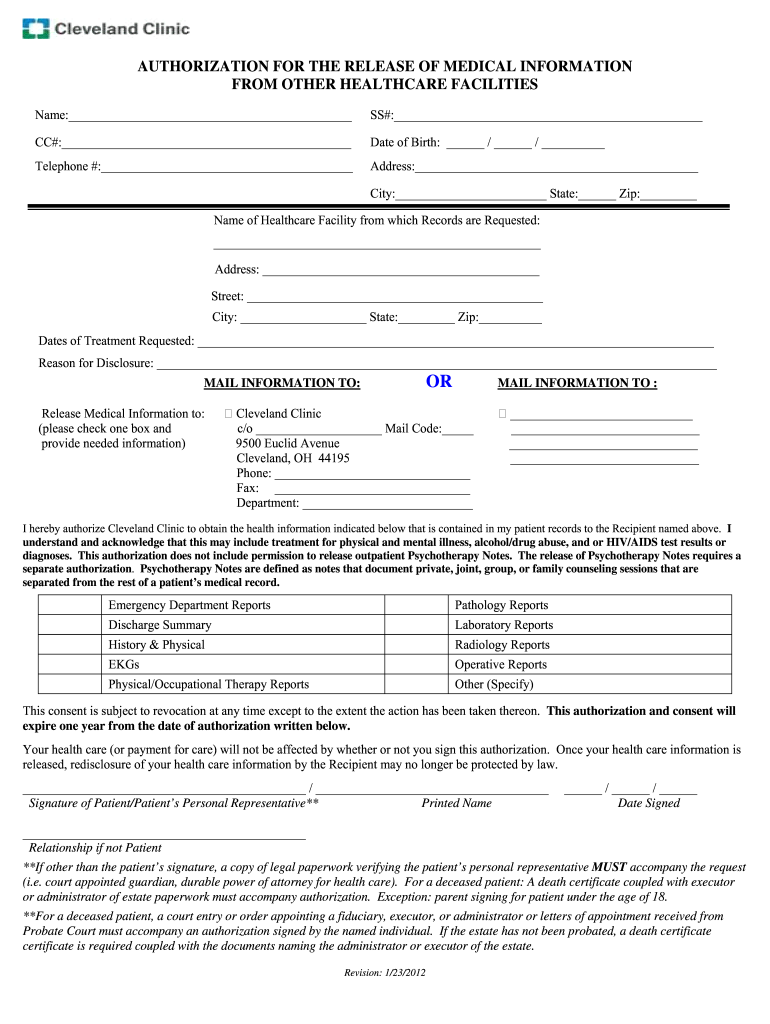
The "2012 Authorization for Medical Records Release" is a legal document used to provide consent for the release of a patient’s medical records from healthcare providers to a specified recipient. This form authorizes the sharing of protected health information (PHI) in compliance with privacy laws such as the Health Insurance Portability and Accountability Act (HIPAA). Signing this form ensures that the patient agrees to the transfer of their medical records to another party, which could include healthcare facilities, insurance companies, or legal professionals.
Key Features
- Patient Information: Includes personal details such as the patient's full name, social security number, and date of birth.
- Type of Records: Specifies which medical records can be released, like emergency department reports or laboratory results.
- Expiration & Revocation: The authorization typically expires one year from signing but can be revoked at any time by the patient.
How to Use the 2012 Authorization for Medical Records Release
This form is typically used whenever a patient needs to transfer medical records from one healthcare provider to another facility or third party. It is employed in situations such as changing healthcare providers, seeking a second opinion, or processing insurance claims.
Steps to Use
- Obtain and Fill the Form: The patient needs to acquire the form from their healthcare provider's office or the clinic’s website, then fill it out completely.
- Specify Information to be Released: Clearly indicate which medical records are authorized for release.
- Specify Authorized Recipient: The form should clearly state who is authorized to receive the information.
Steps to Complete the 2012 Authorization for Medical Records Release
Completing the form accurately is essential to ensure timely processing and to maintain data privacy and compliance.
Detailed Instructions
-
Patient Information Section:
- Enter full name, address, and contact information.
- Include the social security number (if required).
-
Medical Information Section:
- Indicate the specific records to be released such as treatment dates and the types of reports.
- Make sure to check if psychotherapy notes are included or require a separate authorization.
-
Recipient Information:
- List the names and addresses of individuals or entities authorized to receive the records.
-
Review and Sign:
- Carefully review all filled sections for accuracy.
- Sign and date the form. Guardians or legal representatives should sign on behalf of minors or incapacitated patients.
Key Elements of the 2012 Authorization for Medical Records Release
Understanding and correctly filling out the key components of this form is critical for both patients and healthcare providers.
Main Components
- Authorization Statement: Confirms consent from the patient for releasing specific medical records.
- Release Information: Details about what information is to be shared and with whom.
- Revocation & Expiration Clauses: Contains information on how to revoke consent and when the authorization expires.
State-Specific Rules for the 2012 Authorization for Medical Records Release
Different states may have unique requirements or modifications related to medical records release forms. It is crucial to be aware of these differences for compliance.
Examples of State Variations
- California: Additional privacy regulations under the California Consumer Privacy Act (CCPA).
- New York: Specific clauses for release of mental health records.
How to Verify
- Contact local healthcare providers or state health departments for region-specific guidelines.
- Review the state's health information privacy laws to understand additional requirements.
Who Typically Uses the 2012 Authorization for Medical Records Release
This form is utilized by a range of individuals and entities who require access to a patient’s healthcare information for various reasons.


Common Users
- Healthcare Providers: To receive or send patient information.
- Insurance Companies: For claims processing and verification.
- Legal Professionals: In cases requiring medical evidence or expert testimony.

Legal Use of the 2012 Authorization for Medical Records Release
This form must be used in compliance with federal and state laws governing the release of medical records. Understanding legal use is necessary to avoid breaches of privacy.
Legal Considerations
- HIPAA Compliance: Ensures that the release follows the national standards for protecting sensitive patient information.
- Patient Rights: Patients have the right to access their medical records and obtain copies.
Examples of Using the 2012 Authorization for Medical Records Release
Various real-world scenarios illustrate how this form is applied in practice to facilitate efficient and legal exchange of medical records.
Scenarios
- Changing Doctors: A patient moving to a new city transfers their medical history to a new healthcare provider.
- Insurance Claims: An insurer requests medical records to process a reimbursement for a policyholder.
These scenarios highlight the practical importance of having a correctly filled out authorization form to ensure seamless operations in the healthcare industry.




