




01. Edit your form online
Type text, add images, blackout confidential details, add comments, highlights and more.

Type text, add images, blackout confidential details, add comments, highlights and more.

Draw your signature, type it, upload its image, or use your mobile device as a signature pad.

Send it via email, link, or fax. You can also download it, export it or print it out.
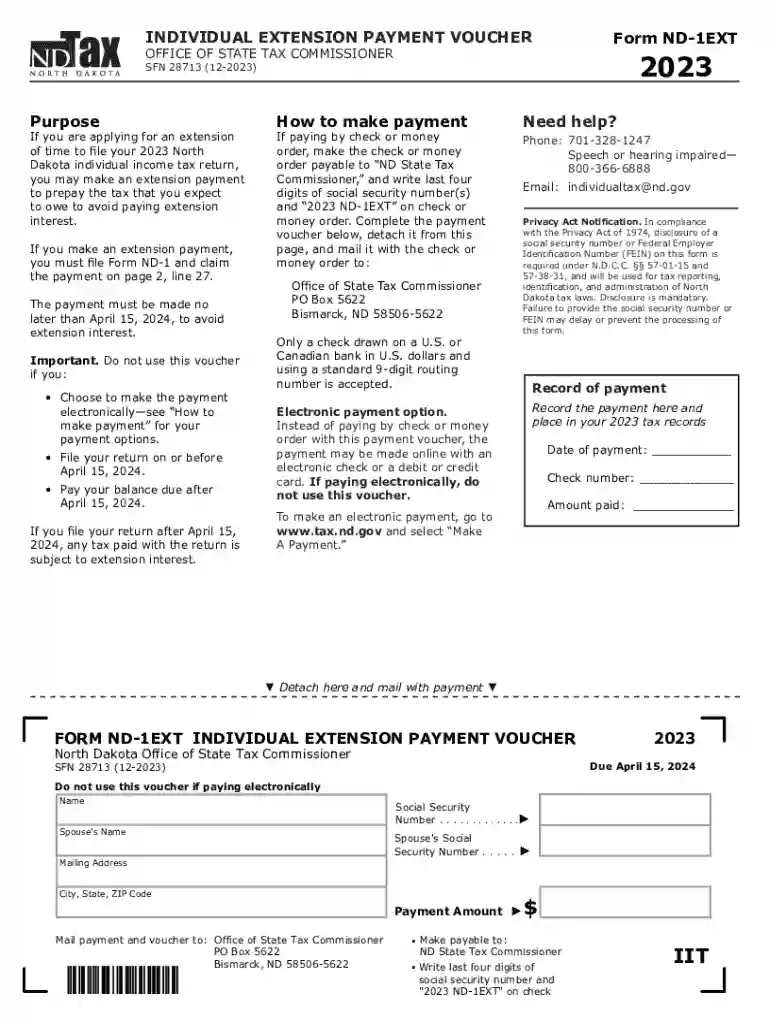
The Form ND-1EXT serves as an Individual Extension Payment Voucher for taxpayers in North Dakota needing additional time to file their 2023 income tax return. It is designed for individuals anticipating a tax liability and wanting to prepay their expected dues to avert interest charges. This form becomes a crucial financial instrument for meeting tax obligations without incurring unnecessary penalties.
To use the Form ND-1EXT efficiently, individuals must calculate their predicted tax liability for 2023. This ensures accurate prepayment, helping avoid underpayment penalties. After computing the tentative amount owed, users fill in the voucher detailing their personal information and calculated payment. The completed document then accompanies the payment to avoid unnecessary interest on unpaid taxes by the extended deadline.
Individuals can obtain the Form ND-1EXT via multiple channels. It is accessible through the North Dakota Office of State Tax Commissioner’s website, where it can be downloaded directly. Taxpayers can also request the form by phone or mail from the office or consult tax professionals who often provide clients with necessary tax forms during tax season.
Completing these steps accurately is crucial to avoid delays in processing or misapplication of payments.
Filing for an extension with the Form ND-1EXT offers taxpayers the benefit of additional time to organize and submit their detailed tax returns beyond April 15, 2024. It helps in managing financial documentation leisurely and preempting penalties associated with late payments. However, it’s essential to note that the extension only applies to filing—not payment—deadlines, making timely payment critical.
Form ND-1EXT is mainly utilized by North Dakota residents who foresee a liability on their 2023 income tax returns and require more time for comprehensive tax calculation and submission. This covers a broad audience including individuals who face complex tax situations, own multiple income sources, or prefer meticulous documentation before final filing.


The legal framework surrounding Form ND-1EXT requires taxpayers to remain compliant by ensuring payments reflect realistic estimates of owed taxes. Noncompliance can result in interest charges, making adherence to estimates paramount. The form is part of a structured legal approach to managing state income tax obligations, reinforcing the importance of maintaining financial responsibility.
While completing Form ND-1EXT, taxpayers should focus on:
North Dakota's specific rules governing Form ND-1EXT involve distinct submission channels and payment processing directives that taxpayers must follow. Knowing these rules ensures that tax obligations are met accurately and punctually. Moreover, these rules help mitigate any unforeseen circumstances that may halt or slow down the processing of tax returns or payments, affirming the necessity for detailed comprehension of the state's tax code as it relates to the extension voucher.
Thus, using Form ND-1EXT strategically provides taxpayers not only with an extended timeline for filing their returns but also with the peace of mind that comes from knowing their finances remain in order with state protocols.
We've got more versions of the Form ND-1EXT - Individual Extension Payment Voucher form. Select the right Form ND-1EXT - Individual Extension Payment Voucher version from the list and start editing it straight away!
At DocHub, your data security is our priority. We follow HIPAA, SOC2, GDPR, and other standards, so you can work on your documents with confidence.



Pay by Check or Money Order. Or, submit your check or money order along with a completed extension payment voucher on or before April 15 (or the 15th day of theRead more
Dec 30, 2020 Publications and forms are available on the Maxwell Publications and Forms Management. Public Voucher for Purchases and Services


