






Definition & Meaning
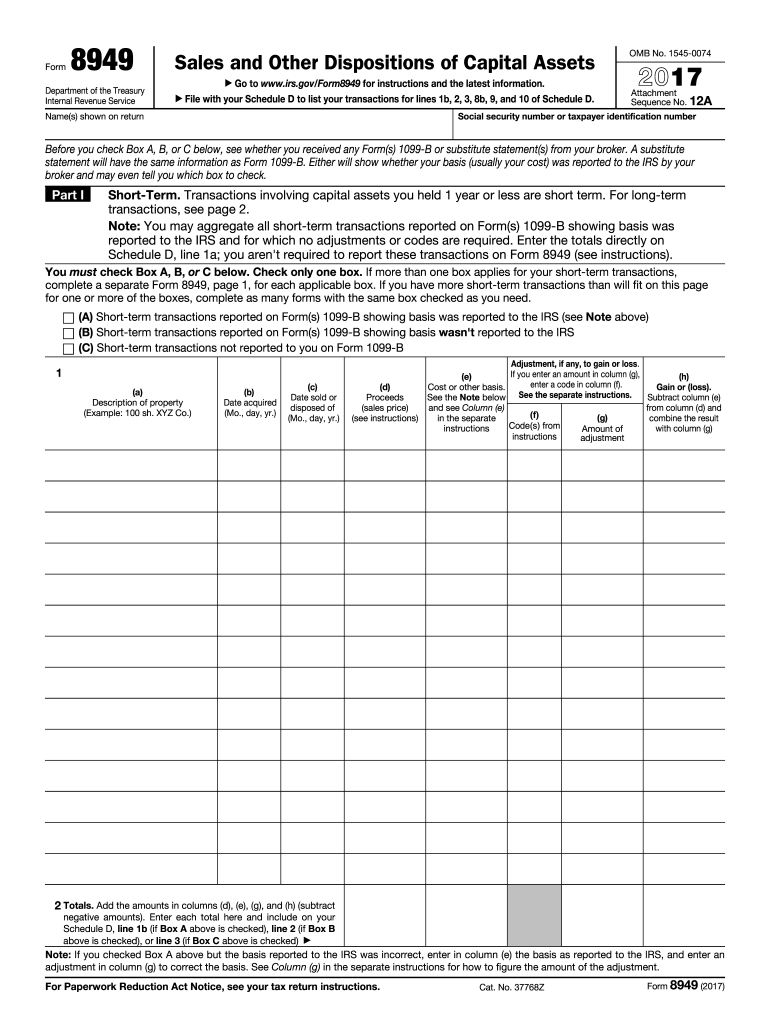
Form 8949, used by the Internal Revenue Service (IRS), is crucial for reporting sales and other dispositions of capital assets such as stocks, bonds, and property. Taxpayers must use this form to detail short-term and long-term transactions, marking the beginning of accurate capital gains or losses reporting. It involves indicating whether the cost basis of the asset was reported to the IRS and provides specifics such as asset description, acquisition and sale dates, proceeds, and cost basis adjustments.
How to Use the Printable IRS Tax Form 8
To use Form 8949 effectively, begin by listing each transaction separately. The form is structured to accommodate short-term transactions on Part I and long-term transactions on Part II. Ensure all entries specify the nature of each transaction, including gains or losses and whether the basis was reported. Accurately transferring totals from Form 8949 to Schedule D is essential, as this affects the overall tax calculation.
- Identify Transactions: Include all capital asset transactions within the tax year.
- Separate by Term: Classify transactions into short-term and long-term categories.
- Enter Detailed Information: Include asset descriptions, acquisition and sale dates, proceeds, and costs.
- Adjust Gains/Losses: Note any adjustments needed for accuracy.
- Transfer Totals to Schedule D: Aggregate results from Form 8949 into Schedule D to finalize tax return entries.
How to Obtain the Printable IRS Tax Form 8
Form 8949 is available directly from the IRS website as a PDF that you can download and print. It can also be accessed through tax software solutions or a tax professional. When using software like TurboTax or QuickBooks, the form is integrated within the platform’s tax filing process.
- IRS Website: Direct download via the IRS's official site.
- Tax Software: Available during tax return preparation.
- Professional Tax Services: Often provided as part of their service package.
Steps to Complete the Printable IRS Tax Form 8
Completing Form 8949 involves carefully inputting data from your capital asset transactions. Here’s a step-by-step guide:
- Gather Transaction Records: Collect all relevant transaction details and documentation.
- Enter Asset Information: For each asset, fill in details such as description, acquisition and sale dates, and sale proceeds.
- Calculate Cost Basis: Determine the cost basis for each asset.
- Make Adjustments for Gains or Losses: Include any necessary adjustments as specified by IRS guidelines.
- Summarize Results: Total the gains or losses for each section.
- Transfer Results to Schedule D: Ensure that the summarized amounts are accurately transferred to Schedule D for final filing.
Important Terms Related to Printable IRS Tax Form 8
Understanding the terminology associated with Form 8949 can simplify the completion process. Key terms include:
- Cost Basis: The original value of an asset, adjusted for stock splits, dividends, and return of capital distributions.
- Proceeds: The amount received from the sale of assets.
- Short-term vs. Long-term: Short-term applies to assets held for one year or less, whereas long-term refers to those held longer than a year.
- Adjustments: Modifications made to gains or losses as instructed by IRS rules.
IRS Guidelines
The IRS provides specific guidelines for completing Form 8949. Importantly, taxpayers should verify whether the IRS was informed of the asset's basis to determine correct form entries. Following IRS Publication 550 can offer comprehensive support for capital asset transactions.
- Understanding Tax Form Instructions: Refer to IRS Documentation for accurate guidance.
- Ensuring Completeness and Accuracy: Double-check entries for accuracy and completeness.
- Meeting Reporting Requirements: Follow all IRS instructions to comply with federal tax regulations.
Filing Deadlines / Important Dates
Form 8949 must be filed in conjunction with your annual tax return, typically due by April 15th. It is critical to adhere to this deadline to avoid penalties.
- April 15th: Standard Deadline for IRS Tax Filings.
- Extensions: If necessary, apply for an extension by this date to get additional time for filing.
- Estimated Date Accuracy: Ensure all transactions reported are within the appropriate tax year.
Required Documents
When completing Form 8949, gather all relevant transaction documents, including:
- Brokerage Statements: Details transaction dates, costs, and proceeds.
- 1099-B Forms: Reports from brokers detailing the sale of assets.
- Receipts and Contracts: For real estate and other asset sales.
Form Submission Methods (Online / Mail / In-Person)
Form 8949 can be submitted as part of the overall tax return package. Whether filing online, mailing physical forms, or through professional services, ensure everything is complete and properly organized.
- Online Submission: Via e-filing platforms.
- Mailing Forms: Ensure ample time for postal delivery before deadlines.
- Tax Professional Services: Often handle submission as part of broader services.
Penalties for Non-Compliance
Failing to file or incorrectly filing Form 8949 can result in IRS penalties. Ensuring accuracy and compliance is paramount to avoid fines or potential audits. Comprehensive record-keeping is critical to justify entries and decisions made on the form.
- Late Filing Penalties: Fees for not filing or late filing.
- Accuracy-Related Penalties: Charged when reported transaction details are incorrect.