




01. Edit your form online
Type text, add images, blackout confidential details, add comments, highlights and more.

Type text, add images, blackout confidential details, add comments, highlights and more.

Draw your signature, type it, upload its image, or use your mobile device as a signature pad.

Send it via email, link, or fax. You can also download it, export it or print it out.
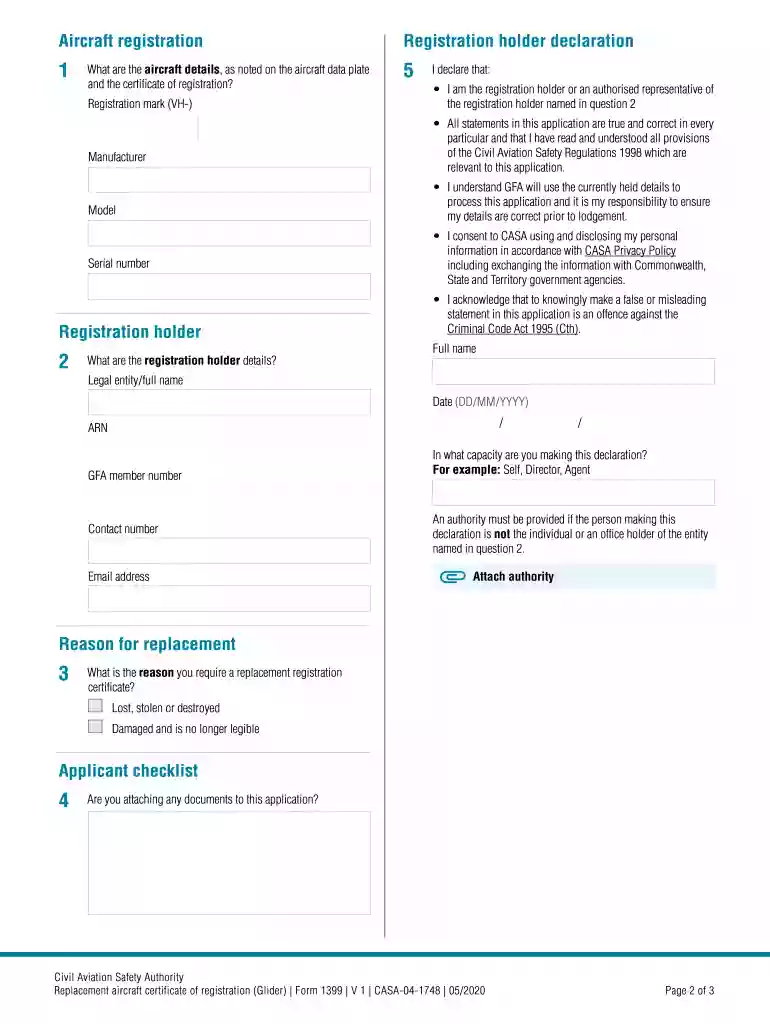
The Form 1399 - Replacement Aircraft Certificate of Registration (Glider) is a formal document utilized to request a replacement for a lost, stolen, or damaged certificate of registration for a glider. This form is managed by the Gliding Federation of Australia (GFA) under the authority of the Civil Aviation Safety Authority (CASA). The certificate confirms the registration status of the glider, which is essential for legal operation in Australian airspace. A valid certificate is necessary to demonstrate compliance with aviation regulations, bolstering the safety and legal legitimacy of the aircraft.
To acquire Form 1399, individuals can visit the official website of the Gliding Federation of Australia. The form is typically available for download as a PDF, which can be printed and filled out manually, or completed digitally using document editing software such as DocHub. It is crucial to ensure you have the latest version of the form as updates or changes may occur over time. If needed, the GFA office may also provide guidance on obtaining the form through regional aviation offices.
Gather Required Information: Before starting, collect all necessary details about the glider and its current registration status, including the aircraft's registration number, owner's information, and any previous certificate details.
Fill Out Aircraft Details: Provide the required specifications of the glider, such as make, model, and unique identifiers. This ensures the correct aircraft is registered.
Reason for Replacement: Clearly state the reason for requesting a replacement certificate, whether due to loss, damage, or other valid circumstances.
Declaration and Signature: The registration holder or an authorized representative must complete the declaration section, confirming the accuracy of the information provided.
Payment Information: Submit any applicable fees as outlined in the form instructions, choosing the preferred payment method.
Submission: Ensure the completed form and any attachments are submitted via the outlined method, such as online, mail, or in-person at the specified offices.
To expedite processing, additional documents may be required alongside Form 1399. These might include:
Form 1399 is typically used by glider owners or their authorized representatives seeking to renew or replace a damaged, lost, or stolen certificate of registration. Individuals involved in the management of glider fleets or aviation clubs may frequently interact with this form to maintain compliance for multiple aircraft.


The application process for Form 1399 typically involves filling out and submitting the completed form along with any requisite documents and fees. Approval times can vary based on the workload of the GFA and the completeness of the submission. Applicants are advised to allow sufficient time for processing and to follow up if they have not received confirmation within the expected timeframe.
Using Form 1399 ensures legal compliance with aviation regulations for glider operation. A valid replacement certificate obtained through this form allows the owner to restore the aircraft's operational legitimacy, preventing any legal issues that might arise from flying without a current certificate.
We've got more versions of the Form 1399 - Replacement aircraft certificate of registration (Glider) form. Select the right Form 1399 - Replacement aircraft certificate of registration (Glider) version from the list and start editing it straight away!
At DocHub, your data security is our priority. We follow HIPAA, SOC2, GDPR, and other standards, so you can work on your documents with confidence.


