







Definition & Meaning
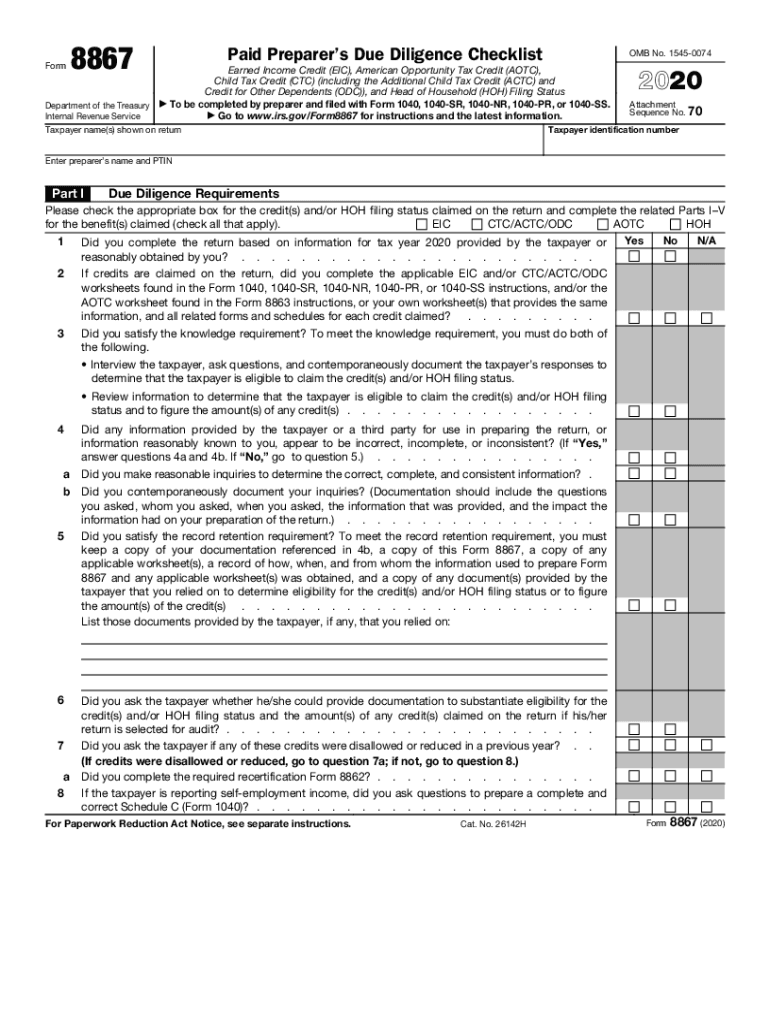
Form 8867, known as the Paid Preparer's Due Diligence Checklist, is a requirement established by the Internal Revenue Service (IRS) for tax preparers. The form is essential when claiming specific tax credits such as the Earned Income Credit (EIC), American Opportunity Tax Credit (AOTC), Child Tax Credit (CTC), and Head of Household (HOH) filing status. The primary goal of Form 8867 is to ensure that tax preparers conduct the necessary due diligence before claiming these credits on behalf of taxpayers. This involves verifying taxpayer eligibility, accurately documenting inquiries, and maintaining all relevant records associated with the claims on tax returns.
How to Obtain the Form 8867
There are several ways to obtain Form 8867. You can download it directly from the IRS website, where it is available as a fillable PDF. Tax preparation software like TurboTax and QuickBooks also typically includes this form as part of their offerings for professional tax preparers. Additionally, tax professionals might receive the form through professional organizations that distribute tax-related documentation. It is vital to ensure you have the latest version of the form as requirements can change annually.
Steps to Complete the Form 8867
-
Review Client Information: Begin by gathering all necessary documents and taxpayer information. This includes income statements, prior tax returns if applicable, and any details relevant to the tax credits being claimed.
-
Complete Due Diligence Questions: Form 8867 contains specific questions related to the tax credits for which due diligence is required. Answer these queries carefully, ensuring that the information aligns with the other supporting documents.
-
Document Client Eligibility: Record the criteria used to determine eligibility for the credits. This includes any specific inquiries made to the client and the responses provided.
-
Maintain Compliance Records: Ensure all documentation, including your notes and any client-provided documents, are retained for future reference or potential audits.
-
Submit the Form: Attach Form 8867 to the client's tax return when filing. The form can be submitted electronically if using tax software or included with the paper return if filing by mail.
IRS Guidelines
The IRS provides comprehensive guidelines on how Form 8867 should be used. These guidelines stress the importance of exercising due diligence and provide detailed instructions on completing the form. The IRS also outlines the requirements for documentation and the record retention period. Tax preparers are advised to familiarize themselves with these guidelines each tax season to ensure compliance and avoid penalties.
Penalties for Non-Compliance
Failure to accurately complete and file Form 8867 can result in significant penalties for tax preparers. As of recent regulations, the penalty per failure can be over $500. These fines apply to each credit improperly claimed without conducting the necessary due diligence. Consistent non-compliance can also result in more severe repercussions, such as being barred from preparing taxes professionally.
Key Elements of the Form 8867
Form 8867 covers several key areas crucial for compliance:
- Taxpayer Eligibility Questions: These sections require answers regarding the individual claims for EIC, AOTC, CTC, and HOH status.
- Documentation Requirements: Ensure all eligibility is backed with appropriate documentation.
- Retention of Records: Outlines the need to maintain records for at least three years following the filing date.
Who Typically Uses the Form 8867
Form 8867 is generally used by professional tax preparers who assist clients in filing returns involving specific credits. These professionals include certified public accountants (CPAs), enrolled agents, and tax attorneys who must adhere to IRS guidelines for due diligence when preparing returns that claim the specified credits.


Software Compatibility
Form 8867 is compatible with various tax preparation software, including popular options like TurboTax, H&R Block, and QuickBooks. These software solutions often integrate the due diligence checklist directly into the tax preparation process, providing prompts and automated checks to ensure compliance. Using such software can streamline the process and help avoid common errors associated with manual completion.
Eligibility Criteria
To complete Form 8867, the preparer must determine the taxpayer's eligibility for each credit. Key factors for consideration include income levels, education expenses, child eligibility, and filing status. These criteria vary for each credit but typically require comprehensive documentation and clear records to justify the claims.





