






Understanding the Job Briefing Form
The job briefing form is a crucial document used primarily across various industries to ensure safety and clarity before starting any work activity. Its primary purpose is to identify risks, establish safety protocols, and confirm that all team members are informed about their roles and responsibilities.
Key Components of the Job Briefing Form
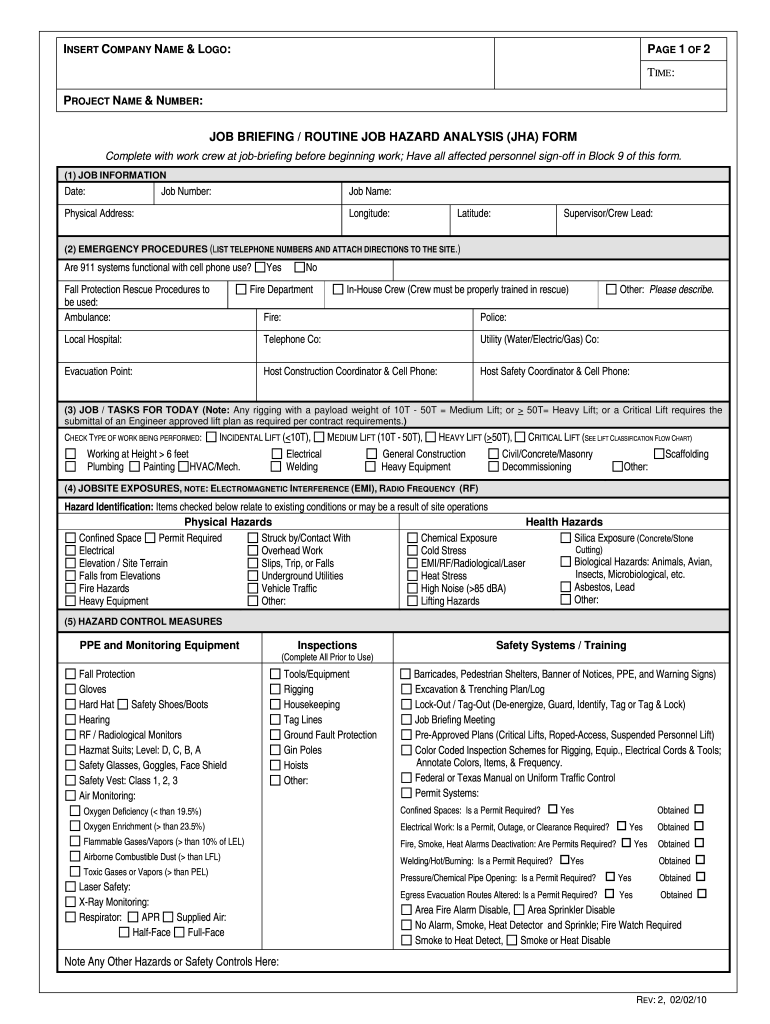
The structure of a job briefing form typically includes several essential components:
- Job Information: Details regarding the project, including job name, location, and start time.
- Emergency Procedures: Clearly defined protocols to follow in the event of an emergency, including contact information for medical assistance and evacuation routes.
- Task Overview: A list of tasks to be completed during the job, broken down into manageable parts.
- Hazard Identification: Identification of potential hazards associated with the job, such as exposure to chemicals, moving machinery, or working at heights.
- Control Measures: Strategies for mitigating identified hazards, including the use of personal protective equipment (PPE), engineering controls, and administrative protocols.
Each component is critical in crafting a comprehensive briefing that enhances safety and efficiency.
Steps to Utilize the Job Briefing Form Effectively
Using the job briefing form involves several systematic steps to maximize its effectiveness:
- Preparation: Before the briefing, gather all relevant information, including task details and known hazards. This ensures that the discussion is informed and comprehensive.
- Conducting the Briefing: Gather all team members to review the job briefing form. Discuss each section in detail, allowing time for questions and clarifications.
- Acknowledge Understanding: Each team member should sign the form to confirm they understand the discussed procedures and safety measures. This also serves as a legal record.
- Review: Periodically review the completed brief to ensure all members adhere to the discussed protocols throughout the duration of the work.
Importance of the Job Briefing Form
The significance of the job briefing form cannot be overstated. Here are several reasons why it is essential in a workplace setting:
- Enhances Safety: By identifying hazards upfront and discussing control measures, the form promotes a culture of safety and vigilance.
- Boosts Team Communication: The briefing fosters open dialogue about job expectations, which can help minimize misunderstandings among team members.
- Protects Organizations Legally: Documenting the safety briefing process provides legal protection in the event of workplace incidents, demonstrating that due diligence was observed.
Common Variations of the Job Briefing Form
Several common variations of the job briefing form cater to specific needs across different industries, including:
- Pre-Task Briefing Form: Focuses on tasks to be performed and potential hazards associated with those tasks.
- Daily Safety Briefing Template: Used regularly to discuss safety concerns before the beginning of each workday.
- Job Safety Briefing Form: Emphasizes safety protocols specifically tailored for high-risk activities.
Each variation serves particular contexts but retains the foundational elements that promote formality and thoroughness in job planning.
Real-World Applications of the Job Briefing Form
Real-world applications of the job briefing form highlight its versatility across various industries:
- Construction: In a construction setting, the form is used to discuss daily tasks, safety measures, and emergency procedures, significantly reducing the risk of accidents on site.
- Manufacturing: Workers utilize the briefing form to recognize potential machine hazards and the importance of lockout/tagout procedures before engaging with equipment.
- Healthcare: In healthcare, a job briefing may focus on handling hazardous materials or ensuring proper protocols are followed during patient transfers.
These examples illustrate how the job briefing form aids in creating safer work environments.
Legal Considerations Surrounding the Job Briefing Form
Adhering to legal requirements when using the job briefing form is vital. Employers must ensure that the form meets industry standards and regulations. Some key considerations include:
- OSHA Guidelines: The Occupational Safety and Health Administration (OSHA) mandates that employers provide a safe work environment. The job briefing form serves as a proactive measure to comply with these regulations.
- Documentation: Maintaining a record of completed job briefing forms can be critical for legal protection and compliance audits.
Understanding these legal implications ensures that organizations fulfill their safety obligations while managing risk effectively.
Customizing the Job Briefing Form for Specific Needs
Organizations may need to customize the job briefing form to fit unique operational requirements. Elements to consider in customization include:
- Industry-Specific Risks: Tailoring the hazard identification section to reflect specific risks related to the industry (e.g., chemical exposure in manufacturing).
- Team-Specific Processes: Incorporating unique team dynamics or workflows to enhance relevance and comprehension.
- Feedback Mechanism: Adding a section for team members to provide feedback on the form’s effectiveness can help refine future briefings.
Customization not only enhances clarity but also increases the form's effectiveness as a safety tool.