
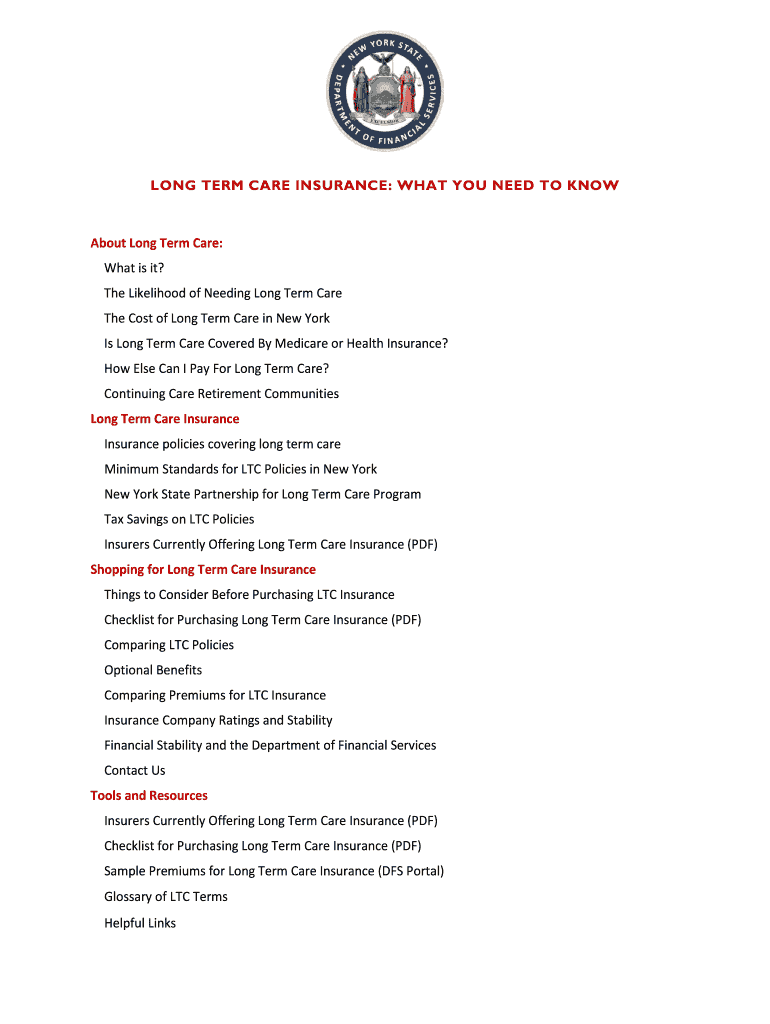







Definition and Meaning of Long Term Care Insurance
Long term care insurance is a policy designed to cover expenses associated with extended personal care services, which are not typically covered by regular health insurance or Medicare. These services can be rendered at home, in a nursing home, or in an assisted living facility. The aim is to provide financial support for individuals who require help with basic daily activities such as bathing, dressing, or eating due to a chronic illness, disability, or aging.
-
Services Covered: Policies may include coverage for in-home care, adult day care, hospice care, and respite care. This includes assistance with activities of daily living (ADLs), medical care, and sometimes skilled nursing services.
-
Policy Variations: It’s important to note that coverage options and benefits can vary significantly between policies. Some may offer rider options for inflation protection or life insurance benefits.
How to Use the Long Term Care Insurance Information
Understanding the components and benefits of long term care insurance helps individuals plan for the future as they age or deal with illnesses. It equips them with the knowledge necessary to select the right policy based on their potential needs and financial situation.
-
Decision-Making: This information guides users in assessing the type of care they might require and the associated costs, thereby aiding in financial planning.
-
Policy Comparison: Users can compare different policies to see which offers the best benefits, premium rates, and terms to match their financial and health situation.
Steps to Complete the Long Term Care Insurance Process
Acquiring a long term care insurance policy involves several essential steps to ensure comprehensive and appropriate coverage.
-
Assessing Needs: Evaluate the type of care services that you or your family member might need in the future. Consider health conditions, family history, and financial capacity.
-
Researching Policies: Gather detailed information on various insurance providers and the types of policies they offer. Focus on benefits, limitations, premiums, and any clauses related to pre-existing conditions.
-
Policy Comparison: Compare the coverage options, premium costs, benefits period, and elimination period among selected policies to determine the best fit.
-
Applying for a Policy: Initiate contact with insurance providers to inquire about the application process. This often involves completing a health questionnaire and possibly undergoing a medical examination.
-
Reviewing the Contract: Carefully review the policy document to understand the terms and conditions, including any exclusions, before signing.
-
Regular Review: Revisit your policy regularly to ensure it continues to meet your needs and make adjustments as life circumstances change.
Who Typically Uses Long Term Care Insurance
Long term care insurance is particularly beneficial for older adults preparing for potential future health challenges that may require prolonged care. It is also useful for individuals who have a family history of diseases such as Alzheimer's or Parkinson's, which typically necessitate extensive care.
-
Aging Individuals: Those approaching retirement age and seeking to protect their savings and assets from being depleted by care costs.
-
Families with Health Concerns: Families who anticipate needing long-term care services due to existing health conditions or a history of chronic illness.
Key Elements of Long Term Care Insurance Policies
Understanding the critical components of long term care insurance can significantly influence the choice of policy.
-
Benefit Triggers: These are specific conditions or criteria, such as the inability to perform multiple ADLs, which must be met to start receiving benefits.
-
Elimination Period: This is the waiting period before the benefits start, usually ranging from one month to a year.
-
Coverage Limits: Policies may have both daily and lifetime maximum benefit amounts to consider.
-
Inflation Protection: This optional feature helps to ensure that your benefits keep pace with the rising costs of care over time.
State-Specific Rules and Differences in Long Term Care Insurance
Regulations and standards for long term care insurance may vary significantly across states. In New York, long term care insurance must adhere to state-specific minimum standards designed to protect consumers.
-
New York State Partnership for Long Term Care: This program encourages residents to purchase LTC policies by offering asset protection benefits.
-
State Regulations: Some states, like California, have unique protection and benefit rules under initiatives like the California Partnership for Long Term Care.
Legal Use and Requirements for Long Term Care Insurance
Long term care insurance contracts must conform to consumer protection laws, such as ensuring clarity in premium rate increases and disclosure of benefits.
-
Consumer Protections: Policies are required to provide a free-look period of 30 days, allowing consumers to cancel without penalty.
-
Legal Terms: Contracts should clearly define terms related to pre-existing conditions, renewability, and potential exclusions.
State-by-State Differences in Long Term Care Insurance
The rules and coverage specifics for long term care insurance can differ widely from one state to another, affecting the purchase and operation of these policies.
-
Policy Standardization: Some states have adopted uniform standards, while others may have unique additional consumer protection provisions.
-
Regulatory Differences: Variations may exist in tax incentives offered for long-term care insurance premiums between states.




