






Definition and Meaning
The "Safer Food Better Business for Retailers" (SFBBR) guidance serves as a comprehensive manual designed to aid retailers in ensuring food safety within their operations. It provides a structured approach to managing food hygiene and safety hazards, targeting small to medium-sized businesses, such as grocery stores, delis, and convenience stores. The document emphasizes the importance of following safe food practices to minimize risks associated with cross-contamination, improper cleaning, and other food handling errors. By adhering to the practices outlined in SFBBR, retailers can protect their customers from foodborne illnesses and ensure compliance with regulatory standards.
How to Use the Safer Food Better Business for Retailers
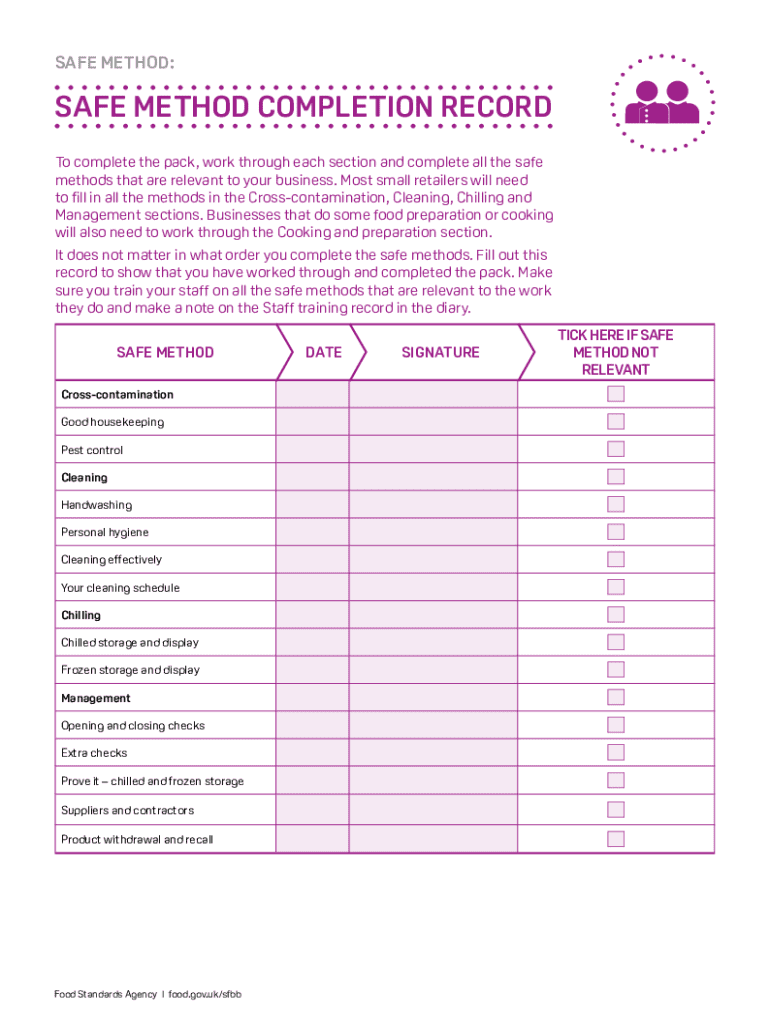
Retailers can use the SFBBR to structure their food safety processes effectively. The guidance document includes detailed instructions and templates for implementing control measures across various areas of food handling. Retailers should integrate these methods into their daily routines, covering areas such as:
- Cross-contamination: Establish protocols to prevent bacteria transfer from raw to ready-to-eat foods.
- Cleaning: Develop regular cleaning schedules and specify cleaning agents suitable for different surfaces.
- Chilling: Implement procedures to store perishable items at safe temperatures.
- Cooking: Ensure proper cooking methods to securely eliminate harmful bacteria.
- Staff Training: Regular training sessions to keep staff updated on best practices and changes in food safety legislation.
How to Obtain the Safer Food Better Business for Retailers
Retailers can obtain the SFBBR guidance through various channels. The most common method is downloading the document directly from government or industry association websites, where it is often available free of charge. Additionally, local food safety agencies may distribute printed copies or offer training sessions that provide the guidance manually. Some retailers may choose to work with food safety consultants who can supply the guidance and offer assistance in implementing its recommendations effectively within the business.
Steps to Complete the Safer Food Better Business for Retailers
To successfully complete and implement the SFBBR program, retailers should follow these steps:
- Assessment: Evaluate current food safety practices and identify areas needing improvement.
- Training: Conduct training sessions for staff to familiarize them with SFBBR guidelines.
- Documentation: Use the templates provided in SFBBR to document safety processes and practices.
- Implementation: Integrate new processes into daily operations, ensuring all staff members comply.
- Monitoring: Regularly review procedures to ensure they remain effective and up to date.
- Review: Periodically audit practices to identify new risks and adapt to regulatory changes.
Why Use the Safer Food Better Business for Retailers?
Utilizing SFBBR offers several advantages for retailers:
- Compliance: Ensures adherence to food safety regulations, reducing risks of non-compliance penalties.
- Customer Trust: Demonstrates commitment to high safety standards, enhancing reputation among customers.
- Risk Reduction: Minimizes the likelihood of foodborne illnesses, protecting public health.
- Operational Efficiency: Streamlines processes through structured, standardized practices, improving overall workflow and safety.
Important Terms Related to Safer Food Better Business for Retailers
Understanding key terms related to SFBBR is essential for effective implementation:
- Cross-contamination: Transfer of harmful bacteria between foods, surfaces, or equipment.
- HACCP (Hazard Analysis and Critical Control Points): A systematic preventative approach to food safety.
- Temperature Control: Maintenance of food at safe temperatures to limit bacterial growth.
- Traceability: Ability to trace the origin and history of a food item through supply chain stages.
Key Elements of the Safer Food Better Business for Retailers
SFBBR encompasses several critical elements vital to maintaining food safety:
- Preventive Controls: Techniques and measures to prevent food safety hazards.
- Standard Operating Procedures (SOPs): Detailed instructions that outline routine operations to ensure consistent quality and safety.
- Record-Keeping: Comprehensive documentation of safety practices and incidents for legal and monitoring purposes.
- Staff Training and Responsibility: Assigning designated roles and continuous education on food safety standards.
Penalties for Non-Compliance with the Safer Food Better Business for Retailers
Failure to adhere to SFBBR's recommendations can result in significant penalties:
- Fines and Legal Actions: Businesses may face fines or legal proceedings for endangering public health.
- Closure Orders: Severe infractions might lead to temporary or permanent closure by health authorities.
- Reputational Damage: Publicized non-compliance incidents can erode consumer trust and affect business survival.
Business Types That Benefit Most from Safer Food Better Business for Retailers
Retailers of all sizes can benefit from SFBBR, but it is particularly useful for:
- Small Grocery Stores: Ensures compliance with minimal resources.
- Independent Delis: Helps manage complex food safety operations within limited spaces.
- Convenience Stores: Standardizes fast-paced, diverse food handling processes.
- Specialized Food Retailers (e.g., butchers, bakers): Provides tailored guidelines for specialized operations, enhancing safety practices.
Software Compatibility and Digital Integration
SFBBR can be integrated with digital platforms to streamline food safety management:
- Document Management Systems: Utilize platforms like DocHub for digital documentation and process management.
- SaaS Food Safety Solutions: Use software tools designed for food safety compliance, offering features such as automated reminders and digital record storage.
- Cloud Storage: Save and access food safety documents within cloud platforms, enhancing accessibility and collaboration.
Eligibility Criteria and Application Process
Most retail food businesses can implement SFBBR as part of their operations. The primary eligibility requirement is being involved in food handling and wanting to improve food safety standards. The process does not involve formal application; businesses can voluntarily adopt the guidelines to enhance their food safety practices.