Definition & Meaning
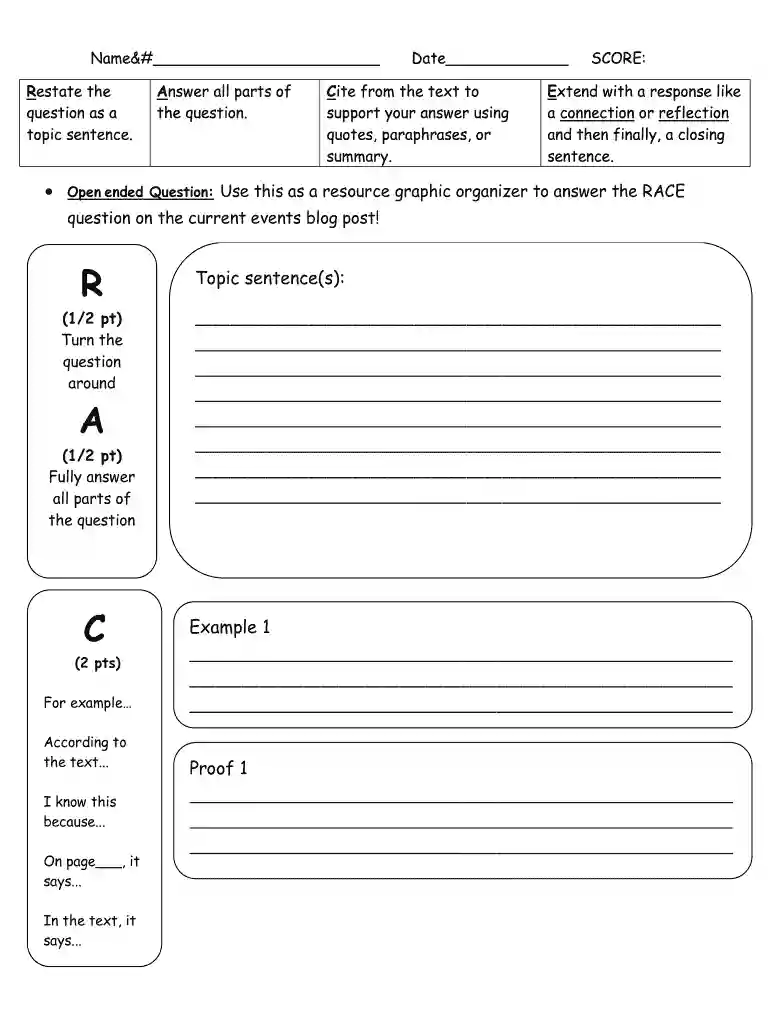
A resource graphic organizer is a structured tool designed to assist individuals in systematically composing comprehensive responses to open-ended questions. This specific organizer uses the RACE (Restate, Answer, Cite, Extend) method to guide users through developing each part of their answer. By providing a clear framework, it helps individuals articulate their thoughts, supporting them with relevant textual evidence and personal insights. This method not only fosters critical thinking but also encourages the formation of well-rounded arguments, making it a valuable asset for educational purposes and professional environments requiring detailed response formulation.
How to Use the Resource Graphic Organizer
To effectively use the resource graphic organizer, one should follow specific steps:
- Restate the Question: Begin by paraphrasing the question to ensure a clear understanding of the topic.
- Answer the Question: Directly respond to the question using your knowledge and insights.
- Cite Evidence: Incorporate quotes or paraphrased information from authoritative sources to back up your answer.
- Extend the Response: Expand on your answer by connecting it to broader ideas, personal experiences, or future implications.
Each of these steps involves using predefined sections in the organizer to fill out your thoughts methodically, ensuring that all necessary components for a comprehensive response are included.
Steps to Complete the Organizer
- Gather Required Materials: Collect any text or resources you'll need to cite for evidence.
- Restate Prompt: Fill in the section for restating the question, translating it into your own words.
- Answer Prompt: Write your direct answer, ensuring it aligns with the restated question.
- Insert Citations: Locate the citation section to input relevant data or quotes from your sources.
- Elaborate: Extend your response with applicable examples, reflections, or analyses in the designated section.
Proceed through each step methodically, utilizing the organizer to its full potential by completing all fields and double-checking for any missing elements or citations.
Key Elements of the Resource Graphic Organizer
- Topic Sentences: Establishes the main idea for each section, ensuring clarity and focus.
- Evidence Sections: Dedicated areas for placing sourced material, which support claims made in the answer.
- Analytical Components: Prompts for in-depth discussion and critical analysis of evidence and ideas.
- Conclusion Section: An area for final thoughts, summarizing the main ideas and their implications.
These elements help maintain organization and coherence across the document, ensuring that users can build logical, persuasive arguments.
Practical Examples of Using the Organizer
- Educational Use: Students preparing for essay-based exams can utilize the organizer to practice structuring arguments and providing evidence.
- Professional Development: Business professionals can employ the organizer when drafting reports or proposals that require thorough justification and analysis.
- Training Exercises: Instructors can implement the organizer as a teaching tool to facilitate discussions that demand student participation and evidence-based reasoning.
These examples illustrate the versatile applications of the graphic organizer in various contexts.
Who Typically Uses the Organizer
The resource graphic organizer is commonly used by:
- Students: Especially in middle and high school environments, where they are learning how to construct well-supported essays.
- Teachers: Who may use it as a teaching aid for assignments that require structured responses.
- Professionals: Engaged in fields that demand critical analysis and precise reporting, such as business or law.
This wide range of users demonstrates the utility of the organizer across different domains that require thoughtful and structured response creation.

Important Terms Related to the Organizer
- RACE Method: An acronym for Restate, Answer, Cite, and Extend, which forms the foundation of the organizer.
- Graphic Organizer: A visual tool that aids in the systematic organization of thoughts and information.
- Citation: A reference to a source of information used to substantiate claims or arguments made within the text.
Understanding these terms is critical for effectively utilizing the organizer and extracting its maximum value.
Versions or Alternatives to the Organizer
Various adaptations of the resource graphic organizer can cater to specific needs:
- Simple Outline: A less detailed version for quick reference or brainstorming.
- Mind Map: A more visual approach to topic exploration and relationship mapping.
- Digital Versions: Software-based organizers that provide interactive features and ease of editing.
These alternatives can be chosen based on user preferences and the complexity of the task at hand.