




01. Edit your prenatal record sample online
Type text, add images, blackout confidential details, add comments, highlights and more.

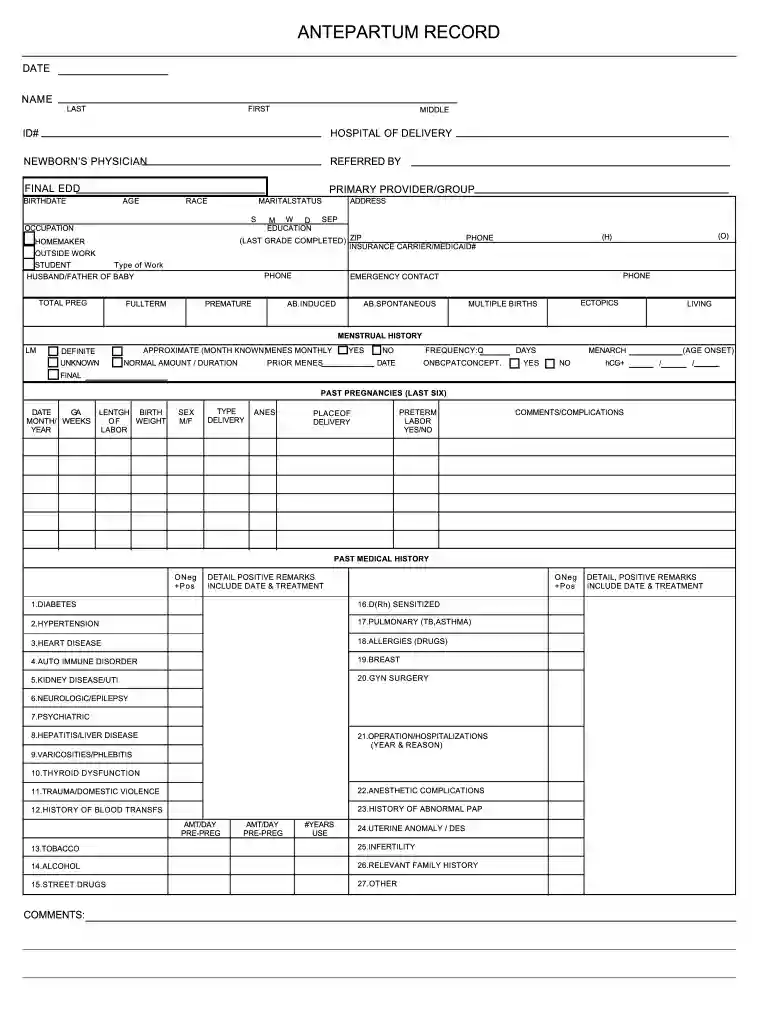
Type text, add images, blackout confidential details, add comments, highlights and more.

Draw your signature, type it, upload its image, or use your mobile device as a signature pad.

Send printable prenatal record template via email, link, or fax. You can also download it, export it or print it out.
A prenatal record template is a structured document that provides healthcare professionals with the necessary framework to collect and organize vital information about a pregnant patient. It is crucial for tracking maternal and fetal health throughout the pregnancy. This template typically includes sections for personal demographics, medical history, pregnancy history, and initial physical examination observations.
Establishing a comprehensive prenatal record helps providers monitor health trends and make informed decisions regarding prenatal care.
A well-organized prenatal record template enhances usability and ensures that no critical information is overlooked. It generally includes:
Creating a detailed structure is vital for healthcare providers to access necessary information quickly during appointments.
Effective prenatal records should capture various aspects of maternal and fetal health. Important components include:
Being thorough in documentation ensures comprehensive care and effective communication among healthcare providers.
Healthcare providers can utilize the prenatal record template throughout the pregnancy. This document is employed during:
Using the template consistently helps streamline communication with other healthcare professionals and supports continuity of care.
Collaboration is key in managing prenatal care. The prenatal record template facilitates efficient communication among:
Maintaining an accurate and up-to-date record enhances shared understanding and optimizes patient care.
Understanding the legal implications regarding prenatal records is essential for healthcare providers. The following considerations are important:
Adhering to these legal requirements protects both the patient and the provider.
Several resources are available for healthcare professionals seeking to implement or improve their prenatal record-keeping process:
Utilizing these resources can enhance the efficiency of record-keeping practices.
In practice, different healthcare facilities implement prenatal record templates in varied ways based on their specific needs:
Analyzing these varying implementations provides insights into best practices for developing effective prenatal record templates.
At DocHub, your data security is our priority. We follow HIPAA, SOC2, GDPR, and other standards, so you can work on your documents with confidence.




01= Completed Interview. 02= Refused Interview. 03= Non-Working Number. 04= No Answer. 05= Business Telephone. 06= No Eligible Respondent at this number.Read more
Medical Record - Prenatal and Pregnancy. Information. Form Number: SF533 PDF versions of forms use DocHub Reader. Download DocHub Reader. Print Page PrintRead more


